
CATEGORY
THE ARCHIVE
Still on the menu.
We haven’t added a story for that craving yet.
Try another place or dish.
A NOTE FROM JO PIGGY
A little curiosity.
A very big appetite.
Hi, I’m JO PIGGY. Think of Pig Out Korea as a friend who enjoys reading the reviews almost as much as you enjoy planning the next meal.
We bring together Korean food stories, neighborhood discoveries, and local reviewers’ perspectives for travelers with an appetite for more.
Our archive is built from research and linked sources. We don’t pretend we’ve eaten every meal ourselves. We help you find the places you’d like to try.
Let’s find your next bite ↗Contact
A question, a local tip, or just a hello?
bravora2026@gmail.comWhy Is There No Fish in Bungeoppang? A Korean Cold-Weather Snack
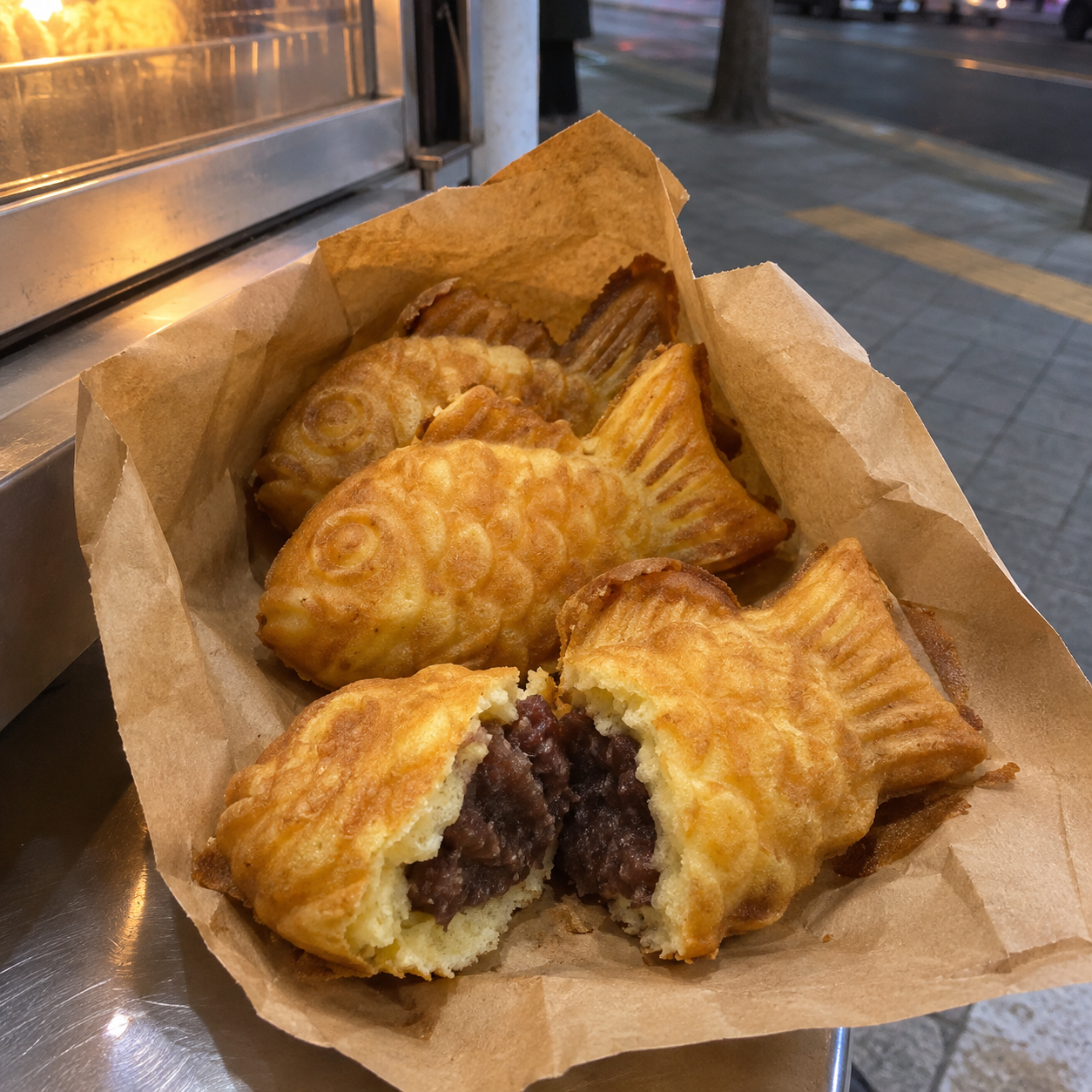
Fish-shaped, with a sweet smell
On a cold walk through Korea, a small street stall may slow your pace. A metal mould opens, revealing a row of golden fish. Someone takes a paper bag and bites a tail.
A first-time visitor might reasonably ask: “Is there fish inside?”
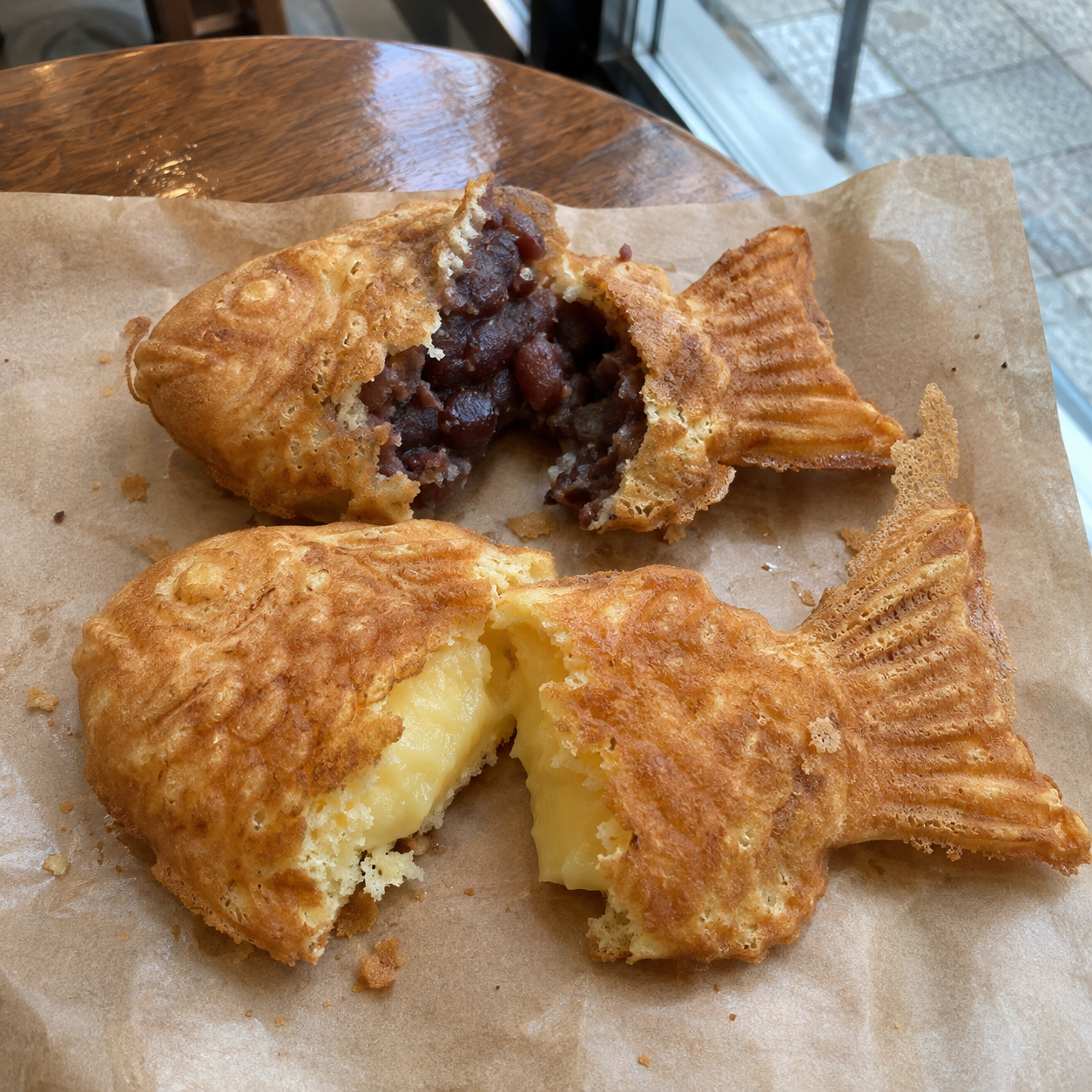
In a standard red-bean bungeoppang, no. The fish describes the shape, not the filling. Wheat batter and sweet red-bean paste are cooked in a fish-shaped mould. If you expected grilled fish, the first bite will be much sweeter. Korea.net’s introduction to bungeoppang and winter snacks
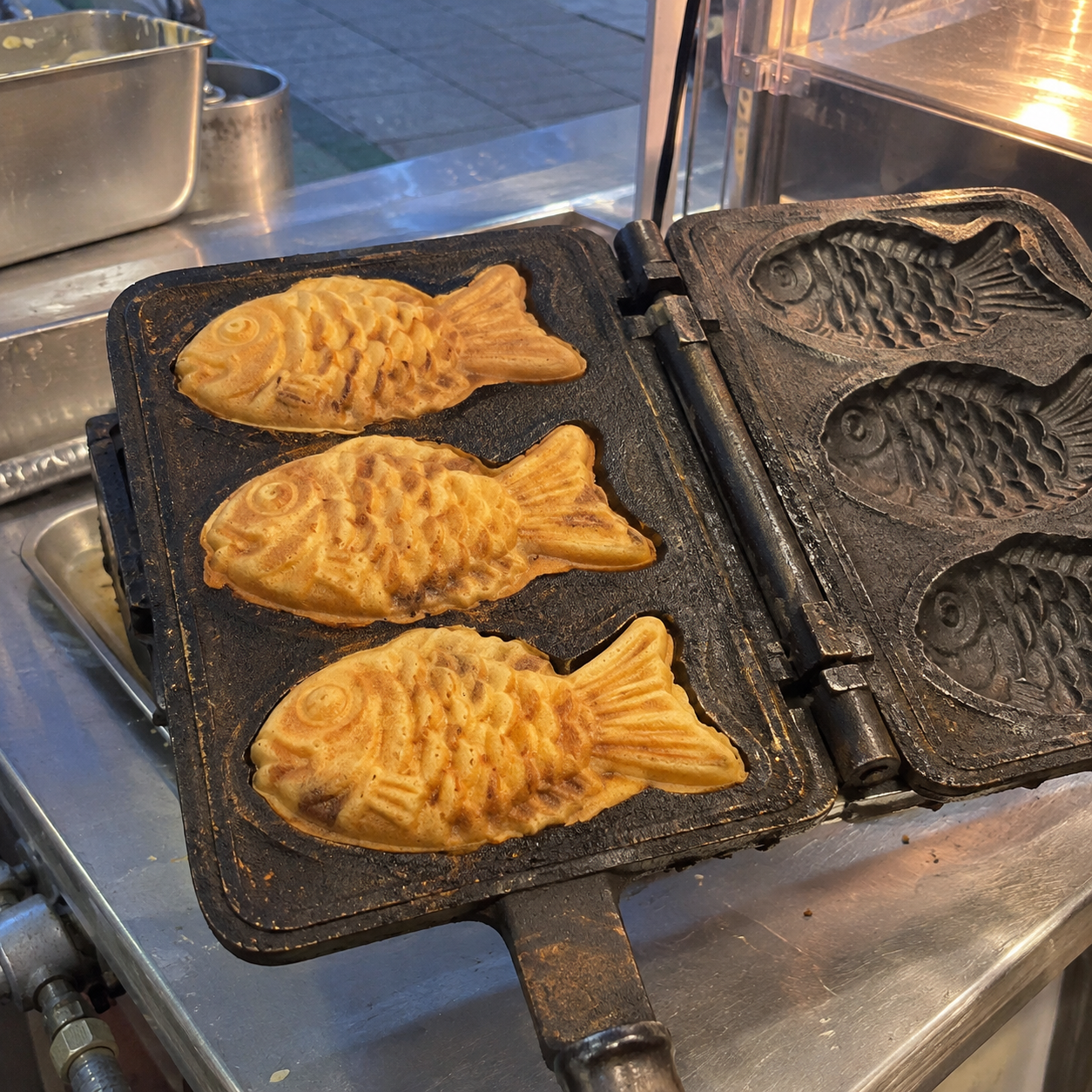
The mould makes the fish; the filling changes the flavour
The face, scales and fins come from the cooking mould. Batter and filling are enclosed and cooked together, producing a pastry patterned on both sides.
The belly may hold more filling, while the edges and tail bring more of the batter’s flavour. The thicker centre and thinner edges can give you different bites within one pastry.
Fresh from the mould, you may find crisp edges leading into soft batter and warm filling. Receiving that warm little parcel is part of the appeal.
Red bean or custard cream?
Sweet red-bean paste is a useful first filling to try. Its sweetness and texture, including how distinct the beans remain, vary by stall.
Pat means red bean and is the word to look for when choosing that filling.
A cream-filled version is commonly called syukeuream on Korean menus. It offers another option if red bean is unfamiliar or you want a softer cream filling. Recipes and flavours vary even under the same name.
Other versions can contain sweet potato, chocolate, cheese or pizza-style fillings. Some shops also serve bungeoppang with ice cream in warmer weather. A small street stall may offer only a few choices, so read its own menu. A Korea Tourism Organization example of varied fillings and sizes
For a first taste, consider a mixture of red bean and cream. You can compare a familiar kind of sweetness with a filling you may not know yet.
Check the quantity and price
Bungeoppang may be sold individually or in bundles. Size and filling also affect the price.
Use the stall’s current signs rather than an old travel article’s prices. If a sign mentions three pieces, confirm what the displayed amount buys and whether you can mix fillings.
Mini versions and regular-sized pastries can be difficult to distinguish from photographs.
Try asking for two red-bean pastries and one cream-filled pastry. If the stall sells a fixed bundle, first ask whether mixing fillings is allowed.
Check the accepted payment methods as well. Not every stall takes the same forms of payment.
Head first or tail first?
Once the bag is in your hands, another choice appears.
Starting with the head can bring you to a thicker section first. Starting at the tail lets you taste a part that may have less filling. Shape and filling distribution vary, so neither direction guarantees the most red bean.
JO PIGGY starts with the tail. That is my own preference; you can begin wherever you like.
There is no required etiquette or correct answer. Friends may joke about what your first bite reveals, but a pastry does not need to decide your personality.
The filling can be hotter than the outside. Let a freshly cooked pastry cool a little, or gently break it open before taking a large bite. Keep the paper bag underneath to catch filling or crumbs.
Why cold weather makes you stop
Bungeoppang does not need to be a grand food expedition. It can be a short pause on a walk: stop, receive a small bag and carry on with something warm to eat.
Availability depends on the weather and the business. Winter does not put a stall on every street, and indoor shops may serve the pastries in other seasons too.
If you find freshly cooked bungeoppang on a cold walk, consider stopping for one.
You already know why there is no fish inside. Now the decision is red bean or cream—and, once it is in your hand, head or tail.
Comments 0