
CATEGORY
THE ARCHIVE
Still on the menu.
We haven’t added a story for that craving yet.
Try another place or dish.
A NOTE FROM JO PIGGY
A little curiosity.
A very big appetite.
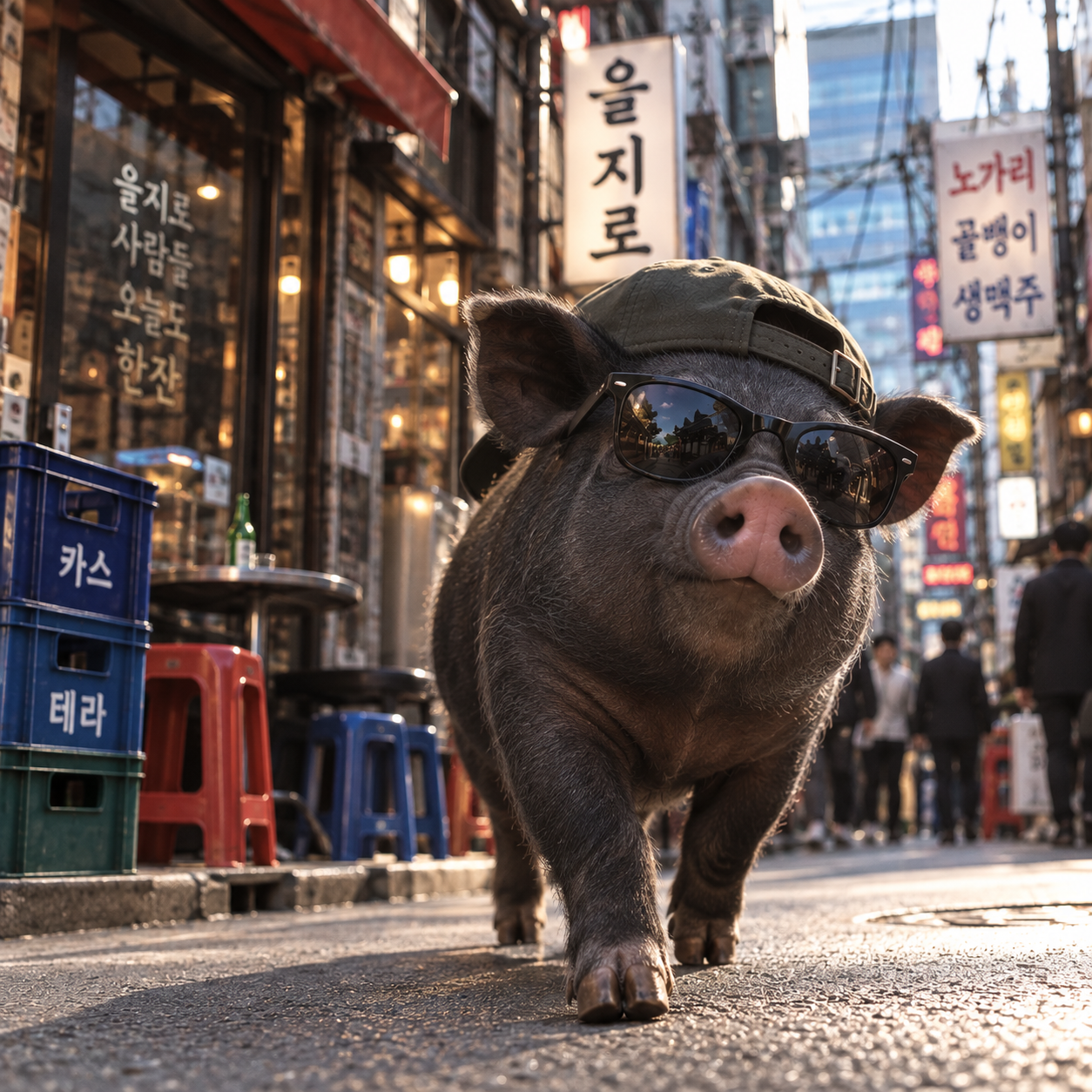
Hi, I’m JO PIGGY. Think of Pig Out Korea as a friend who enjoys reading the reviews almost as much as you enjoy planning the next meal.
We bring together Korean food stories, neighborhood discoveries, and local reviewers’ perspectives for travelers with an appetite for more.
Our archive is built from research and linked sources. We don’t pretend we’ve eaten every meal ourselves. We help you find the places you’d like to try.
Let’s find your next bite ↗Contact
A question, a local tip, or just a hello?
bravora2026@gmail.comYou Ordered Raw Fish. Why Is the Table Full? A Guide to Korean Hoe
The fish is still on its way. The other plates keep coming.
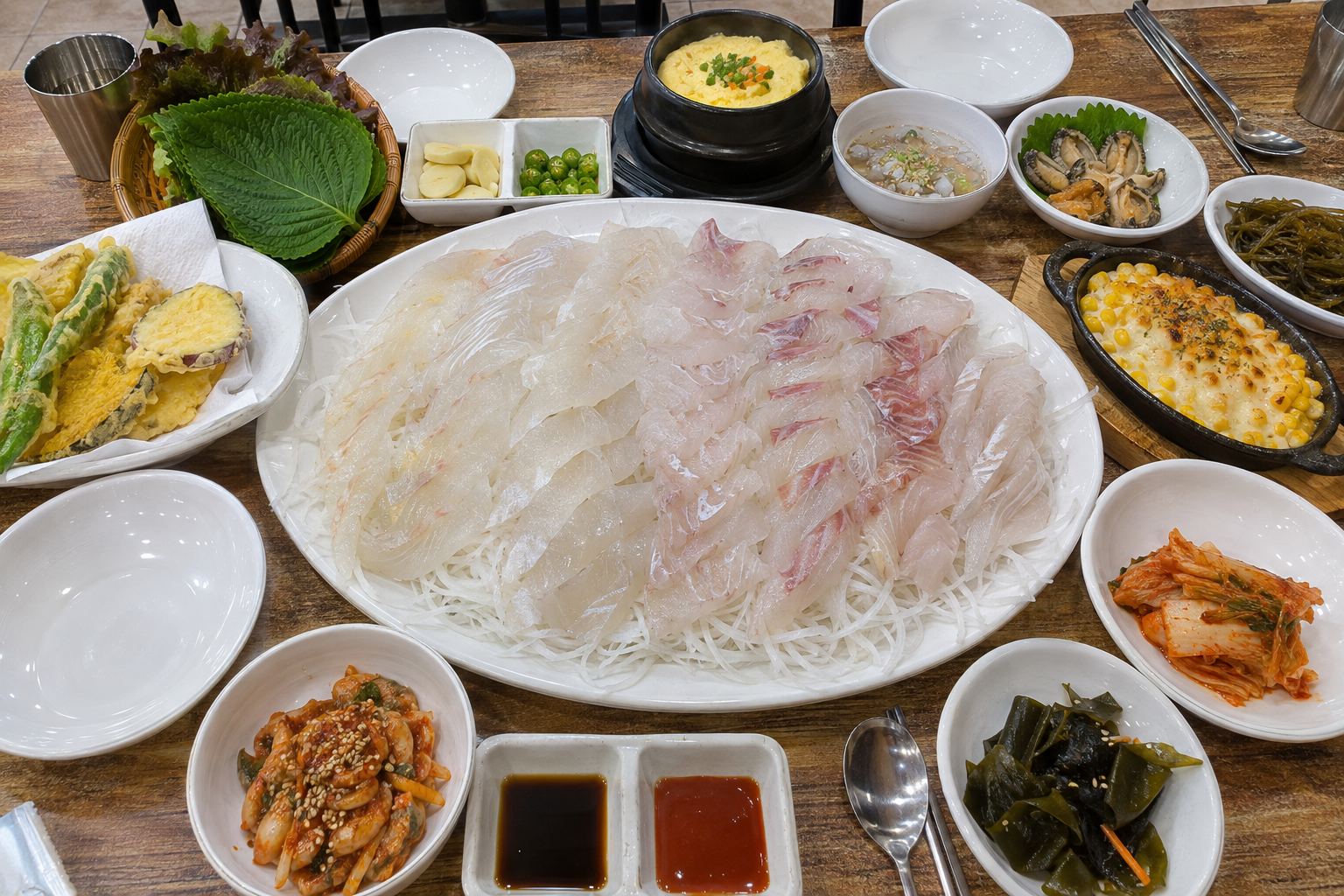
You order raw fish, and the table starts filling with lettuce, perilla leaves, garlic and green chilies. There is soy sauce, but also a bright red dipping sauce. Depending on the restaurant, small seafood dishes and cooked food arrive too. You may need to keep the middle of the table clear for the fish.
If this is your first encounter with hoe (Korean-style sliced raw fish, pronounced roughly “hweh”), the way it is served can be as unfamiliar as the fish itself. Perhaps you pictured eating a few quiet bites, one at a time. Here, a slice can become a leafy wrap, and the meal may end with a steaming pot of soup.
A useful way into this meal is to ask how many different ways you can enjoy the same piece of fish.
You could fill up before the fish arrives: meet seukki-dashi
The assortment of dishes served alongside hoe at Korean raw-fish restaurants is commonly called seukki-dashi (the side dishes that accompany the fish). What arrives varies considerably: corn dishes, fried food, sushi and other small seafood plates may all be part of the spread.
You may hear someone praise a restaurant for its seukki-dashi. They are thinking about the variety and generosity of the accompanying dishes as well as the fish. A warm bite while you wait, followed by something cold and some vegetables, can make the meal feel like a small sequence of courses.
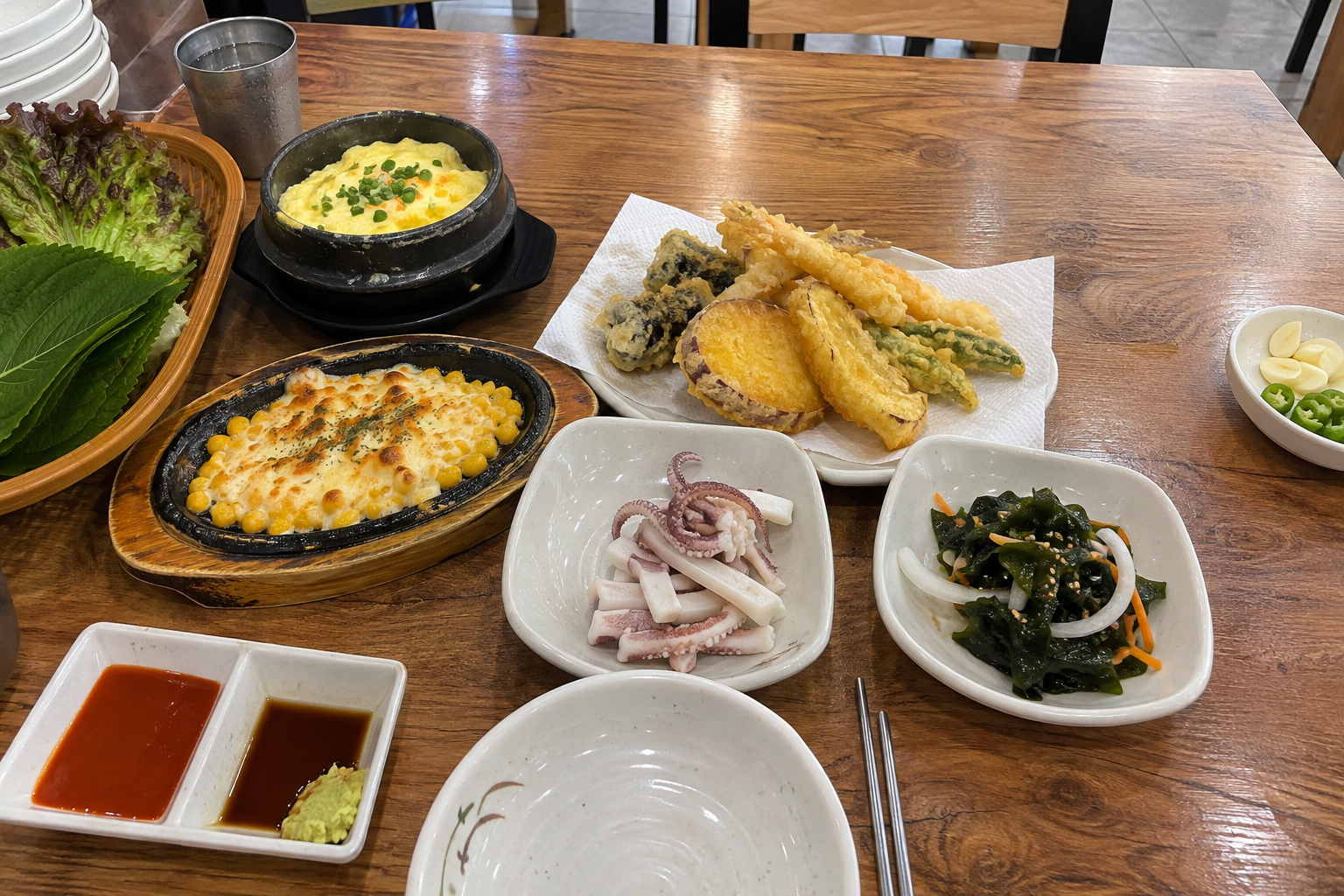
The confusing part for a visitor is often the price. Food arriving without a separate order does not automatically make it a free bonus unrelated to the bill. It may be included in the fish set or table service. Ask what is included, what an extra order costs and whether requesting more of a dish adds a charge.
Whether you prefer a generous spread or fewer accompaniments with more attention on the fish is a matter of taste. The same budget can buy different kinds of meals. A busy table can be enjoyable, but filling up before the fish arrives leaves less room to appreciate it.
After the fish’s name, ask about its texture
Gwang-eo (olive flounder) and ureok (Korean rockfish) are familiar choices at Korean hoe restaurants, but the cut, thickness and preparation all affect how they feel when you bite. Think about whether you enjoy a firm, springy texture or something softer.
Hwal-eo-hoe (raw fish prepared from a fish kept alive until shortly before serving) is one style you may encounter. Some restaurants also serve fish that has been rested or aged after preparation. Neither approach is automatically better: the fish and the texture the restaurant wants to achieve both matter.
If you see sekkoshi, also called ppyeo-jjae-hoe (fish sliced with its small bones), ask a little more before ordering. It can be quite different from the soft, boneless fish you might have imagined. Knowing what you will be chewing is more useful than simply recognising the name.
One piece plain, the next with a little seasoning
You do not need to choose one way of eating hoe for the entire meal. Take two or three pieces from the same part of the fish and try them differently.
For the first, pay attention to the fish’s texture. With the next, try a little ganjang (soy sauce) or gochunaengi (wasabi). Cho-jang (a sweet, tangy chili dipping sauce) combines gochujang with vinegar and sweetness, giving the bite a brighter, sharper flavour. With any sauce, adding more can push the fish itself into the background.
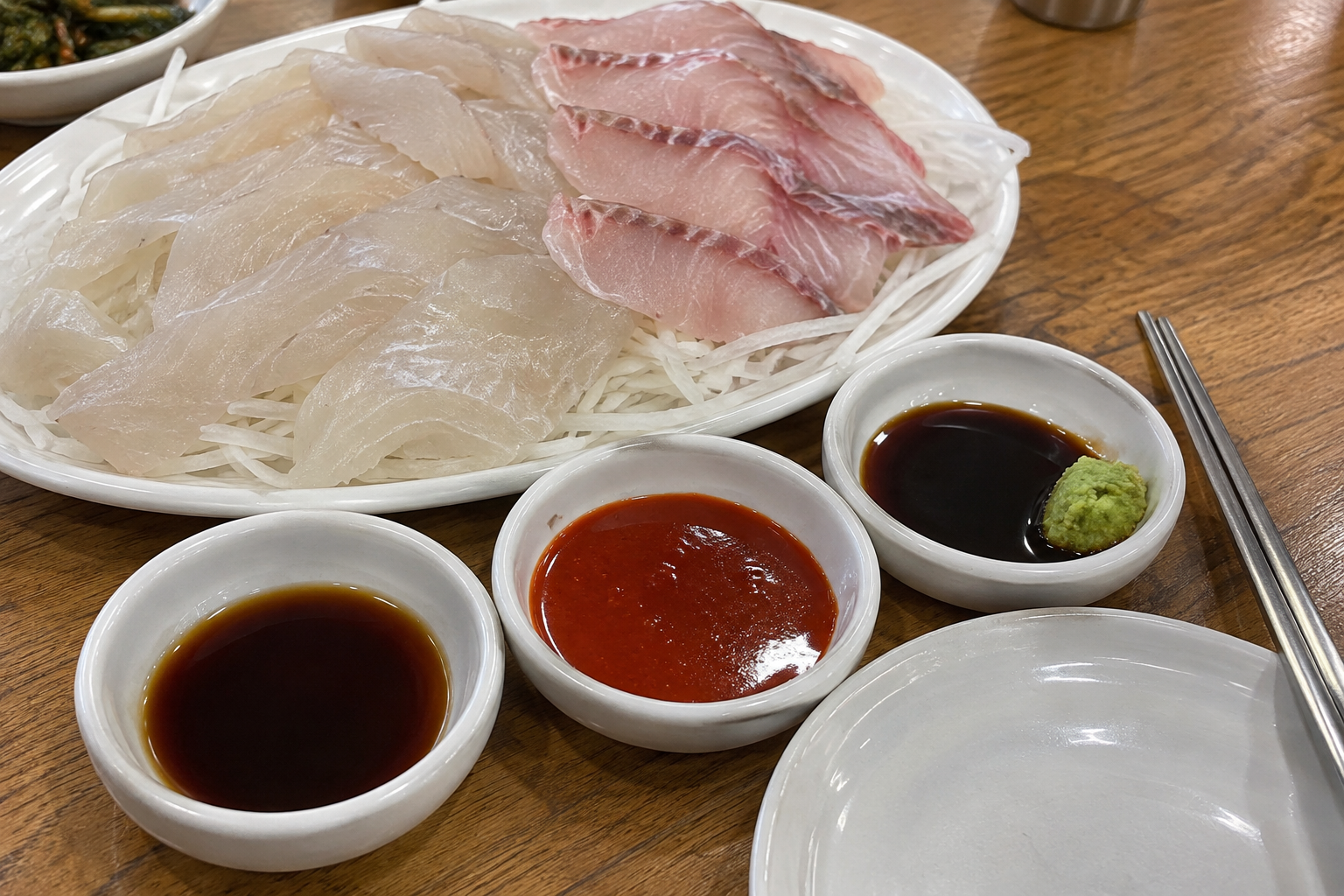
Dipping fish in cho-jang does not mean you know less about it, and eating it plain does not automatically make you an expert. Enjoy moving between a lightly flavoured bite and a more strongly seasoned one. Add sauce to your own piece rather than pouring it over the shared platter, so everyone keeps that choice.
Leafy wraps are not just for grilled meat
At a Korean hoe table, lettuce and perilla leaves are there to eat. Put some fish inside and add a little garlic, chili or a ssamjang-style sauce. The Korea Tourism Organization also describes eating hoe with leafy vegetables.
Start with a small ssam (a bite wrapped in a leaf). One leaf, one or two pieces of fish and a little of the seasoning you want are enough. If you add everything at once, the aroma of perilla, the sharpness of raw garlic and the heat of chili can arrive together, making it harder to notice which part you enjoy.
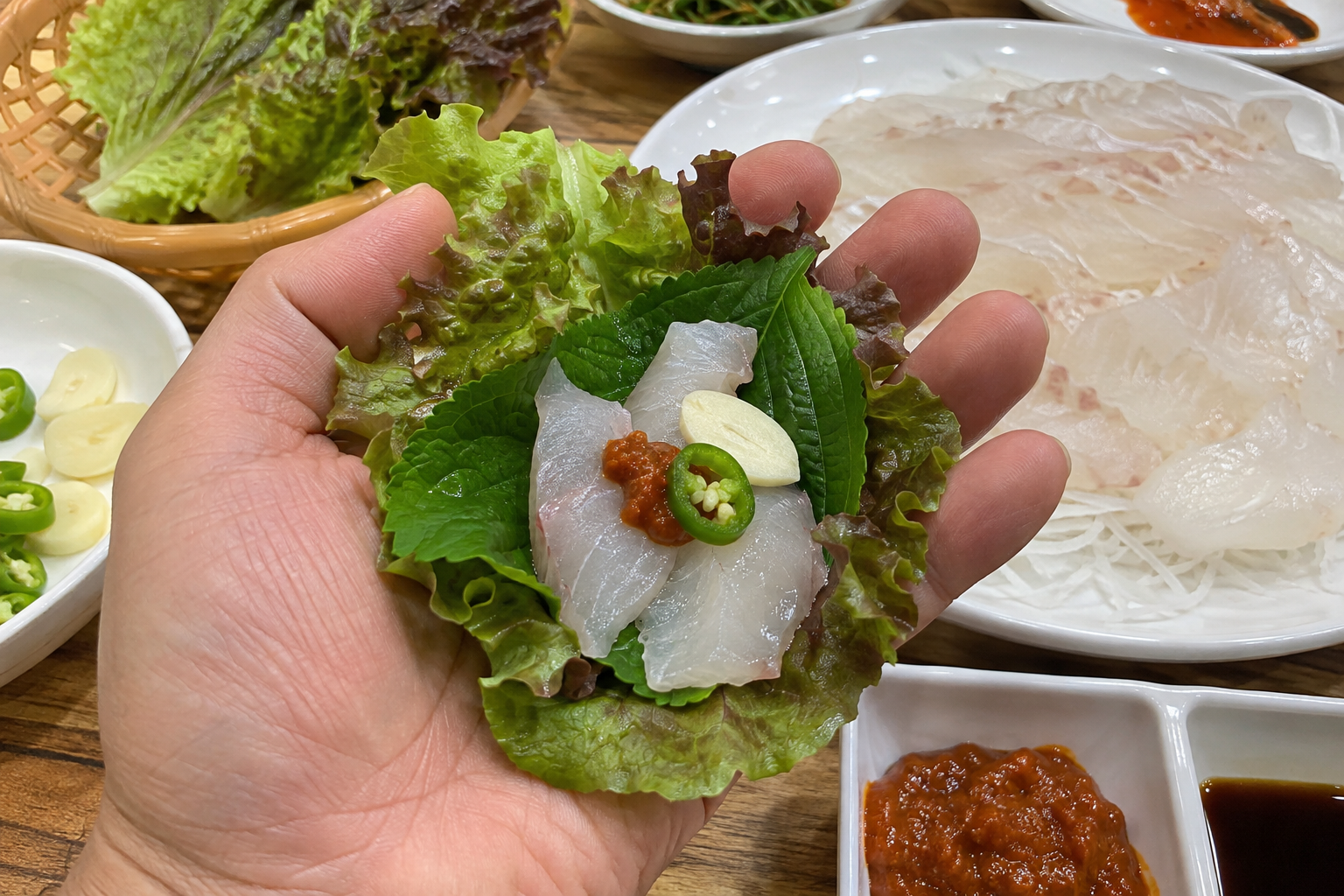
If kkaennip (perilla leaf) is new to you, compare it with a lettuce wrap. The same fish can taste quite different inside the more aromatic leaf. Making ssam is another way to combine flavour and texture.
More plates do not necessarily mean better value
When comparing prices, consider the number of dishes and the amount of fish separately. Similar prices can cover different fish, portions, accompaniments and meal dishes. Even the same menu description—such as a medium assorted-fish platter—does not promise the same quantity or selection.
If you are choosing fish at a seafood market, ask whether preparation or table-service charges are added to the fish price. The way the bill works depends on the business. A simple “What exactly is included in this price?” before ordering can make the rest of the meal easier to enjoy.
Order rice, and you may discover why there is room for maeuntang
Some hoe restaurants offer maeuntang (spicy fish stew) made with fish heads, bones and other pieces after the raw fish. The change from cool, firm slices to hot broth is one of the pleasures of the meal. Radish, vegetables and a bowl of rice bring a different pace to the table.
Chopsticks give way to spoons. Individual rice bowls appear beside the dishes everyone has been sharing. What looked like a few bites of fish becomes a full meal.
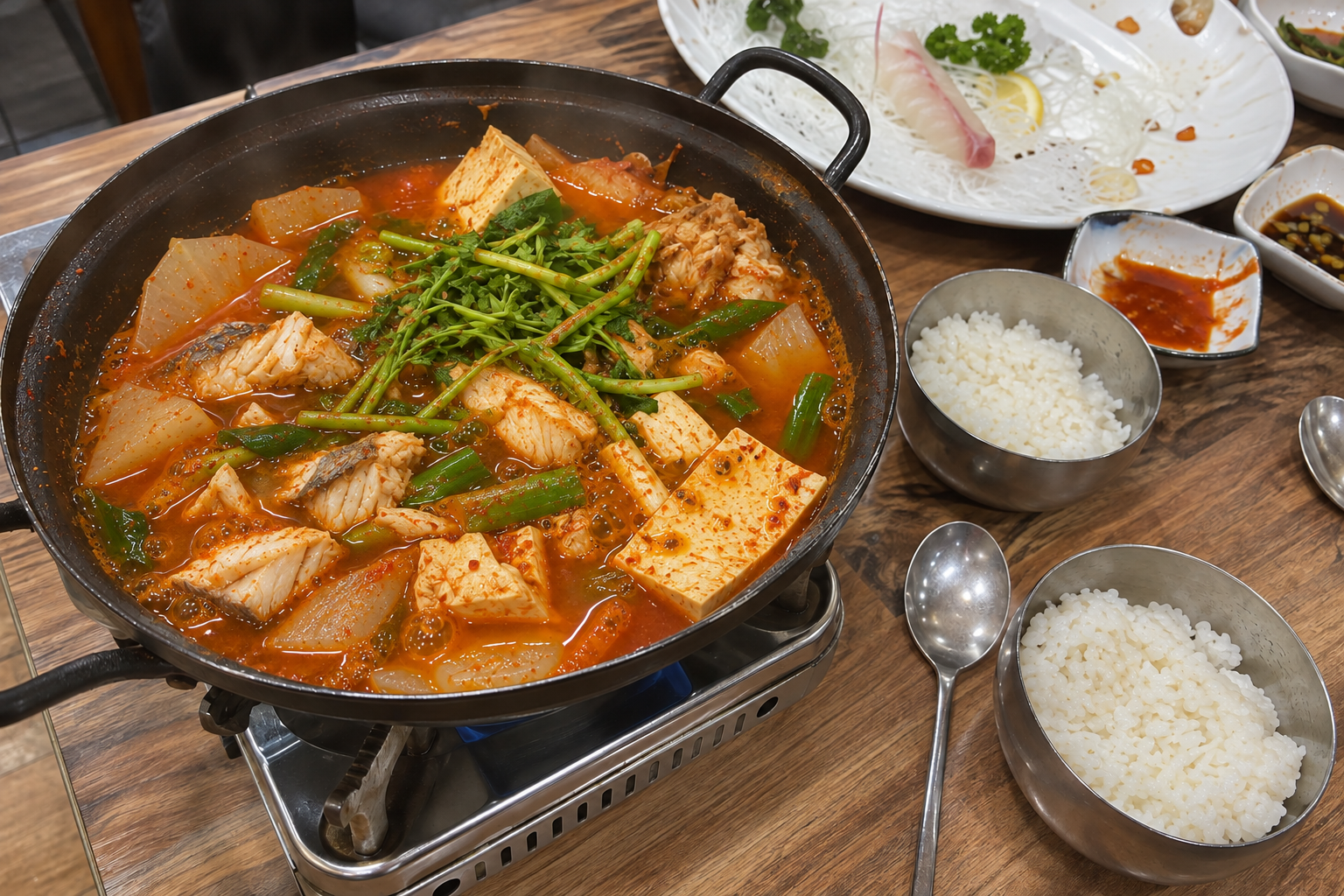
Maeuntang is not always included at no extra cost. Check whether you need to order it separately, whether a non-spicy soup is available and whether rice costs extra. It is an option, rather than a compulsory final course.
What you might remember about a Korean hoe meal
You do not need to memorise every fish name. After the trip, “We wrapped the fish in lettuce and finished with maeuntang” may stay with you more clearly than the name of the fish you ordered.
Next time, try the same fish cut a different thickness, or put a familiar piece inside a different leaf. A Korean hoe meal becomes more interesting when you explore both the fish in the middle and the ways of eating everything around it.
Comments 0