
CATEGORY
THE ARCHIVE
Still on the menu.
We haven’t added a story for that craving yet.
Try another place or dish.
A NOTE FROM JO PIGGY
A little curiosity.
A very big appetite.

Hi, I’m JO PIGGY. Think of Pig Out Korea as a friend who enjoys reading the reviews almost as much as you enjoy planning the next meal.
We bring together Korean food stories, neighborhood discoveries, and local reviewers’ perspectives for travelers with an appetite for more.
Our archive is built from research and linked sources. We don’t pretend we’ve eaten every meal ourselves. We help you find the places you’d like to try.
Let’s find your next bite ↗Contact
A question, a local tip, or just a hello?
bravora2026@gmail.comYour Gukbap Has Arrived. What Are All These Condiments For?
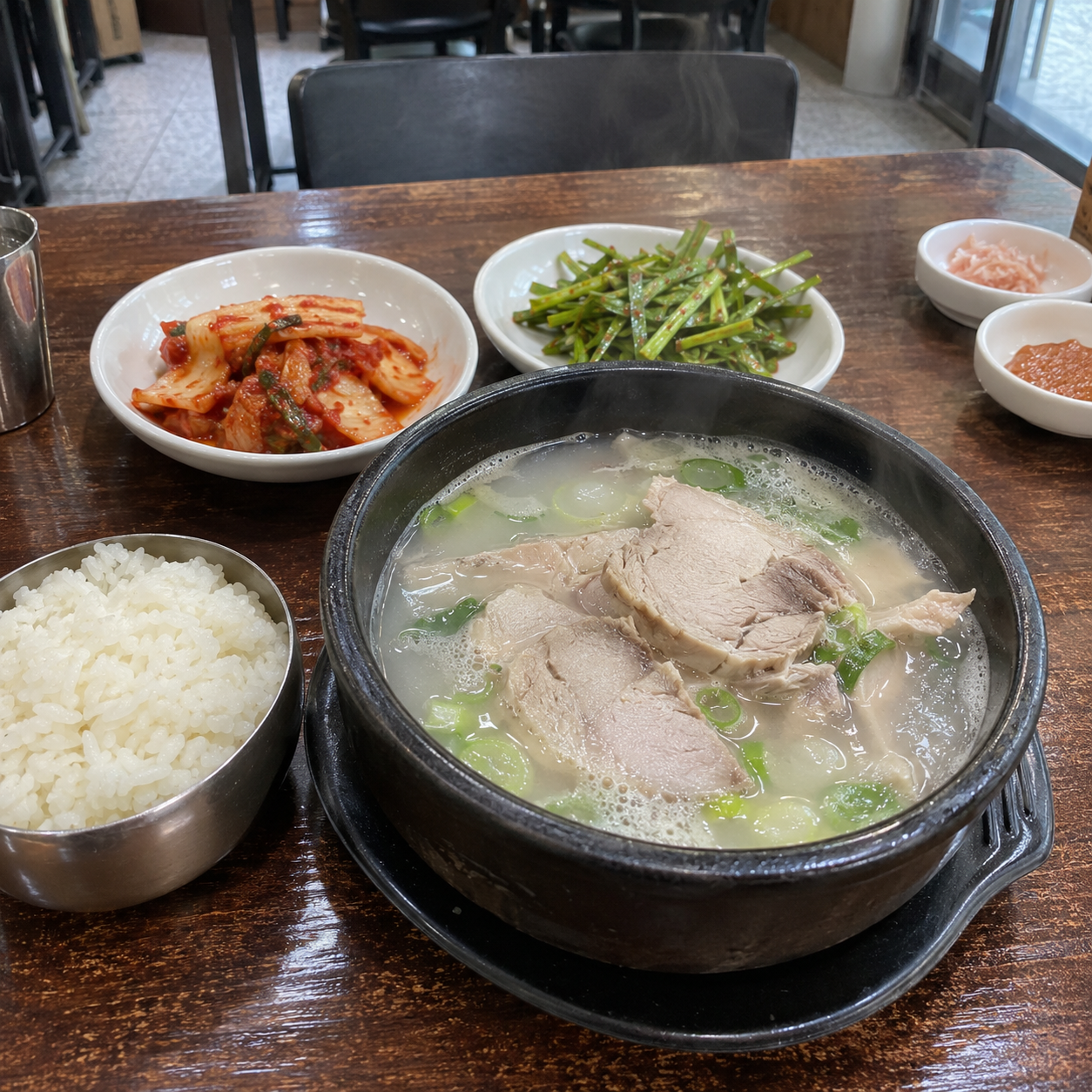
You ordered a bowl of soup. The final decisions are yours.
Steam rises from an earthenware bowl. Rice and kimchi sit beside it. So far, so straightforward.
Then you notice the little containers on the table: something that looks like salt, tiny shrimp, a red paste and a brownish powder.
Are you meant to add all of them? Which comes first?
A first bowl of dwaeji-gukbap, pork soup with rice, or sundae-guk, soup with Korean blood sausage, can feel like a small test before you have even picked up a spoon.
Start by tasting the broth, not by opening every container. You may already like it exactly as it is.
The starting broth and the condiments vary
Think of gukbap as a meal built around soup and rice. The rice may already be in the soup or arrive separately. Pork, blood sausage, beef or bean sprouts can give different bowls very different characters.
This guide focuses on seasonings you may encounter with pork gukbap and sundae-guk. The same collection does not appear at every soup restaurant.
Some broths arrive fully seasoned. Others leave room for you to adjust the saltiness. Some restaurants already add red seasoning before serving.
Instead of copying the number of spoonfuls someone at the next table uses, find out where your own bowl is starting. Let a spoonful cool a little before tasting the hot broth.
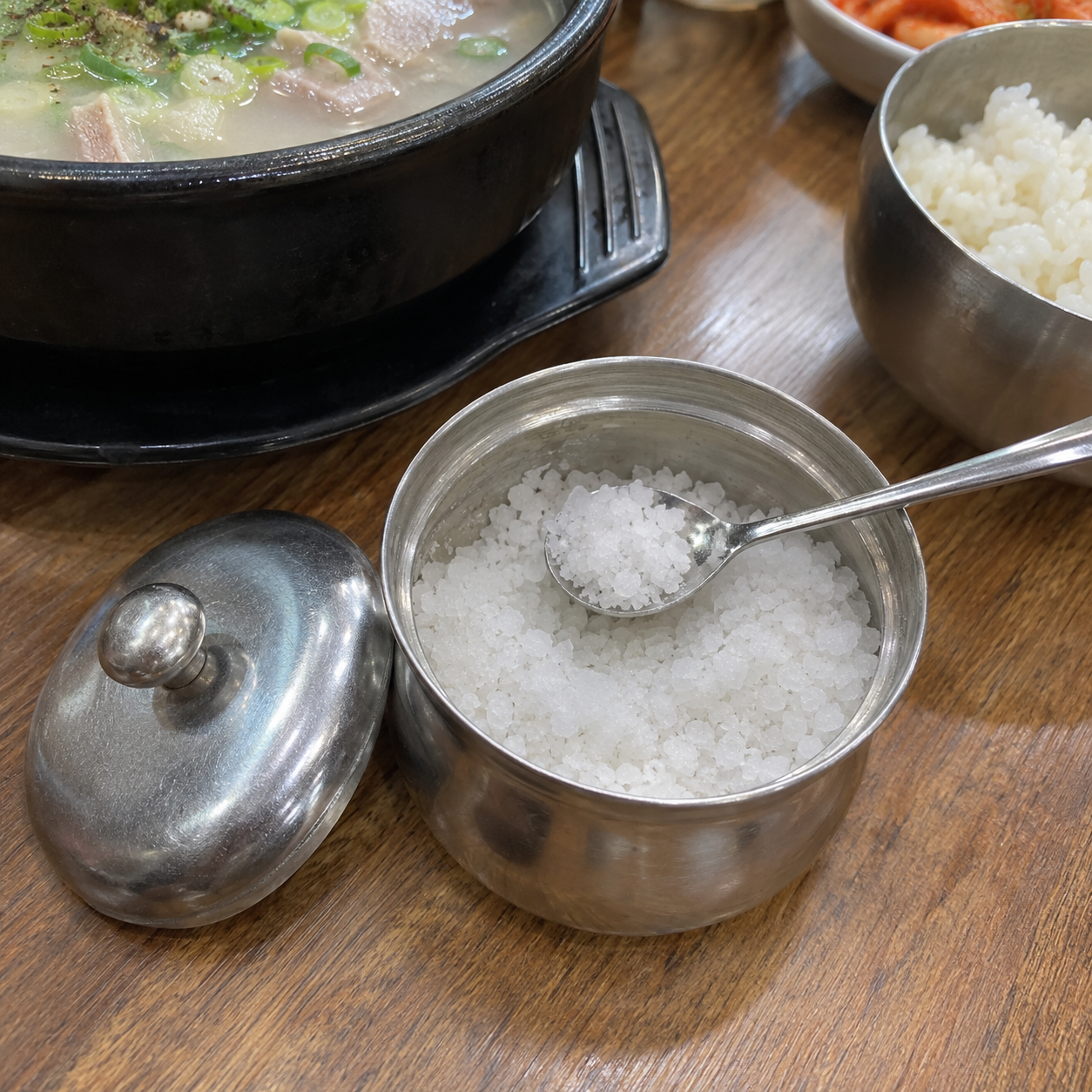
Saeujeot: tiny shrimp, plenty of salt
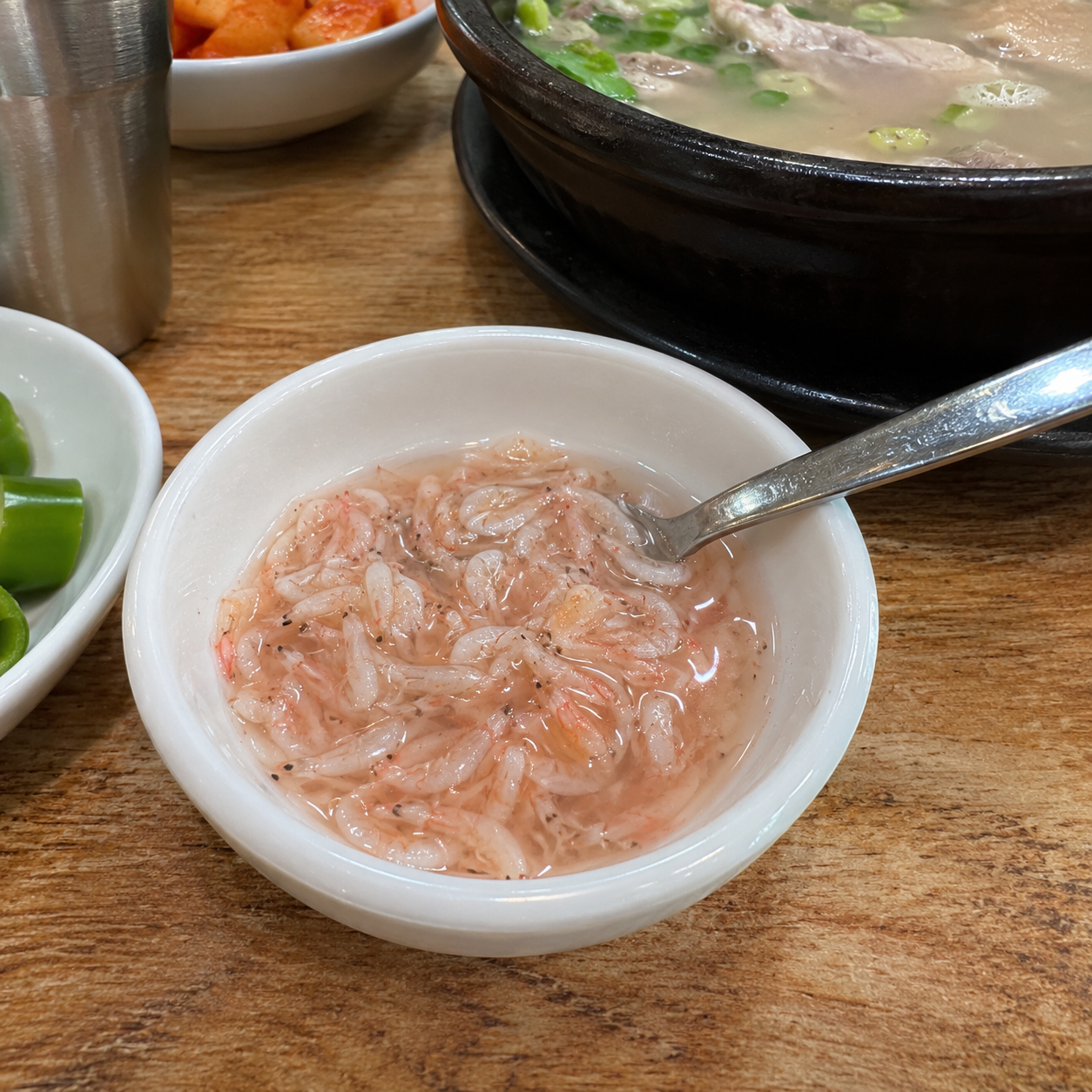
Saeujeot is salted, fermented shrimp. At pork soup restaurants, you may find it alongside salt or use it as another way to season the broth.
The shrimp are small; the saltiness is not. If the soup needs more seasoning, add a little with the spoon provided, stir and taste again. There is no need to begin with a heaped spoonful.
Adding saeujeot and salt at the same time makes it harder to judge what changed the broth. Choose one, taste, then decide what to do next.
Because this condiment contains shrimp, ask about alternatives such as salt if shrimp is an ingredient you do not eat. If you cannot identify a container, check with the staff.
Dadaegi: changing the heat and flavour
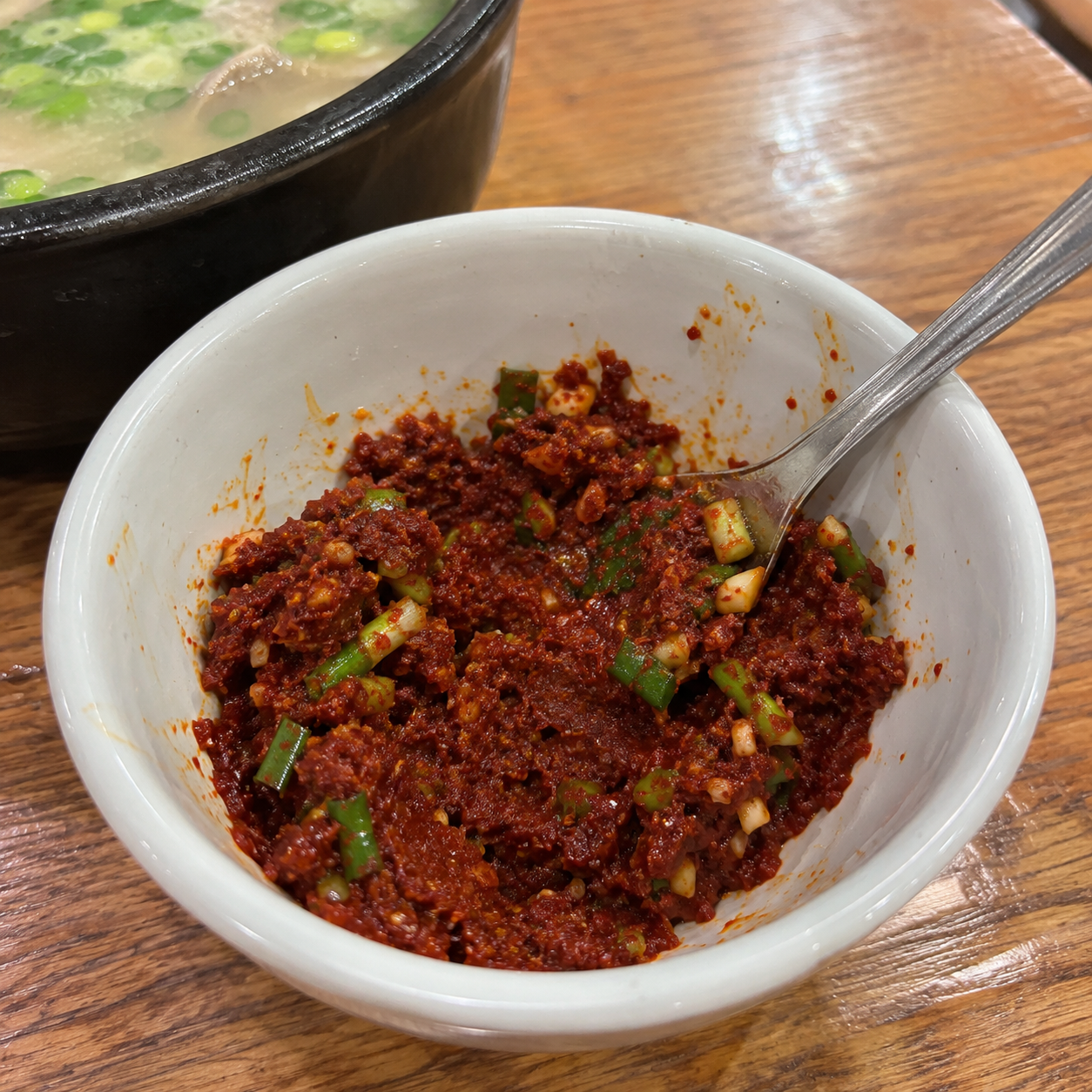
Dadaegi usually refers to a seasoning mixture made with ingredients such as red chilli powder and garlic. In soup, it adds redness, heat and the aroma of the seasonings. Its recipe and saltiness vary by restaurant.
If the broth seems plain, a generous scoop of red paste may change it more than you intended. Separate two questions: “Does this need more salt?” and “Do I want it spicy?”
Salt or saeujeot may help with the first question. Red seasoning changes other parts of the flavour too.
For a first try, mix a tiny amount into a spoonful of broth you have set aside. Learn what it tastes like before changing the entire bowl.
You can also ask when ordering whether the dadaegi can be left out or served separately. If you are unsure how the dish comes, ask whether the seasoning is already added in the kitchen.
Deulkkae-garu: a nutty aroma rather than extra salt
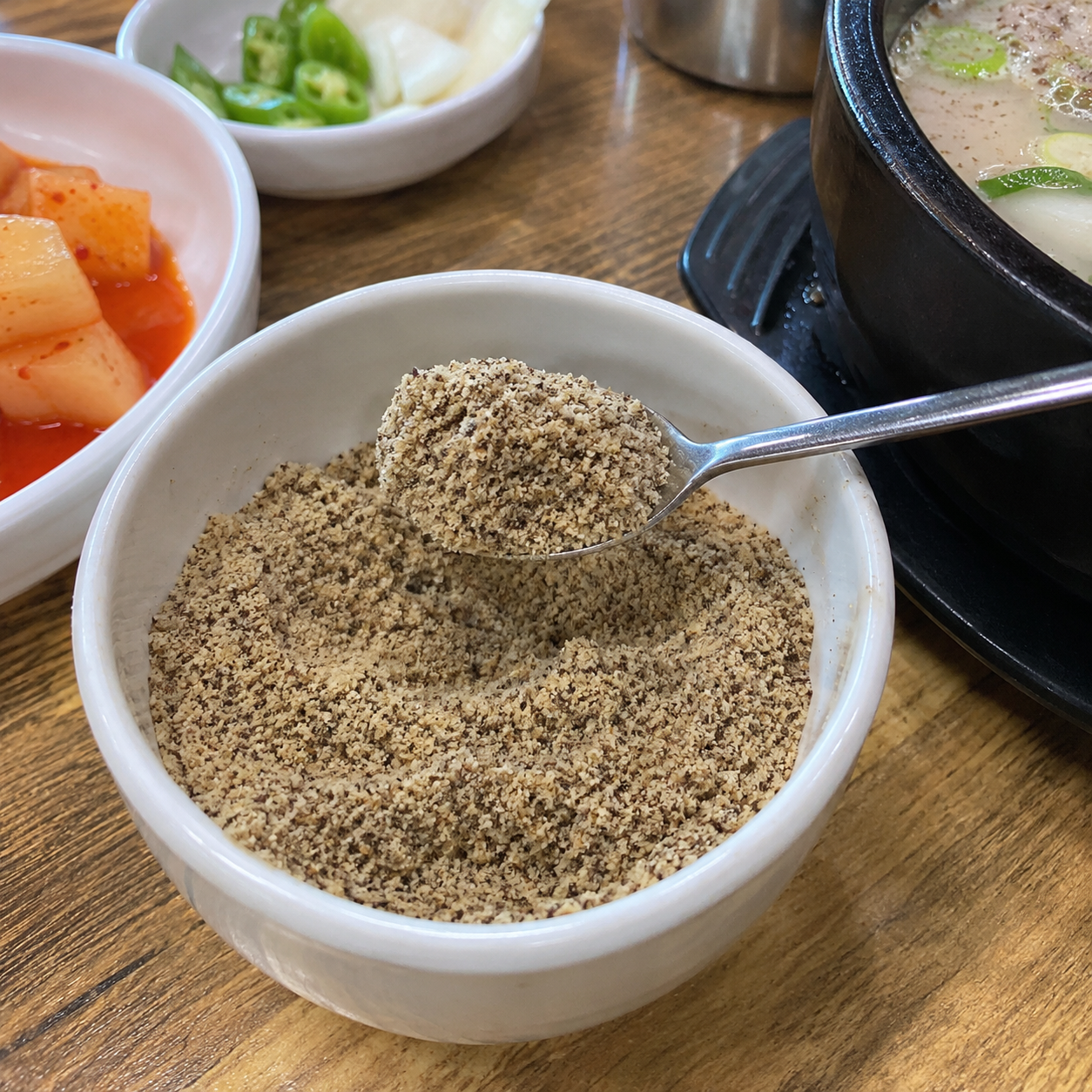
Deulkkae-garu is ground perilla seed. You may see it at sundae-guk restaurants, where it adds an earthy, nutty flavour. The amount you use can change the broth's texture as well.
Try a little first. If you enjoy the aroma, add more. Covering the surface straight away makes it harder to compare the result with the original broth.
Do not assume every brown powder is perilla seed powder, either. If the container has no label, ask whether it is deulkkae-garu. That is useful on a first visit when different powders and seasonings may look unfamiliar.
You do not have to add it to eat gukbap properly. The same goes for saeujeot and dadaegi. If you enjoy the broth already, leave it as it is.
Try the broth before and after adding rice
If the rice comes separately, taste the soup first, then dip in a spoonful of rice. Alternate between meat, rice and kimchi, or mix some rice into the bowl when you feel like it. There is no rule that all of it must go in at the beginning.
Kimchi or kkakdugi, cubed radish kimchi, can change how the same soup tastes from bite to bite. Before adding more seasoning, try the broth alongside the side dishes and see whether the balance already suits you.
If chives are provided, look at whether they are already seasoned. Both the chives and their coating can affect the soup. Taste things one at a time rather than putting every accompaniment into the bowl at once.
The order to remember for your first gukbap is simple: taste the broth, add one seasoning only if you want it, stir, then take another spoonful.
You do not have to use every container to finish the meal. A bowl that tastes right to you is enough.
Comments 0