
CATEGORY
THE ARCHIVE
Still on the menu.
We haven’t added a story for that craving yet.
Try another place or dish.
A NOTE FROM JO PIGGY
A little curiosity.
A very big appetite.

Hi, I’m JO PIGGY. Think of Pig Out Korea as a friend who enjoys reading the reviews almost as much as you enjoy planning the next meal.
We bring together Korean food stories, neighborhood discoveries, and local reviewers’ perspectives for travelers with an appetite for more.
Our archive is built from research and linked sources. We don’t pretend we’ve eaten every meal ourselves. We help you find the places you’d like to try.
Let’s find your next bite ↗Contact
A question, a local tip, or just a hello?
bravora2026@gmail.comWhy Is My Meat Still Raw? Your First Korean BBQ Meal, Explained
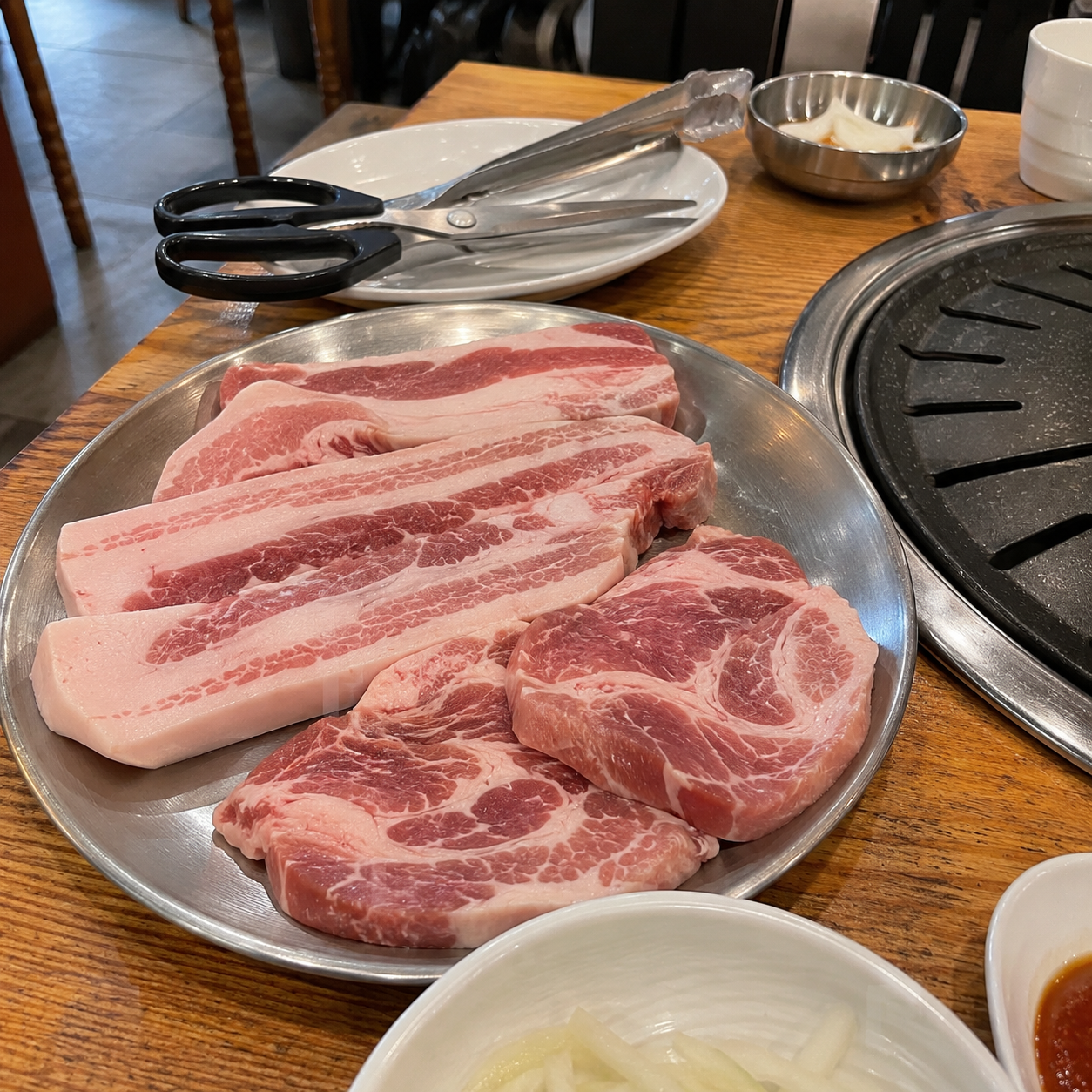
You came for dinner and were handed a pair of tongs
There is a grill in the middle of the table. A member of staff sets down a plate of meat. It is still raw. Beside it are scissors, tongs, lettuce and dipping sauces.
“Was I supposed to cook this?”
At Korean barbecue restaurants, meat is often grilled at the table. If you are used to receiving a finished plate, it can feel as though dinner has come with a small cooking assignment.
You do not need to memorise grilling videos before walking through the door. First, find out just one thing: who does the cooking at this restaurant?
Sometimes you grill. Sometimes the staff do.
At some restaurants, customers take the tongs. At others, staff handle the grilling and cutting. There are also places where someone gets things started and then leaves you to watch the grill.
A plate of raw meat is not necessarily your signal to take over.
“고기는 직접 굽는 건가요?” — “Do we grill the meat ourselves?”
If a member of staff is cooking, let them guide the process. Watch for their cue about which pieces are ready. If you are unsure, ask whether you can eat a particular piece yet.
If you will be grilling, say it is your first visit and ask for help with the heat and the order of cooking. Grill surfaces, meat thickness and marinades vary, so one cooking time will not suit every plate. If you are unsure whether something is cooked through, check with the staff.
Keep utensils used for handling raw meat separate from those you eat with. Ask for extra tongs or scissors if needed. A first-time table asking for an explanation is nothing unusual.
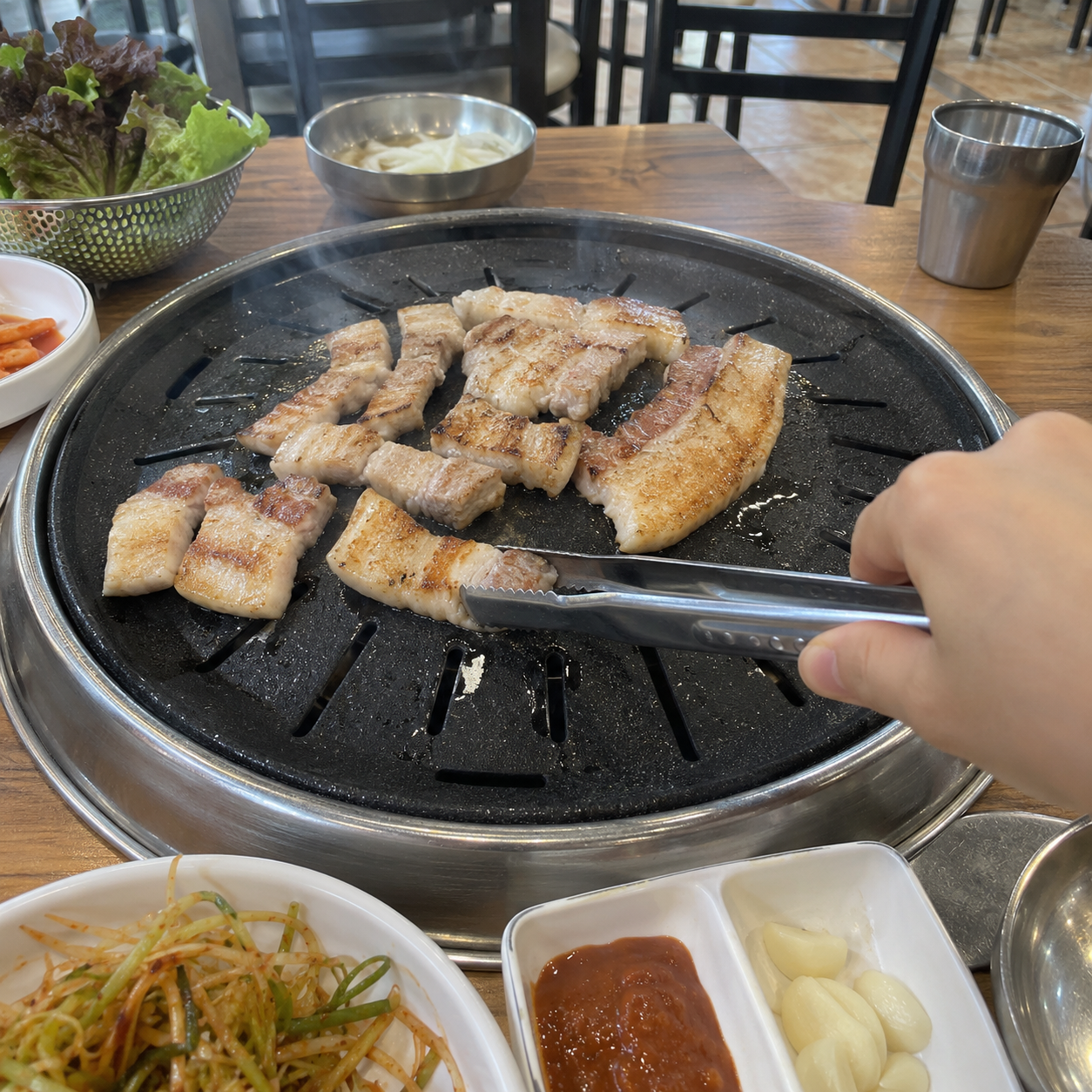
JO PIGGY’s samgyeopsal grilling tips
Grilling the meat yourself? This is JO PIGGY’s approach for thick pork belly on a tabletop burner you can switch off and relight.
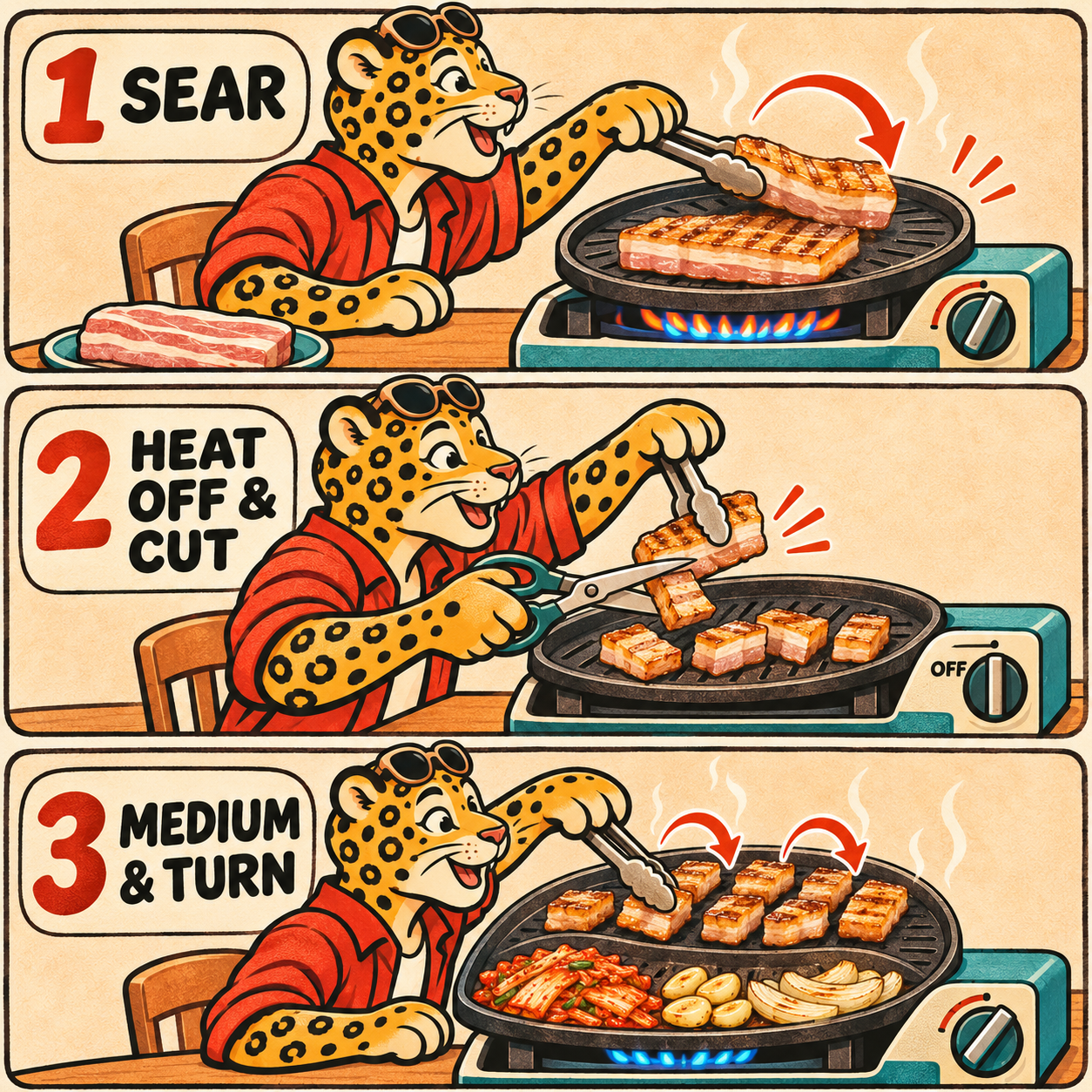
1. Sear both sides over high heat
Let the grill heat up, then add the pork belly. Use high heat at first to develop a golden-brown surface. When the first broad side has browned, flip the strip once and give the other side a similar sear.
2. Turn off the heat, then cut
Once both sides have colour, switch off the burner. Hold the meat with tongs and use kitchen scissors to cut it into bite-size chunks.
Avoid cutting the pieces too small: they can dry out quickly as they continue cooking. Keep them large enough to retain a satisfying, juicy bite.
Meat left against the grill can scorch while you concentrate on cutting. Turning the burner off gives you a little more time to work. The hotplate itself will still be hot.
3. Finish over medium heat, turning often
Relight the burner at medium heat. Turn the pieces frequently so they cook evenly, including on their cut faces.
Cooking time varies with the thickness of the meat and the grill. Cook the pork through. If you can check with a food thermometer, Korea’s Ministry of Food and Drug Safety recommends heating meat to a core temperature of at least 75°C (167°F) for at least one minute. MFDS food-safety guidance
Try kimchi, garlic and onion on the grill, too
If the restaurant allows these accompaniments on its grill, try cooking a little kimchi, garlic or onion alongside the pork.
On a sloping hotplate, put the side dishes below the meat, in the direction the oil drains. Separate the areas so the kimchi seasoning does not run over the pork. On a flat grill, simply leave some space between the meat and the seasoned side dishes.
Read the numbers beside the names
Samgyeopsal is pork belly, with layers of fat and meat. Moksal is pork neck or collar. Comparing their textures and richness can be part of the fun, even though both are pork.
Look at the weight and price listed beside 1인분, meaning one portion. That label does not represent the same weight at every restaurant. Some places also require a minimum initial order, such as two portions or a certain quantity of the same cut.
Two diners do not always have to choose identical orders, but check whether you can mix cuts.
“Can we have one portion of samgyeopsal and one of moksal?”
If you are eating alone, check whether solo diners can order before settling in. The minimum for the first order may also differ from the minimum when adding more meat later.
Reading the small print before ordering makes the bill less surprising.
Keep the first bite simple. Then make a ssam.
Once the meat is cooked, try a piece with just a little salt or one of the sauces provided. Taste the meat before piling on every accompaniment.
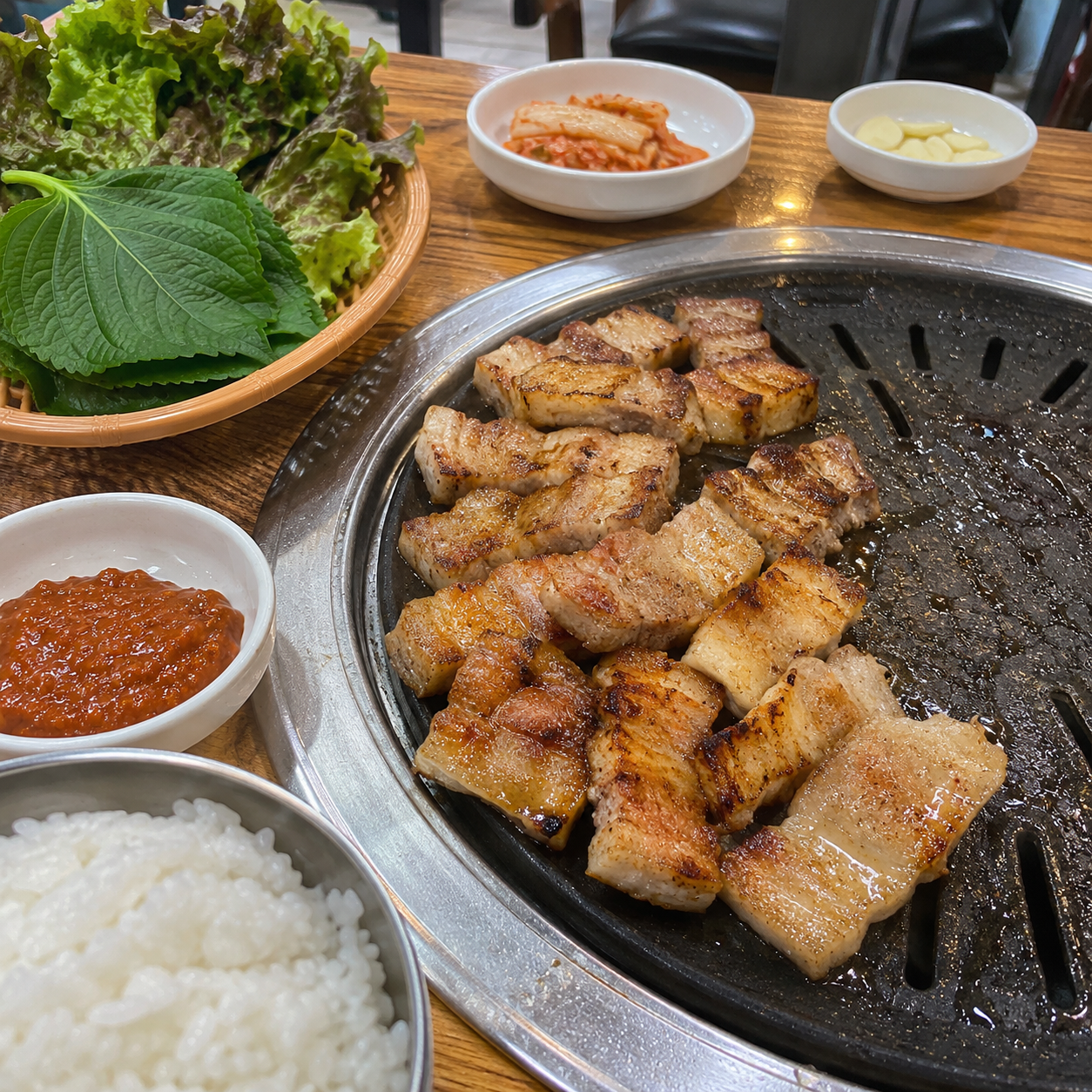
Next, put a piece on a lettuce or perilla leaf. Add a little ssamjang, a savoury dipping paste, then perhaps some scallion salad or garlic. Wrapping ingredients in a leaf like this is called ssam.
Start with a small wrap you can comfortably eat in one bite. Trying to fit every side dish onto one lettuce leaf creates more work for your hands than your mouth. One piece of meat, a little ssamjang and one accompaniment make it easier to compare combinations.
Raw garlic, chillies and the aroma of perilla leaves may taste strong at first. None is compulsory. Begin with the ingredients you want to try.
Not everything beside the grill belongs on it
Some restaurants encourage you to grill kimchi or garlic. That does not mean everything within reach should go onto the hot surface.
Certain ingredients or seasonings may burn or stick, and the restaurant may have its own way of arranging the grill. Before copying another table, ask whether an accompaniment can be cooked there too. If a member of staff is handling the grilling, let them lead.
For extra lettuce or side dishes, follow the restaurant's refill system: there may be a self-service corner, or you may need to ask.
The scissors can seem unfamiliar, but they are there to cut the meat into manageable pieces. If you need to use them and feel awkward, ask for help cutting the meat smaller.
Leave a little room for rice or cold noodles
You can finish after the meat, but rice, doenjang-jjigae—soybean paste stew—or naengmyeon, cold noodles, may be tempting too. Check the menu to see what is included and what needs to be ordered separately.
Rather than ordering every accompaniment as soon as the meat arrives, you can see how hungry you are partway through. One more plate of meat might leave no room for the noodles you had your eye on.
Korean barbecue involves more than receiving and emptying a plate. Waiting for a piece to cook, changing the dipping sauce and choosing the ingredients for your next wrap are part of the meal.
For a first visit, find out who is grilling. Then start with one cooked piece and one small ssam.
Comments 0