
CATEGORY
THE ARCHIVE
Still on the menu.
We haven’t added a story for that craving yet.
Try another place or dish.
A NOTE FROM JO PIGGY
A little curiosity.
A very big appetite.
Hi, I’m JO PIGGY. Think of Pig Out Korea as a friend who enjoys reading the reviews almost as much as you enjoy planning the next meal.
We bring together Korean food stories, neighborhood discoveries, and local reviewers’ perspectives for travelers with an appetite for more.
Our archive is built from research and linked sources. We don’t pretend we’ve eaten every meal ourselves. We help you find the places you’d like to try.
Let’s find your next bite ↗Contact
A question, a local tip, or just a hello?
bravora2026@gmail.comYou’re Full—So Why Order Rice? Korea’s Final Fried-Rice Course
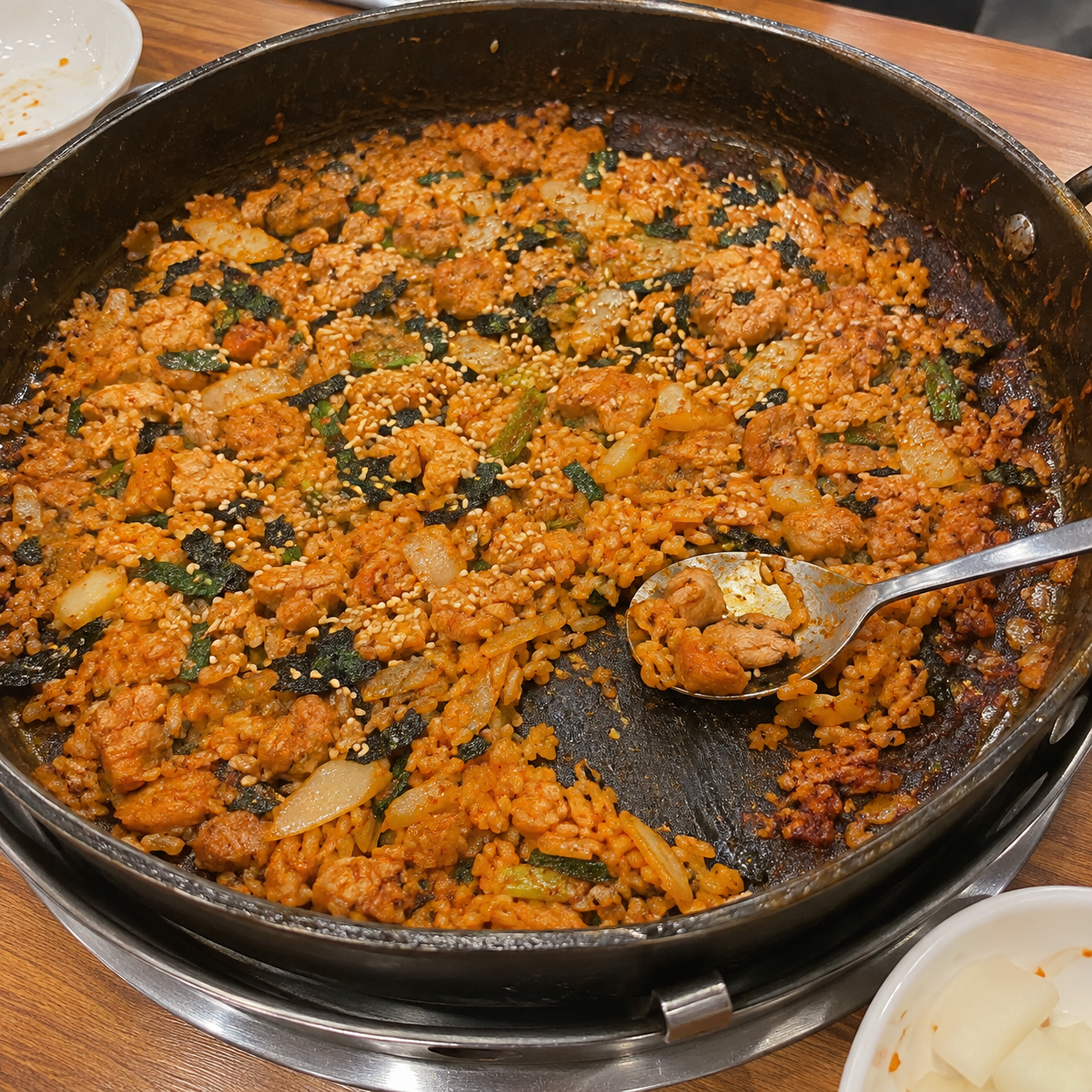
The meal seems over. Then someone orders rice.
You put down your chopsticks after dakgalbi, and someone asks:
“How many fried rice portions?”
The people who just said they were full look up. A little chicken and cabbage remain in the pan, with seasoning around the edges. Somehow, the meal is starting again.
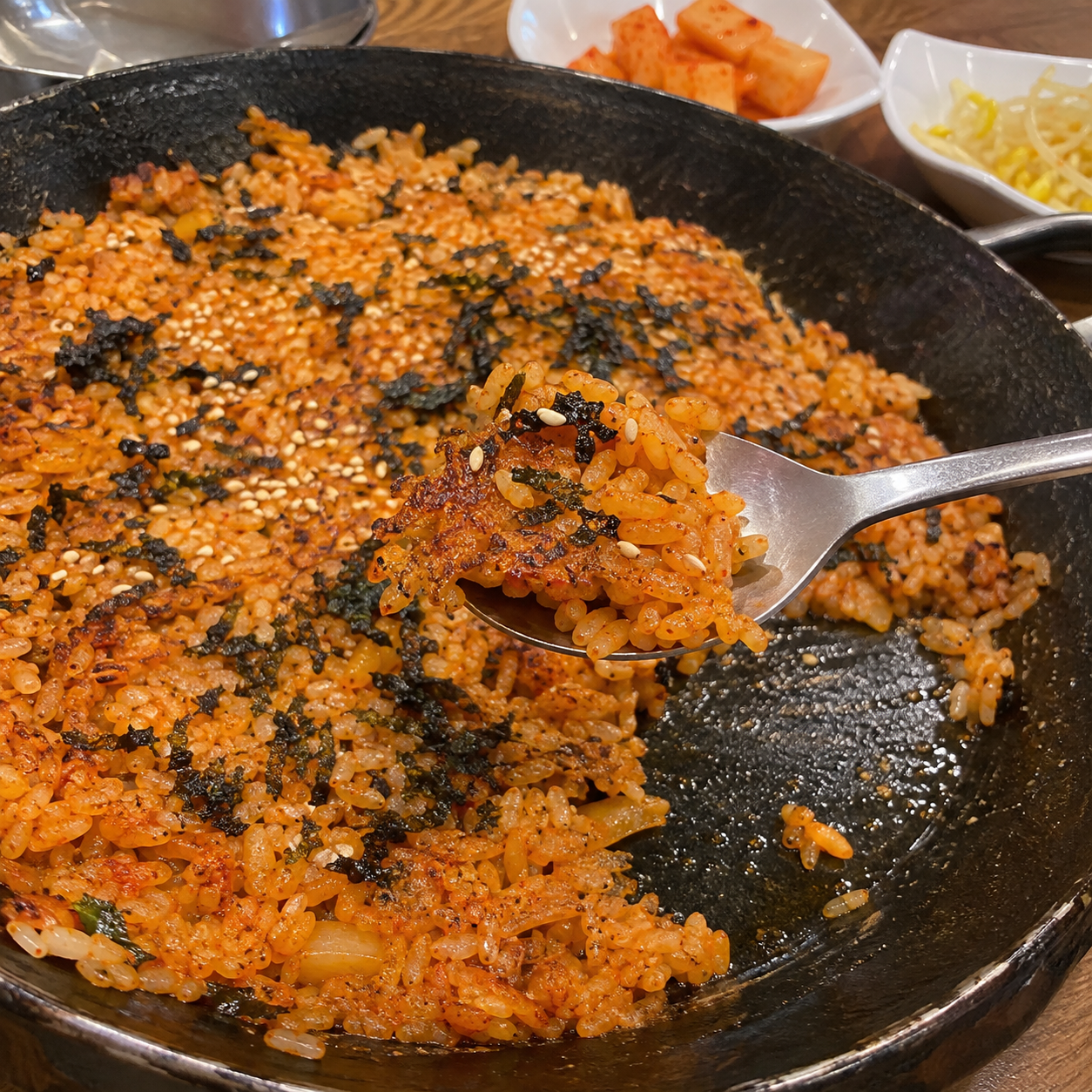
After dishes such as tabletop-cooked tteokbokki, iron-pan dakgalbi, gopchang or certain hot pots, diners may finish with bokkeumbap, fried rice. If it appears as an extra on the menu, think about that final course when placing your first order.
Discovering it after adding several portions of noodles and rice cakes can require some serious appetite calculations.
Familiar seasoning, a different way to eat it
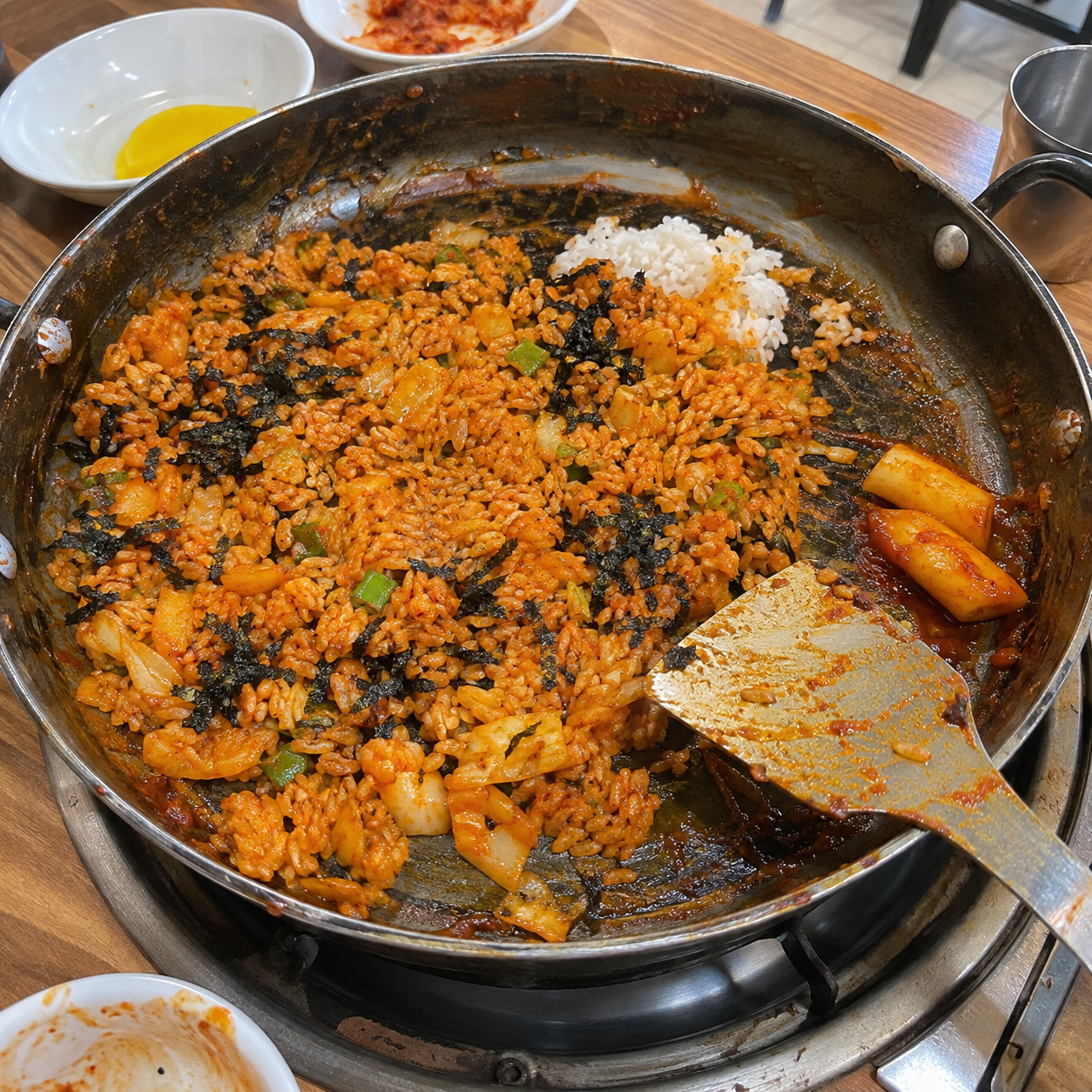
Finishing fried rice uses seasoning or broth from the earlier dish to make another course. Rice may be mixed with seaweed flakes, vegetables, sesame oil, kimchi or cheese. The ingredients vary by restaurant.
Flavours you were tasting as broth or sauce now cling to the rice. Small ingredients mix through each spoonful. When rice is spread across a hot pan, lightly browned patches can add another texture.
Your stomach has not suddenly emptied, but another piece of meat and a spoonful of fried rice can appeal differently. Ordering one fewer noodle extra to leave room for the rice is a reasonable trade.
Which dishes can lead to fried rice?
| Earlier dish | What the final course can bring |
|---|---|
| Tabletop-cooked tteokbokki | Rice and seaweed mixed into remaining seasoning, continuing its sweet-spicy flavour in another form. |
| Iron-pan dakgalbi | Rice fried in the pan after the chicken and vegetables, sometimes incorporating small remaining pieces. |
| Gopchang dishes | Where offered, rice finished with the remaining seasoning, kimchi or other ingredients. Fat and seasoning levels vary. |
| Hot pot | Where the menu offers it, broth is adjusted before rice is fried. Other hot pots finish with porridge or noodles instead. |
The Korea Tourism Organization describes finishing tabletop tteokbokki with rice and seaweed, and frying rice after Chuncheon dakgalbi. That does not mean every pot or grill offers the same finish. Tteokbokki description · Chuncheon dakgalbi guide
Leave room when you place the first order
The space you need to save is in your appetite. Staff can tell you how much food or broth should remain in the pan.
If everyone orders plain rice and several additional noodle portions, trying the final fried rice may become difficult. Check the main dish’s minimum order, then decide on extras as you eat.
“We’d like fried rice later. How many extras would you suggest?”
Asking is easier than estimating unfamiliar portions from a photograph.
The rice is optional. You may prefer more of the main dish or a noodle finish. Curiosity is a good reason to try something; it does not require eating beyond comfort.
Does everyone need a separate portion?
The group usually decides how many extra portions to order. Two diners do not automatically need two portions of finishing rice, although minimum quantities and serving rules vary.
If you are already full, ask: “Could we share one portion of fried rice?”
With a larger group, find out who wants a taste and who is planning to eat a proper helping.
Check any cheese, egg or other add-ons too. A small menu option can change both the final flavour and the bill.
Ask before drinking every last drop
Some restaurants fry rice directly with the remaining seasoning. Others remove some broth or ingredients and add a separate seasoning mixture. Some prepare it on a different pan.
You do not need to memorise the method. Tell staff you want fried rice before emptying the broth or clearing the cooking surface.
“Should we leave this as it is for the fried rice?”
Where staff cook it, wait until they say it is ready. Let the restaurant guide whether the rice should be stirred immediately or left spread out a little longer.
Plan for the final spoonful
When ordering an iron-pan meal in Korea, look for fried rice on the menu first. You can decide whether tonight’s meal ends with meat and vegetables or continues into rice.
You may initially wonder why anyone would order more after such a substantial meal. Try a spoonful of the seasoned rice and its lightly browned underside, and your next order might look different.
Instead of asking only how much more meat you want, you may start checking whether you have saved room for the finish.
Comments 0