
CATEGORY
THE ARCHIVE
Still on the menu.
We haven’t added a story for that craving yet.
Try another place or dish.
A NOTE FROM JO PIGGY
A little curiosity.
A very big appetite.

Hi, I’m JO PIGGY. Think of Pig Out Korea as a friend who enjoys reading the reviews almost as much as you enjoy planning the next meal.
We bring together Korean food stories, neighborhood discoveries, and local reviewers’ perspectives for travelers with an appetite for more.
Our archive is built from research and linked sources. We don’t pretend we’ve eaten every meal ourselves. We help you find the places you’d like to try.
Let’s find your next bite ↗Contact
A question, a local tip, or just a hello?
bravora2026@gmail.comNot All Kimchi Is Red: Eight Kinds to Try in Korea
“I’ve tried kimchi” is the start of another question
When somebody asks whether you like kimchi, do you picture napa cabbage in a red seasoning? At a Korean restaurant, you may also meet neat cubes of radish, small radishes with their greens attached, pale cabbage or a bowl of clear brine. They can all be kimchi.
Remembering kimchi as one flavour leaves a lot of the table unexplored. Change the vegetable and you change the crunch and aroma. Give the same vegetable more time to ferment, and its role in the meal can change too.
Three questions are more useful than memorising eight names: What vegetable is it? What is its texture? How ripe is it now? They make an unfamiliar little side dish much easier to understand.
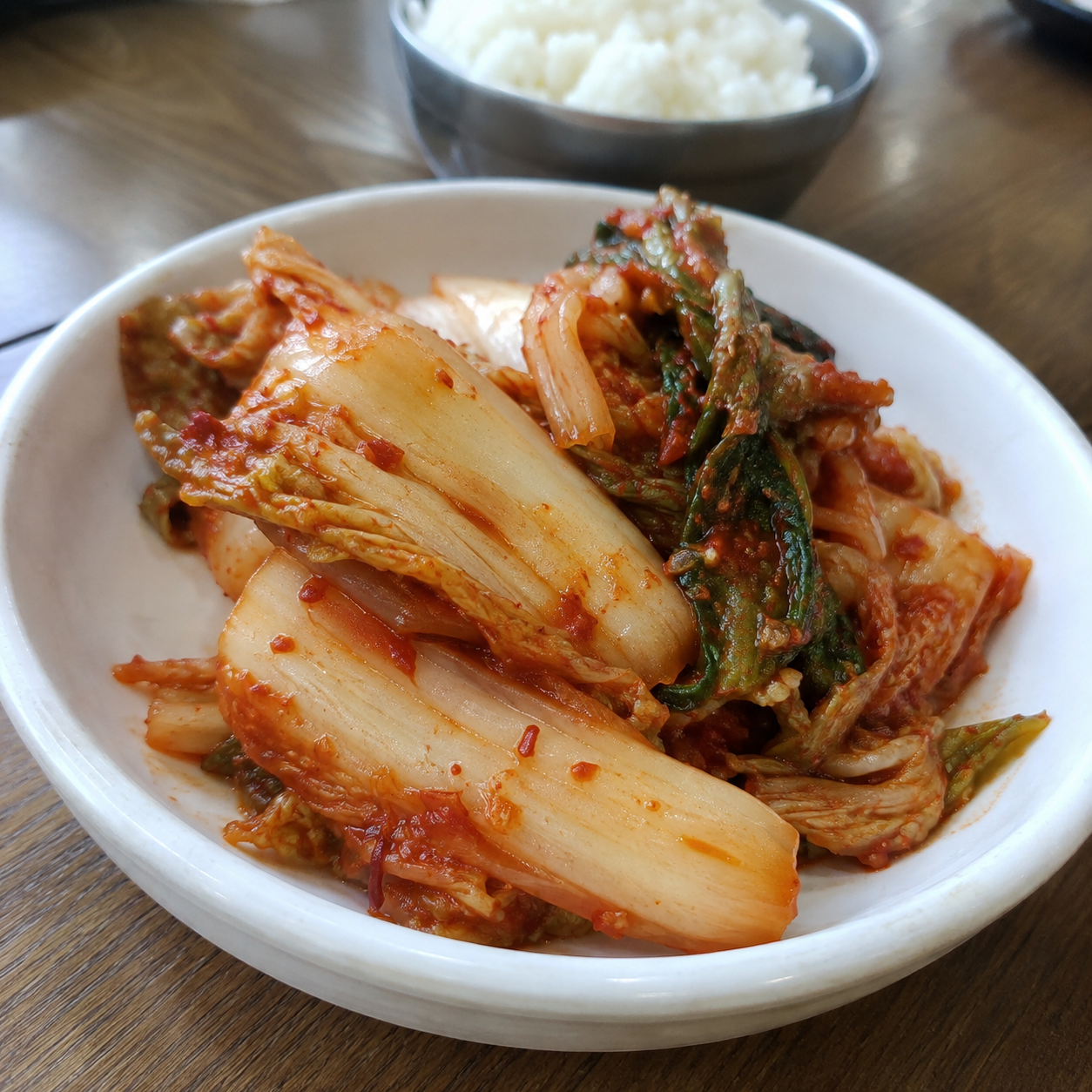
Baechu-kimchi (napa cabbage kimchi): stems and leaves in the same bite
Baechu-kimchi (napa cabbage kimchi) is made by salting and seasoning napa cabbage. Even one piece contains different textures: the thick stem can be crisp, while the thinner leaves hold the seasoning and feel softer.
Start with a small piece on plain rice. Notice how the rice changes the saltiness and heat that seemed strong when you ate the kimchi on its own. With meat, choosing a stem or a leaf changes the texture of the mouthful too.
That gives “This place has good kimchi” a more specific meaning. Was it the acidity, the crisp stems, or seasoning that did not overwhelm the vegetable?
Kkakdugi and chonggak-kimchi: the same vegetable, a different bite
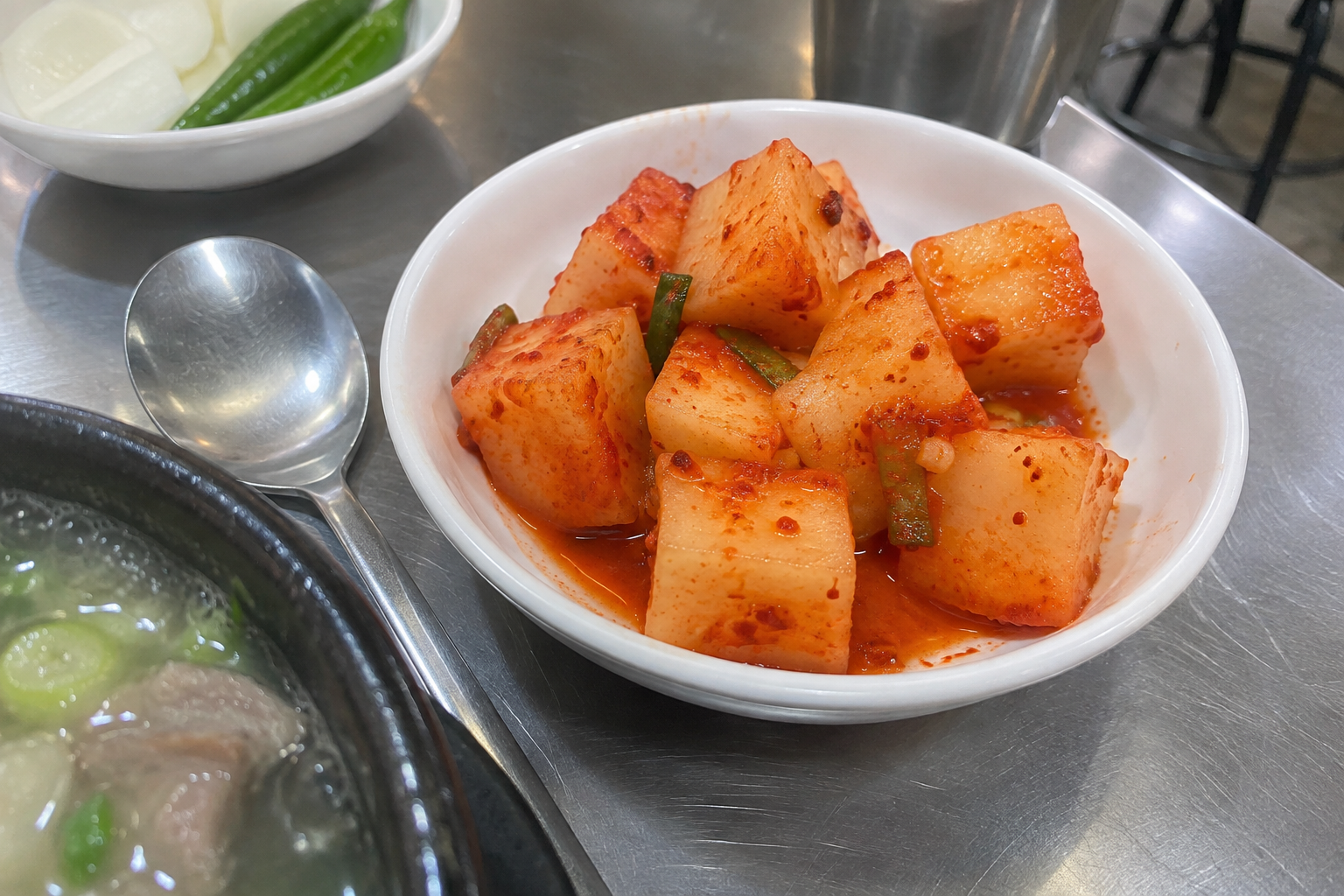
Kkakdugi (cubed-radish kimchi) is made with radish cut into chunky cubes. It often accompanies soup-and-rice dishes such as gukbap (soup with rice) or seolleongtang (ox-bone soup). Between warm spoonfuls of soup and rice, a firm cube gives you a change of texture.
Chonggak-kimchi (young radish kimchi with leafy tops) often keeps the small radish roots and their greens together. You move between the root and the leaves as you eat. Instead of the single blocky bite of kkakdugi, there is a radish to bite into and a length of greens to chew.
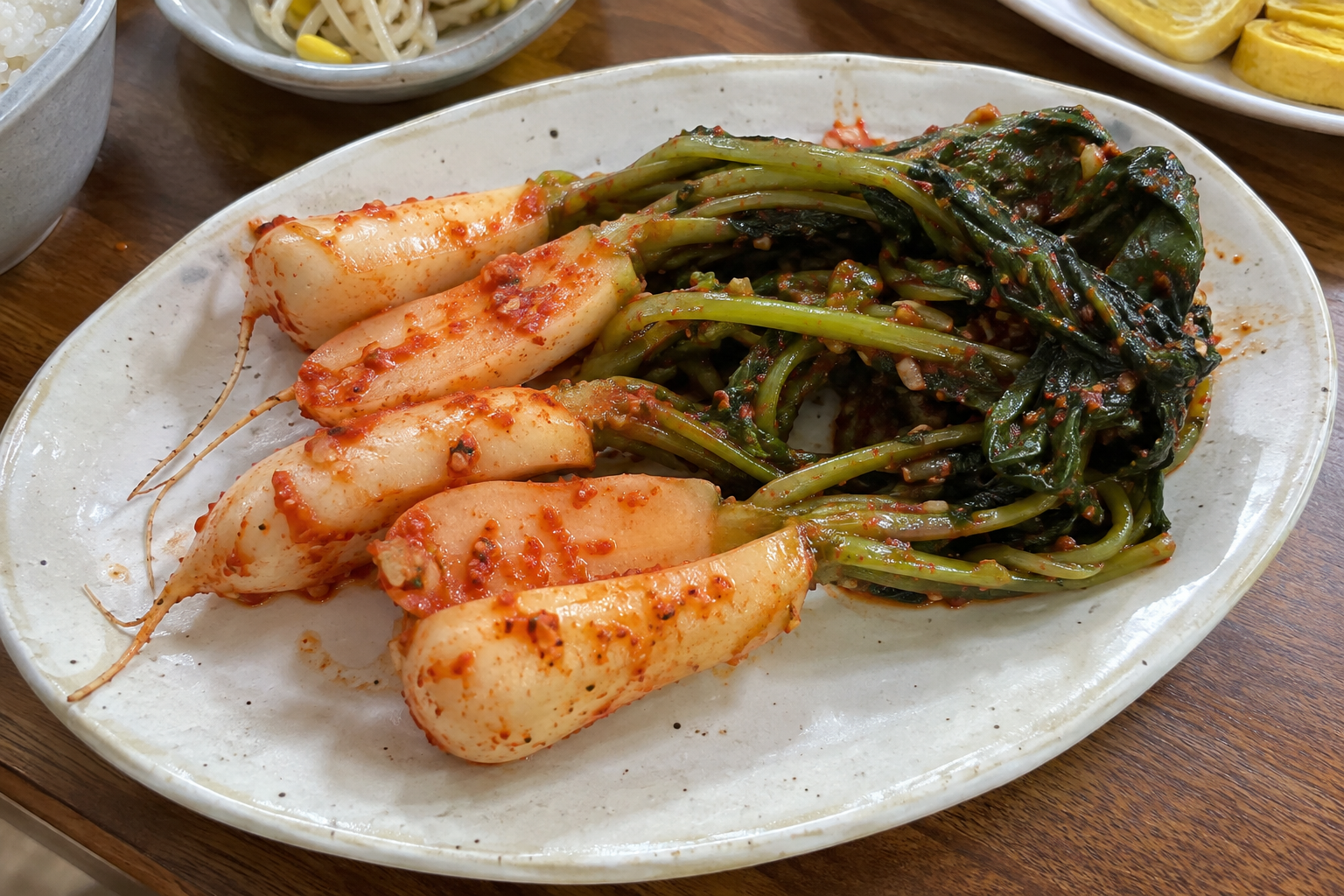
Compare the thickness of the radish and the surfaces touched by the seasoning, rather than simply trying to decide which is hotter. These two make it clear that kimchi is about more than its seasoning.
Yeolmu-kimchi (young radish greens kimchi): a lighter kind of crunch
Yeolmu-kimchi (young radish greens kimchi) uses the tender leaves and stems of young radishes. Its slender, fresh-feeling crunch is different from biting into a thick radish cube. Some versions include a little brine, and preparations vary.
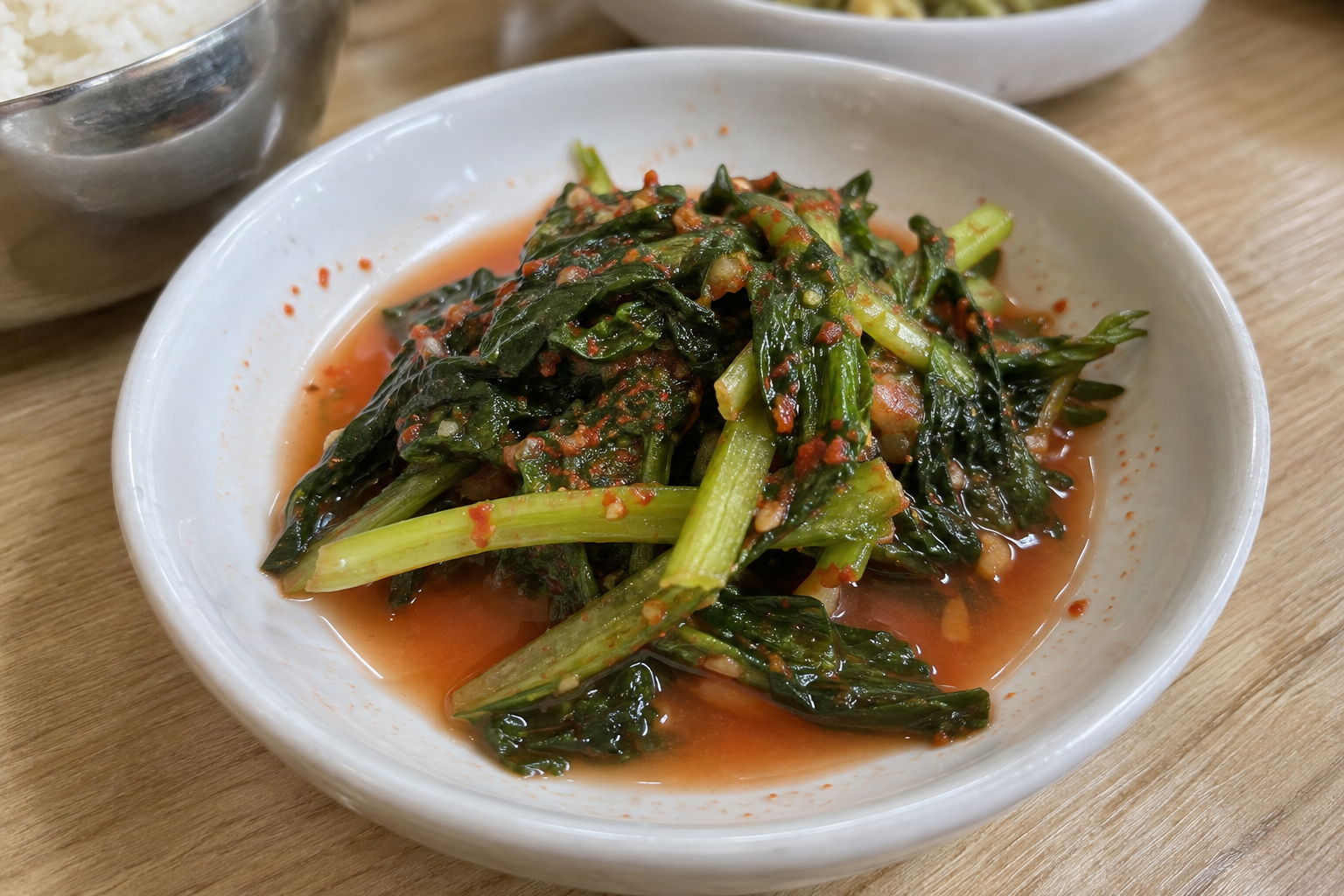
It can also become a central ingredient in dishes such as yeolmu-bibimbap (rice mixed with young radish greens kimchi) or yeolmu-guksu (noodles with young radish greens kimchi). Mixed through soft rice or noodles, the stems bring their own texture to the dish.
If you see yeolmu on a summer menu, do not read it simply as “noodles with kimchi.” Think about how differently it might feel from a version made with napa cabbage kimchi.
Pa-kimchi and gat-kimchi: pay attention to the aroma
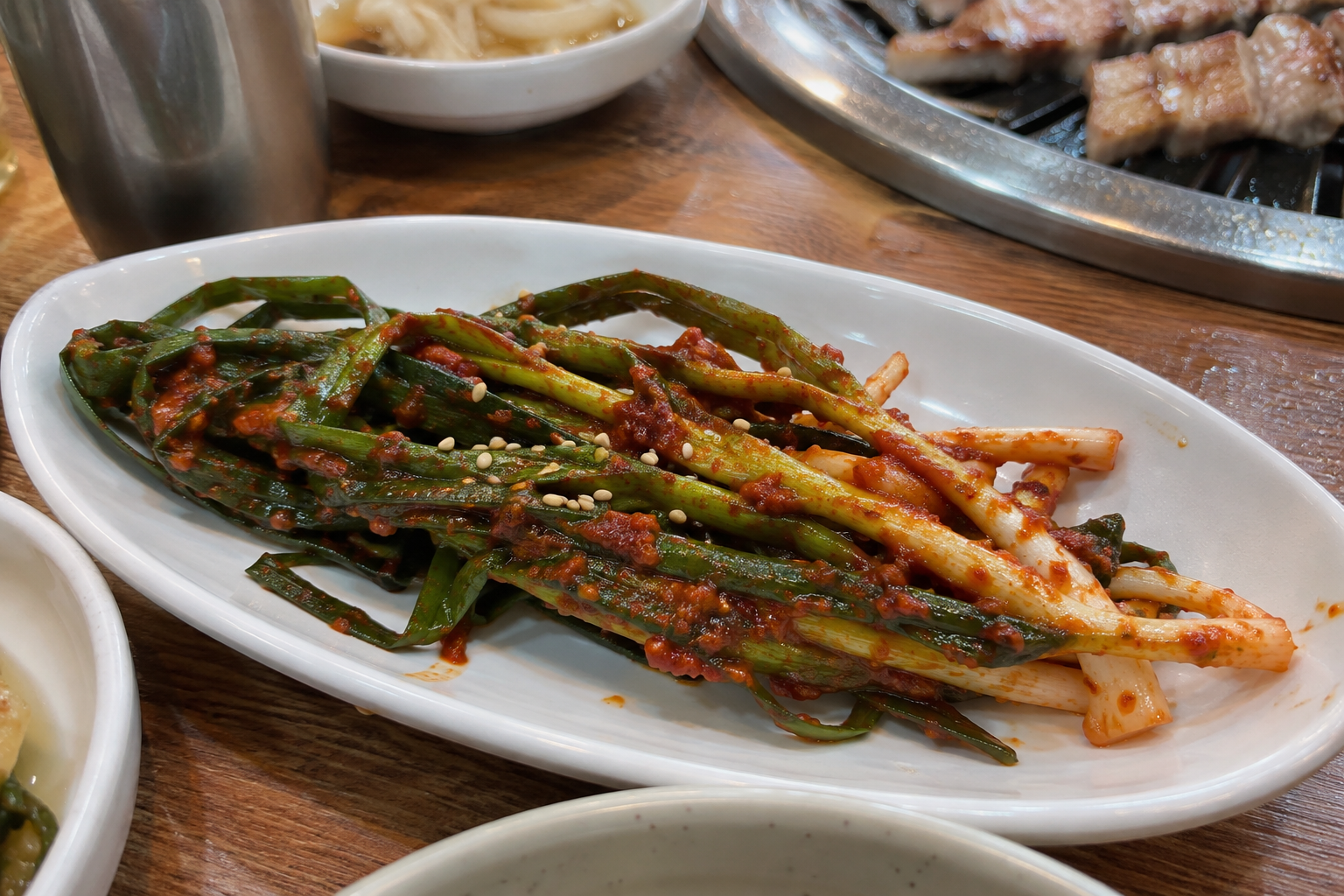
Pa-kimchi (scallion kimchi) is made with slender green onions. Their sharp aroma and long strands stand out. Try a little beside grilled pork and notice how the scallion flavour works with the richness of the meat.
Gat-kimchi (mustard-leaf kimchi) uses mustard greens. The version associated with Dolsan in Yeosu is well known, but the name does not identify a single restaurant or one fixed recipe. Look for the mustard greens’ distinctive aroma and peppery bite.
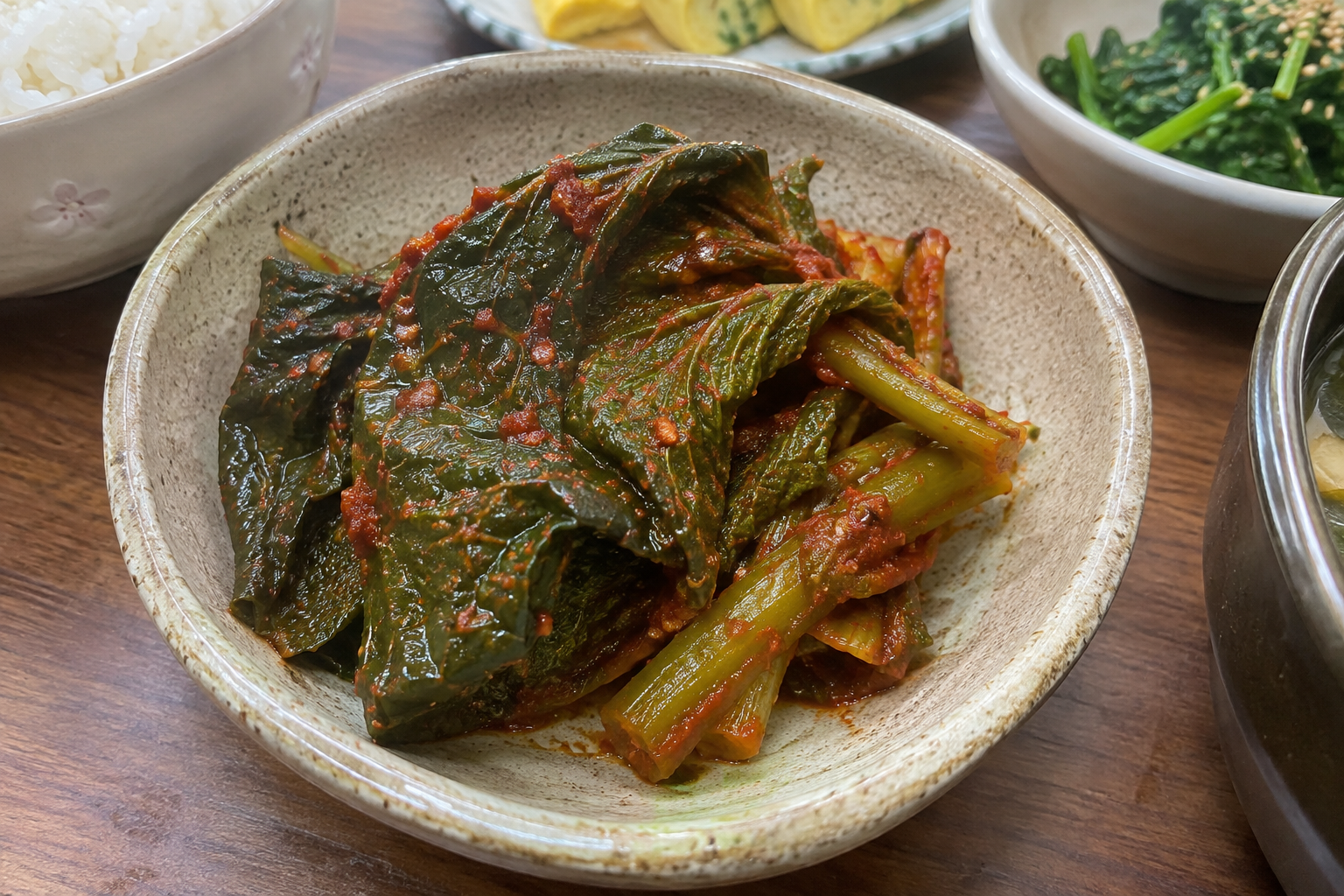
Choose either just by looking at its red seasoning, and the vegetable’s aroma may surprise you. Start with a little rice or meat alongside. Enjoying a pungent aroma and tolerating chilli heat are separate preferences.
Baek-kimchi and dongchimi: no red pepper powder, plenty of flavour
Baek-kimchi (white napa cabbage kimchi) is made without red pepper powder. Instead of the heat of a red seasoning, pay attention to the cabbage, brine, garlic and other aromatics, and the acidity that develops as it ferments. Pale colour does not mean every version will be completely mild: other pungent ingredients may still be present.
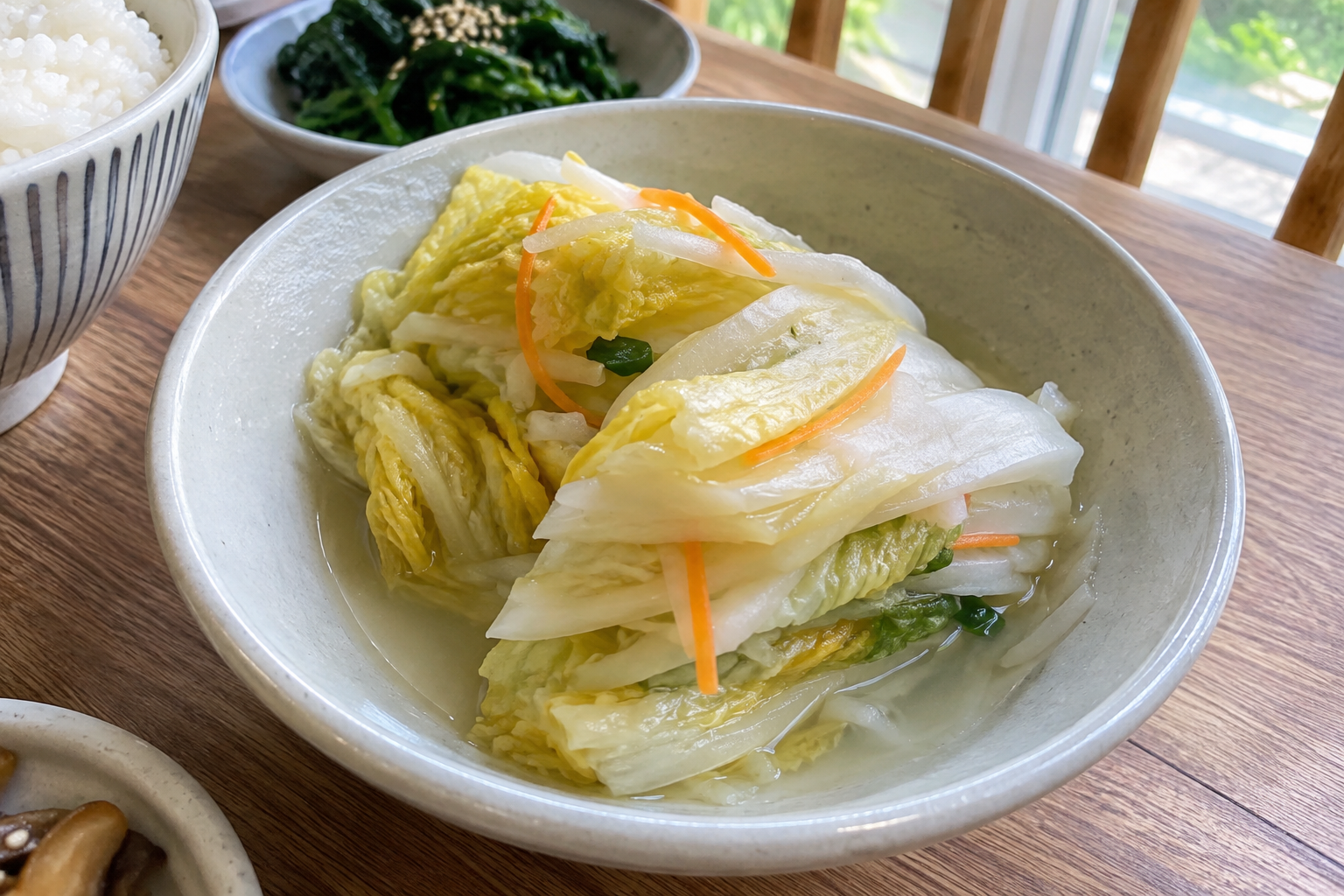
Dongchimi (radish water kimchi in a clear brine) brings something to sip as well as something to bite. Radish ferments in salted water with other ingredients. When it is pleasantly ripe, it is known for a refreshing acidity and a crisp, clean impression. A little clear dongchimi brine beside a spicy dish gives your palate a different flavour to explore.
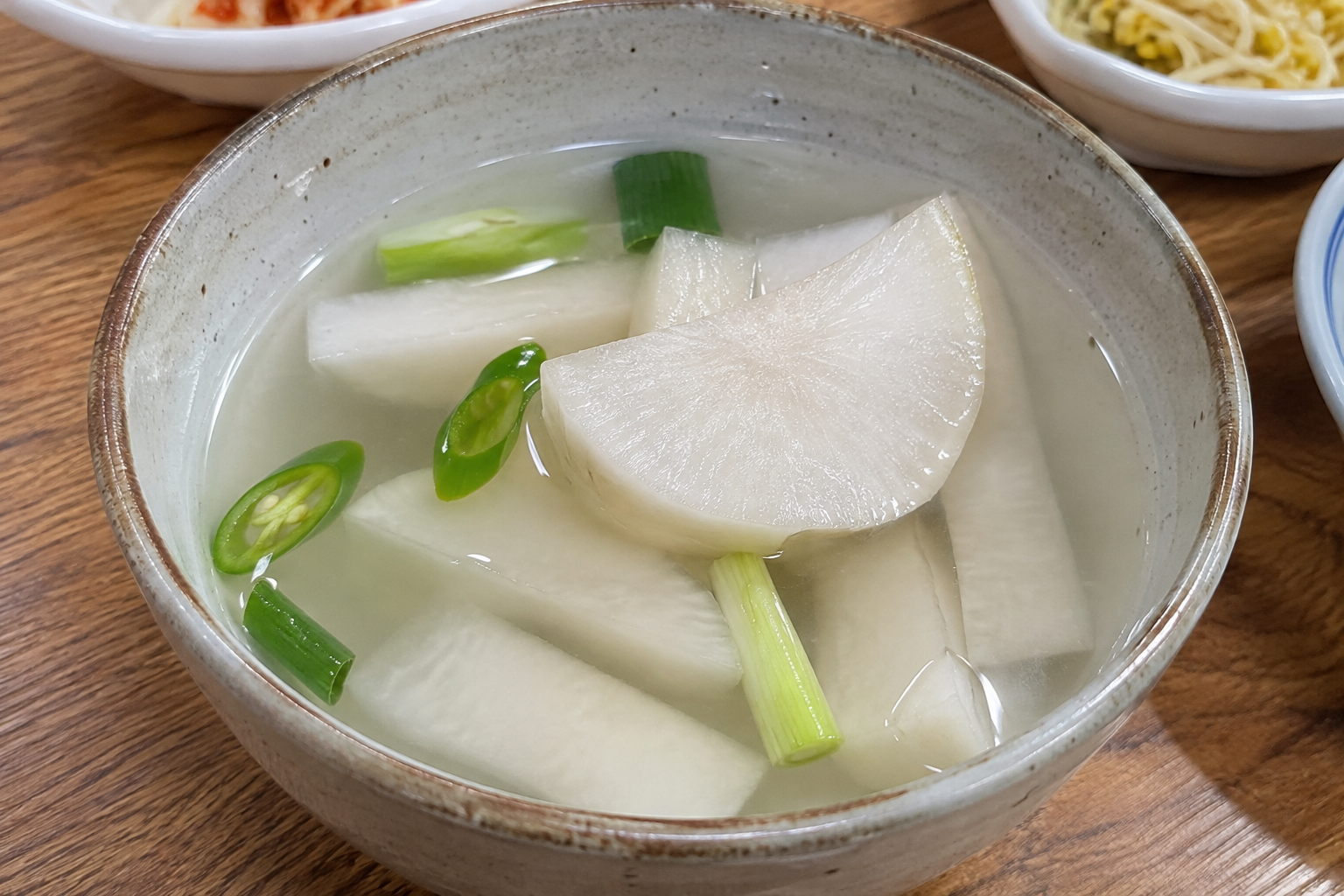
Try baek-kimchi and dongchimi side by side, and it becomes obvious that red seasoning is not the centre of every kimchi. Vegetables, salt, other ingredients and time create a much wider range.
The same baechu-kimchi changes its job as it ripens
In freshly made, less-fermented kimchi, the vegetable and seasoning may come forward first. As microorganisms produce organic acids and other compounds during fermentation, the acidity and aroma change. The World Institute of Kimchi’s explanation of fermentation discusses this development in flavour.
Do not treat geotjeori (freshly dressed vegetables, often napa cabbage, prepared for eating soon after making) as simply another name for any under-fermented kimchi. The word describes a preparation style too.
The acidity of well-ripened kimchi changes how it works with rice and meat. Mugeunji (long-aged kimchi) may be used in stews or braised dishes. Wrap some softened, cooked kimchi around meat and the texture is very different from a crisp uncooked piece. Using ripe kimchi in fried rice or Kimchi-Jeon (pan-fried kimchi cakes) is another way to enjoy that change.
Time alone does not turn every kimchi into good mugeunji. The ingredients and storage conditions matter together. Sourness on its own is not enough to judge its quality.
The easiest comparison starts with the same bowl of rice
If you have the chance, try a little baechu-kimchi, kkakdugi and baek-kimchi. Taste each on its own first, then put a small piece of each on the same plain rice. Compare the crunch, aroma, acidity and finish, as well as the heat.
It is fine to find one kind you like and stay with it. If napa cabbage kimchi did not appeal to you at first, a radish kimchi or a brined variety may be a better place to begin.
Next time, add a small question to “More kimchi, please”: “What kind of kimchi is this?”
That is enough to discover something new on a Korean table.
Comments 0