CATEGORY
THE ARCHIVE
Still on the menu.
We haven’t added a story for that craving yet.
Try another place or dish.
A NOTE FROM JO PIGGY
A little curiosity.
A very big appetite.
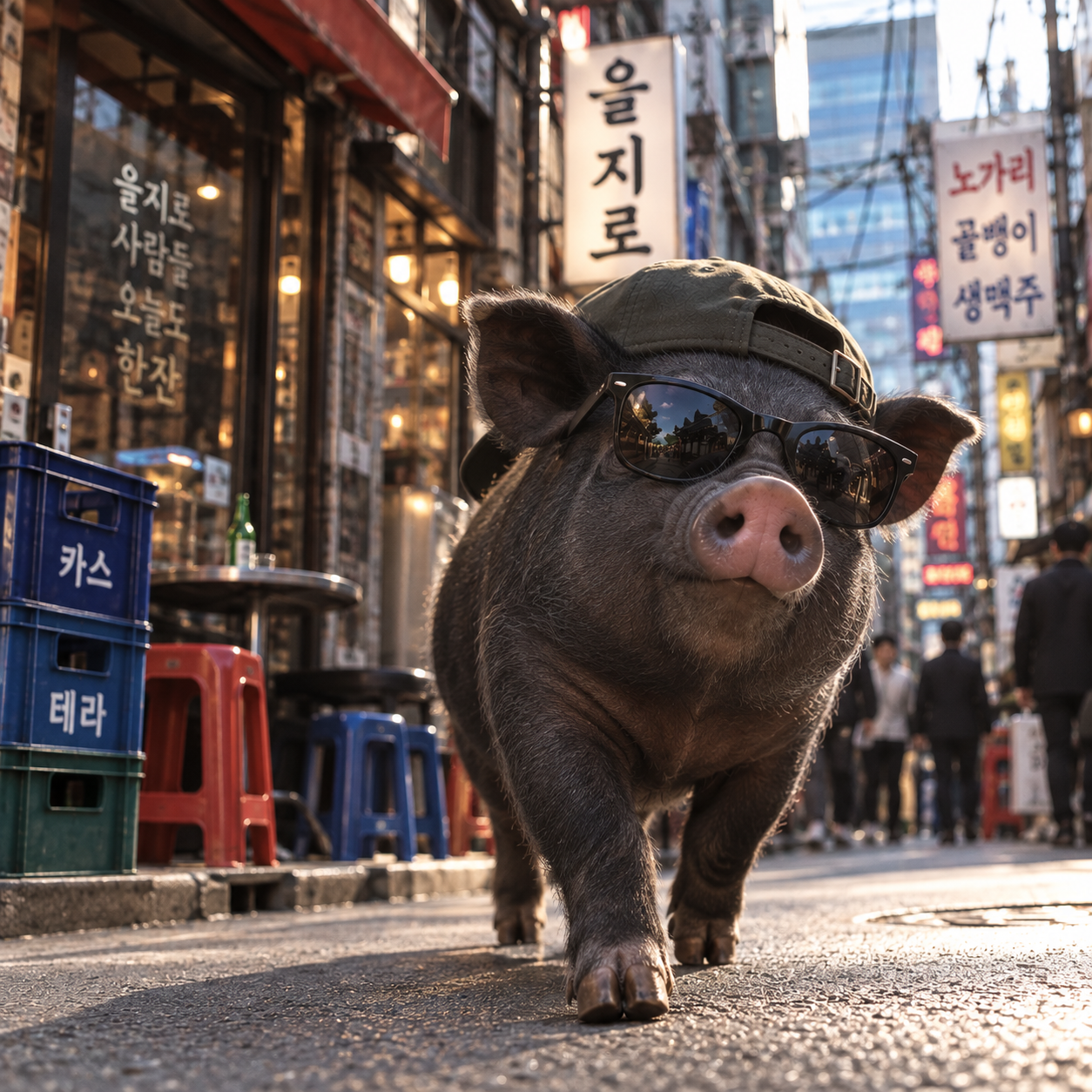
Hi, I’m JO PIGGY. Think of Pig Out Korea as a friend who enjoys reading the reviews almost as much as you enjoy planning the next meal.
We bring together Korean food stories, neighborhood discoveries, and local reviewers’ perspectives for travelers with an appetite for more.
Our archive is built from research and linked sources. We don’t pretend we’ve eaten every meal ourselves. We help you find the places you’d like to try.
Let’s find your next bite ↗Contact
A question, a local tip, or just a hello?
bravora2026@gmail.comWater Is Free. So Why Is Nobody Bringing It? A Guide to Korean Restaurant Service
You keep looking at the server. The server keeps walking past.
You have taken a seat and chosen your meal. Now you would like some water, so you look towards a server. They deliver food to another table, clear some plates and head back to the kitchen.
“Didn't they just see me?”
In many everyday Korean restaurants, looking at a member of staff does not necessarily tell them you need something. Customers are often expected to speak up. And the water may be self-service in the first place.
You do not need a long Korean sentence to make things easier. Look around first. If you need help, try one short expression: jeogiyo—“excuse me.”
This guide is about casual places such as neighbourhood diners, soup restaurants, snack shops and Korean barbecue restaurants. Fine dining and restaurants with an attentive course service work differently.
Basic drinking water is often free
Many casual Korean restaurants provide ordinary drinking water with your meal at no extra charge. If you are used to choosing water from a drinks menu every time, this can feel unfamiliar.
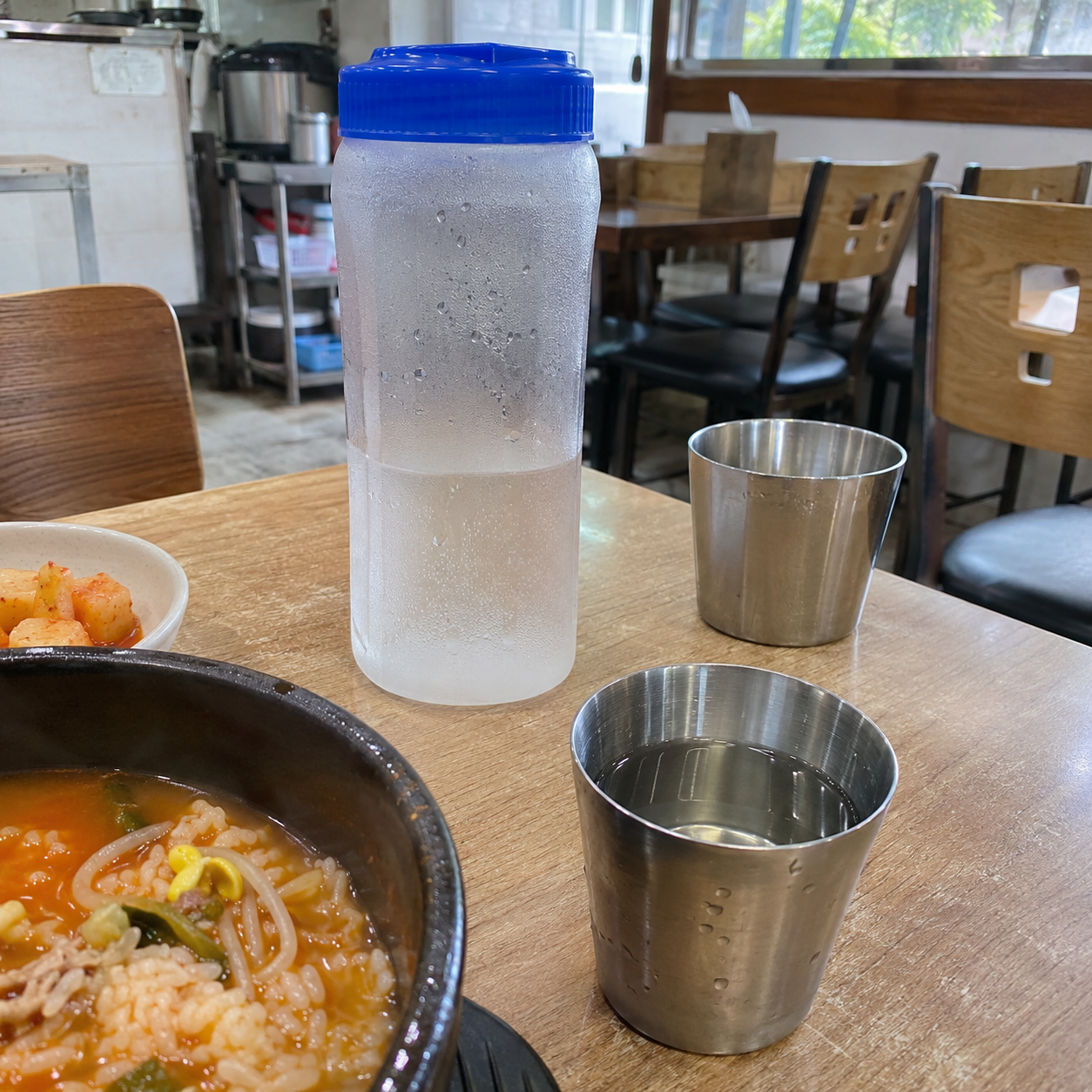
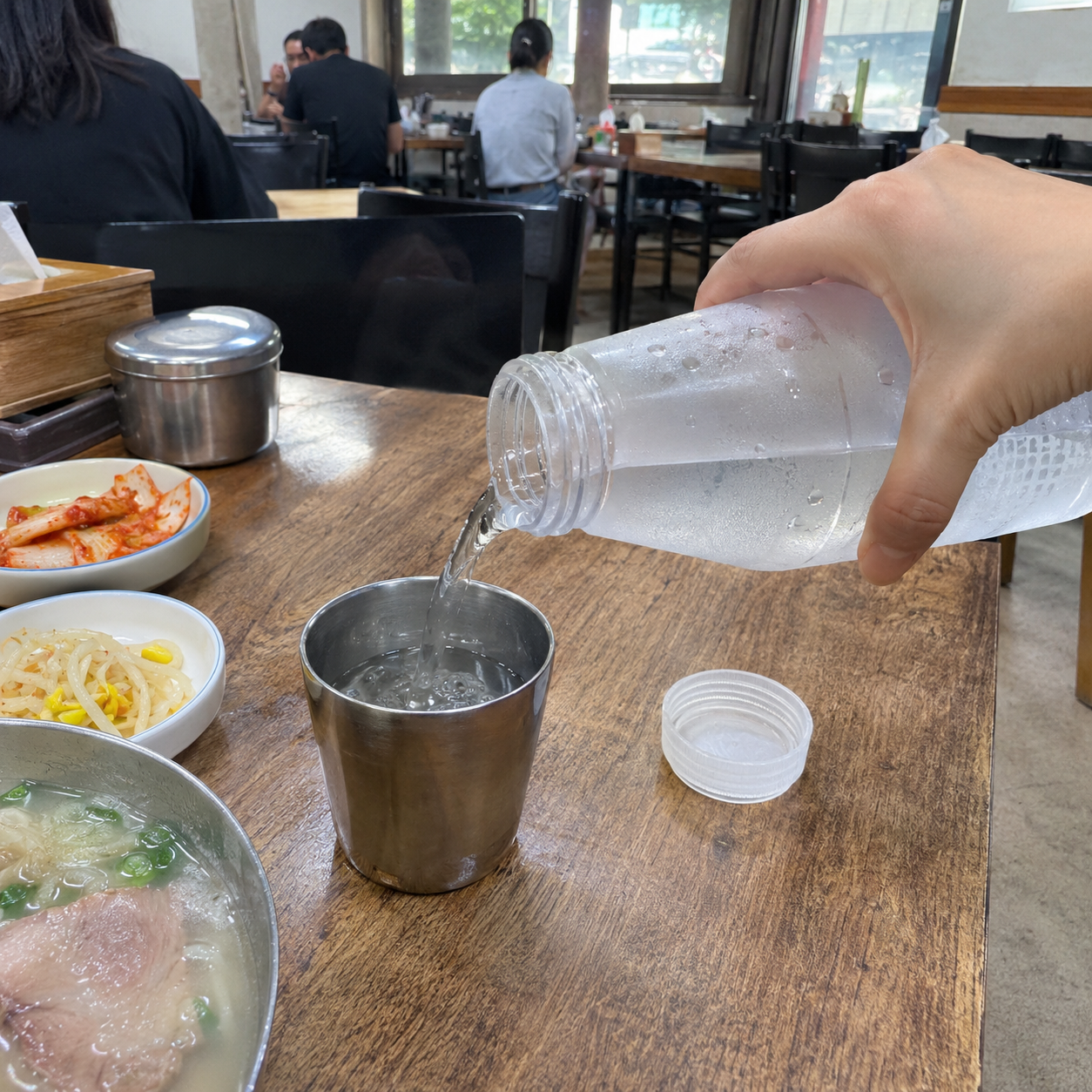
A bottle or jug already on the table is usually there for you to pour into the cups provided. Some restaurants serve tea as their standard drink instead. If you cannot tell what is in the bottle, ask before pouring.
Keep this separate from bottled mineral water or sparkling water sold as menu items. A product with a price on the menu is not necessarily included with your meal.
If you see a separate water listing, you can ask whether ordinary drinking water is available too. In many everyday restaurants, the first thing to figure out is simply where to get it.
If water is self-service, head to the dispenser
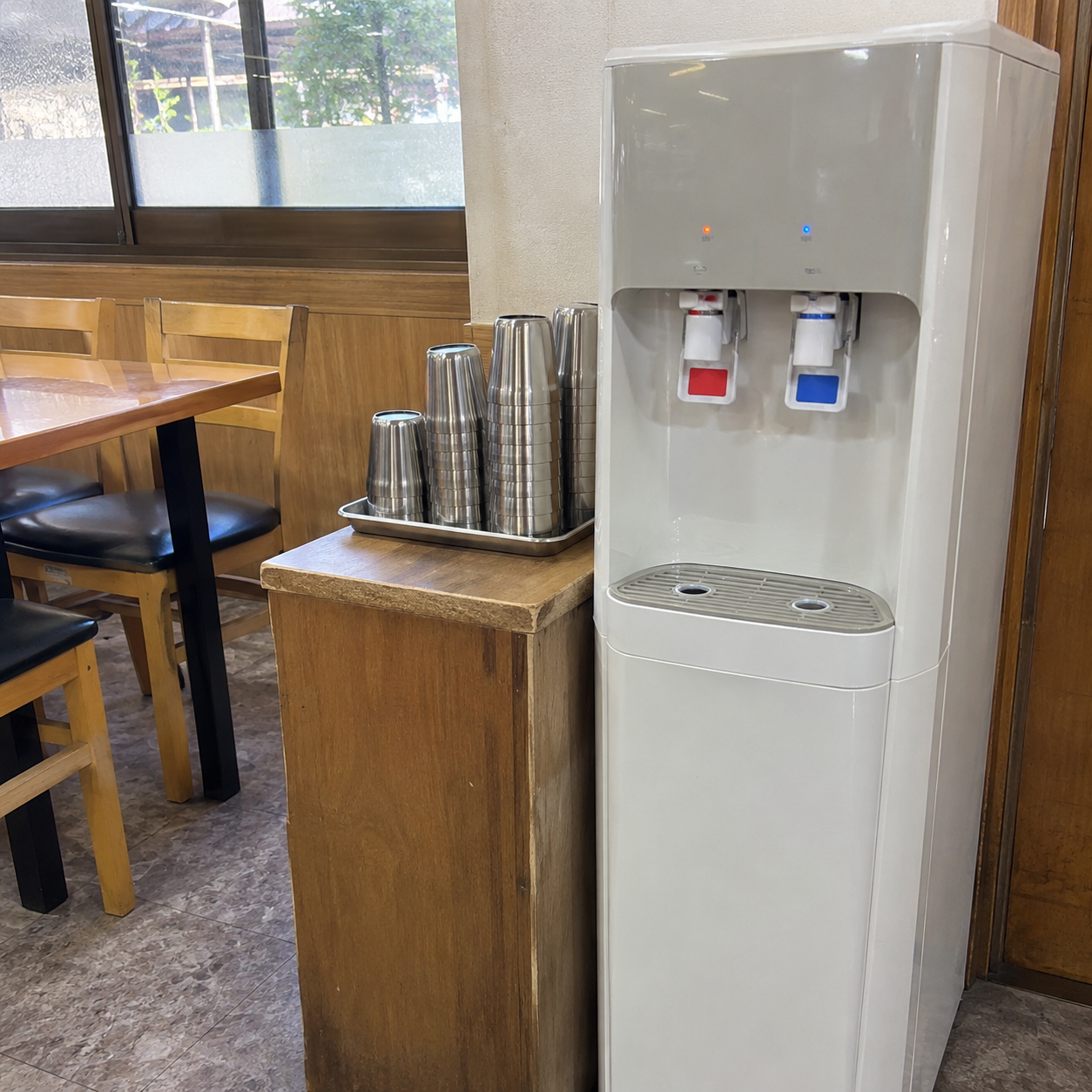
You may spot the words 물 셀프 (mul sel-peu) or 물은 셀프입니다 (mu-reun sel-peu-im-ni-da) on a wall or menu. They mean that you should help yourself to water.
Look for a dispenser with cups nearby. Fill a cup, take it back to your seat and return for more when you need it. If the machine offers hot and cold water, check the labels before using it.
Some places keep cups in a fridge. Others provide bottles for customers to take to their tables. If the arrangement is unclear, ask:
“Where can I get some water?”
There is no need to wander into the kitchen looking for cups. If you are unsure whether an area is for customers, check with a member of staff first.
Before concluding that someone has forgotten your water, look for a bottle on the table or a self-service sign. That small check may solve the mystery.
No call button? Raise a hand and say “jeogiyo”
If you need help and there is no call button, raise a hand slightly and speak towards a member of staff.
“Jeogiyo!”
Say it clearly enough to carry over the kitchen noise and other conversations. A voice meant only for the person beside you may not reach the server. Finish the final “yo” rather than letting the word disappear halfway through.
When someone looks over, follow with what you need: “Could I have some water, please?” or “I'd like to order.” If they have already acknowledged you, give them a moment instead of calling repeatedly.
Speaking up does not mean shouting angrily or barking an instruction. In a casual Korean restaurant, getting someone's attention with jeogiyo and then making a polite request is an ordinary way to ask for service.
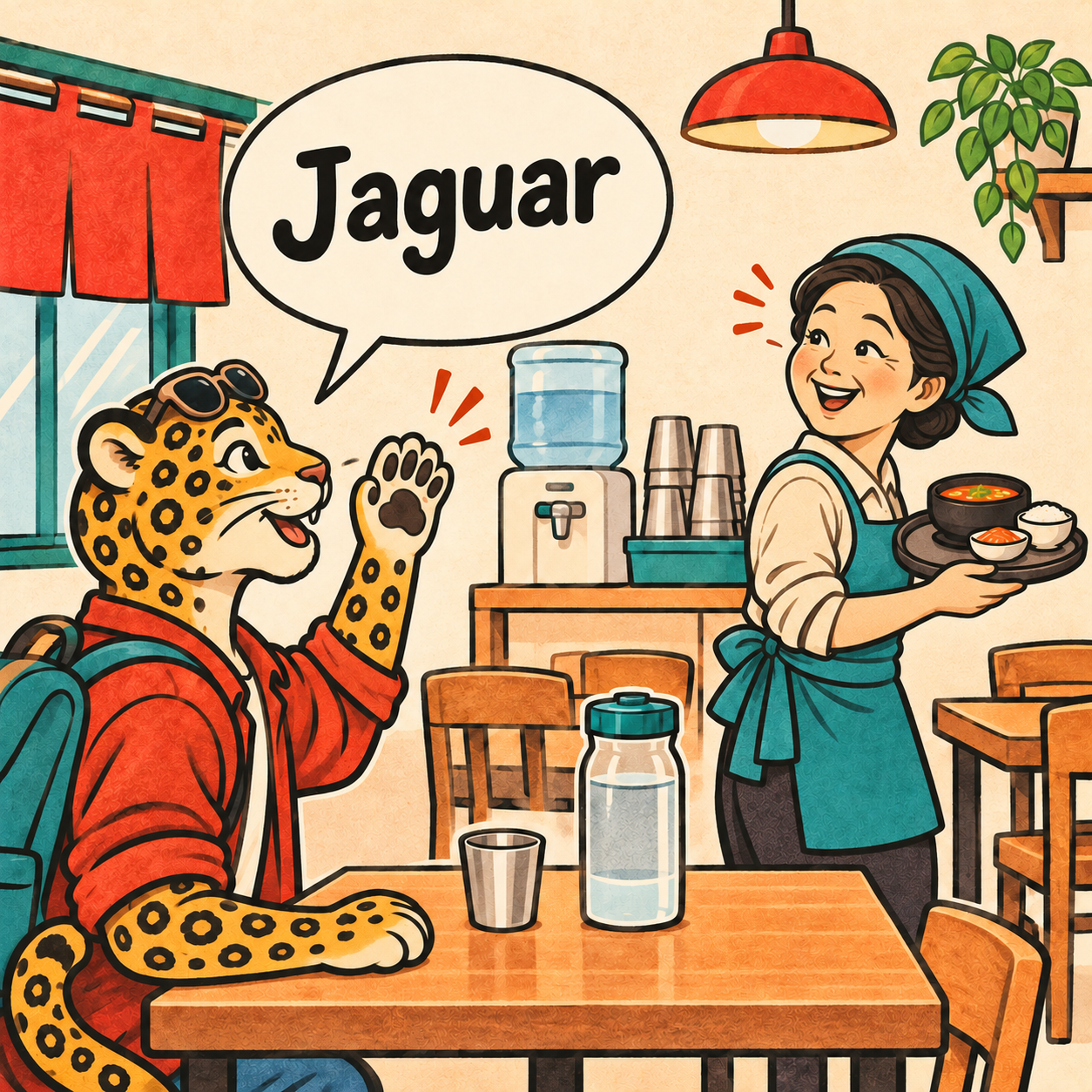
Can't say “jeogiyo”? Try “Jaguar!”
There is a Korean pronunciation meme about jeogiyo coming out as “jaguar.” You set out to call a server and suddenly sound as though you are looking for a big cat. That explains the customer sitting in this article's thumbnail.
So if JEOGIYO will not quite come out, raise a hand and call “Jaguar!” Someone will probably come over anyway—or at least realise that the person waving needs something. We are joking, of course. You do not have to pass a pronunciation test to get a glass of water.
The actual expression is 저기요 (jeogiyo), roughly “juh-gee-yoh,” in three syllables. It politely gets someone's attention when you do not know their name or title. Keep the jaguar in mind if it helps you remember the word, then follow with a short request.
A few useful phrases:
- 물 좀 주세요 — Mul jom juseyo. “Some water, please.”
- 물은 어디에 있나요? — Mul-eun eodie innayo? “Where is the water?”
- 주문할게요 — Jumunhalgeyo. “I'd like to order.”
- 이 반찬 조금 더 주세요 — I banchan jogeum deo juseyo. “A little more of this side dish, please.”
- 계산할게요 — Gyesanhalgeyo. “I'd like to pay.”
You do not need to deliver a flawless sentence. Get the person's attention, say what you need and add gamsahamnida—“thank you.”
Let the staff know what you need
Casual restaurants and fine dining do not always follow the same service rhythm. Some places keep checking your glass. Others expect you to refill it yourself and call when you need help.
If a server is busy elsewhere, think “I haven't asked yet” before assuming they are ignoring you.
Check the table for a water bottle. Look for a self-service sign. If you still need help, raise a hand and call clearly once:
“Jeogiyo, mul jom juseyo.”
“Excuse me, some water, please.”
You may find that your first request in a Korean restaurant needs far less conversation than you expected.
Comments 0