
CATEGORY
THE ARCHIVE
Still on the menu.
We haven’t added a story for that craving yet.
Try another place or dish.
A NOTE FROM JO PIGGY
A little curiosity.
A very big appetite.

Hi, I’m JO PIGGY. Think of Pig Out Korea as a friend who enjoys reading the reviews almost as much as you enjoy planning the next meal.
We bring together Korean food stories, neighborhood discoveries, and local reviewers’ perspectives for travelers with an appetite for more.
Our archive is built from research and linked sources. We don’t pretend we’ve eaten every meal ourselves. We help you find the places you’d like to try.
Let’s find your next bite ↗Contact
A question, a local tip, or just a hello?
bravora2026@gmail.comSalt, Ssamjang or Chili Sauce? Korea’s Sundae Dips Have Hometowns
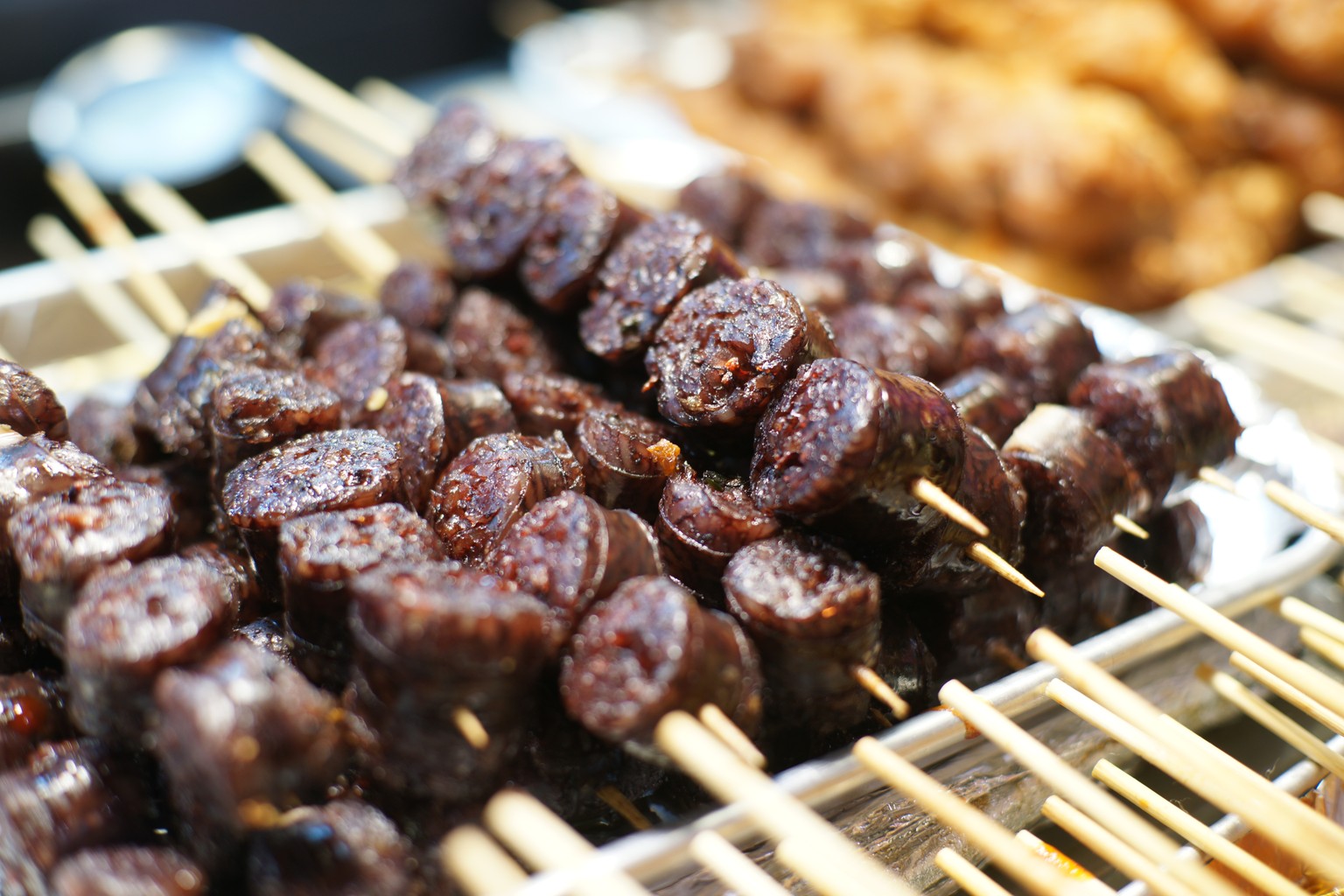
The little dipping dish might surprise you first
Order sundae (Korean blood sausage) in Seoul and a small dish of salt may arrive beside it. Order the same food elsewhere and you might get a brown paste or a red sauce instead. Did somebody bring the wrong condiment?
That little dish offers another way to discover sundae. The filling varies, but so do the seasonings people are used to eating with it.
For a traveler, it makes an enjoyable comparison. Follow the same food across the country and the last taste of each bite can change.
First, what is inside sundae?
Sundae is typically made by filling a cleaned intestine casing with various ingredients, then boiling or steaming it. The filling may include seonji (pig’s blood), dangmyeon (glass noodles), grains and vegetables, with different combinations and proportions. The noodle-heavy sundae commonly found at snack shops can feel quite different from versions with more blood or vegetables.
“Korean sausage” is a useful starting point, but a bite may surprise you if you picture a casing packed tightly with minced meat. Notice the springiness of the noodles, the moist filling and the chew of the casing.
If you do not eat blood or pork, check the ingredients before ordering. A pale colour or a filling full of noodles does not mean those ingredients are absent.
Image credit: “Sundae” — Popo le Chien / Wikimedia Commons · CC0 1.0.
From a snack-shop plate to a steaming bowl of soup
Koreans enjoy sundae as both a snack and a meal. At a bunsikjip (a Korean snack-food shop), you will often find it beside tteokbokki (rice cakes in a spicy sauce) and fried snacks. In other restaurants, it appears in stir-fries or a hot soup served with rice.
- Bunsik-sundae (steamed sundae served at snack shops): Noodle-filled sundae is steamed and cut into bite-size pieces. Its chewy texture makes it a popular order alongside tteokbokki and fried snacks.
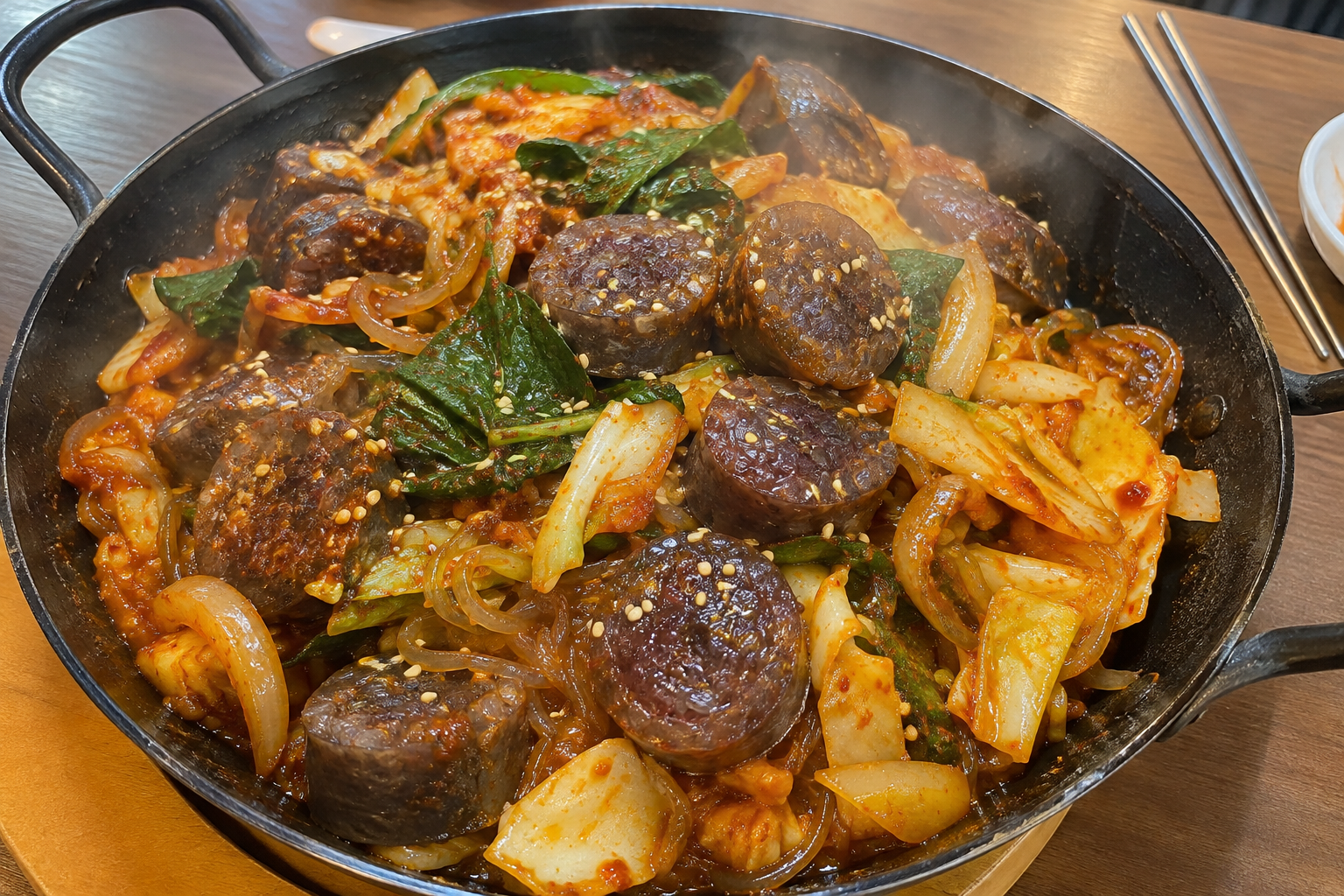
- Yachae-sundae-bokkeum (spicy sundae and vegetable stir-fry): Sliced sundae is stir-fried with vegetables such as cabbage and perilla leaves. Some versions add glass noodles, making a substantial meal or a dish to share over drinks.
- Sundae-gukbap (sundae soup with rice): Sundae, pork and other ingredients are served in hot broth with rice. The ingredients—and whether the rice arrives in the soup or beside it—vary by restaurant.
Steamed sundae lets you enjoy its chew. A stir-fry brings sauce and fragrant vegetables into the picture. Gukbap offers another way to enjoy it in a hot, comforting broth.
Salt, makjang and cho-jang: eight regional ways to dip
The map below breaks the broad families of salt, salted shrimp, seasoned pastes and soy sauce into more local combinations. It helps explain why the same piece of sundae can prompt the question, “You dip it in that?”
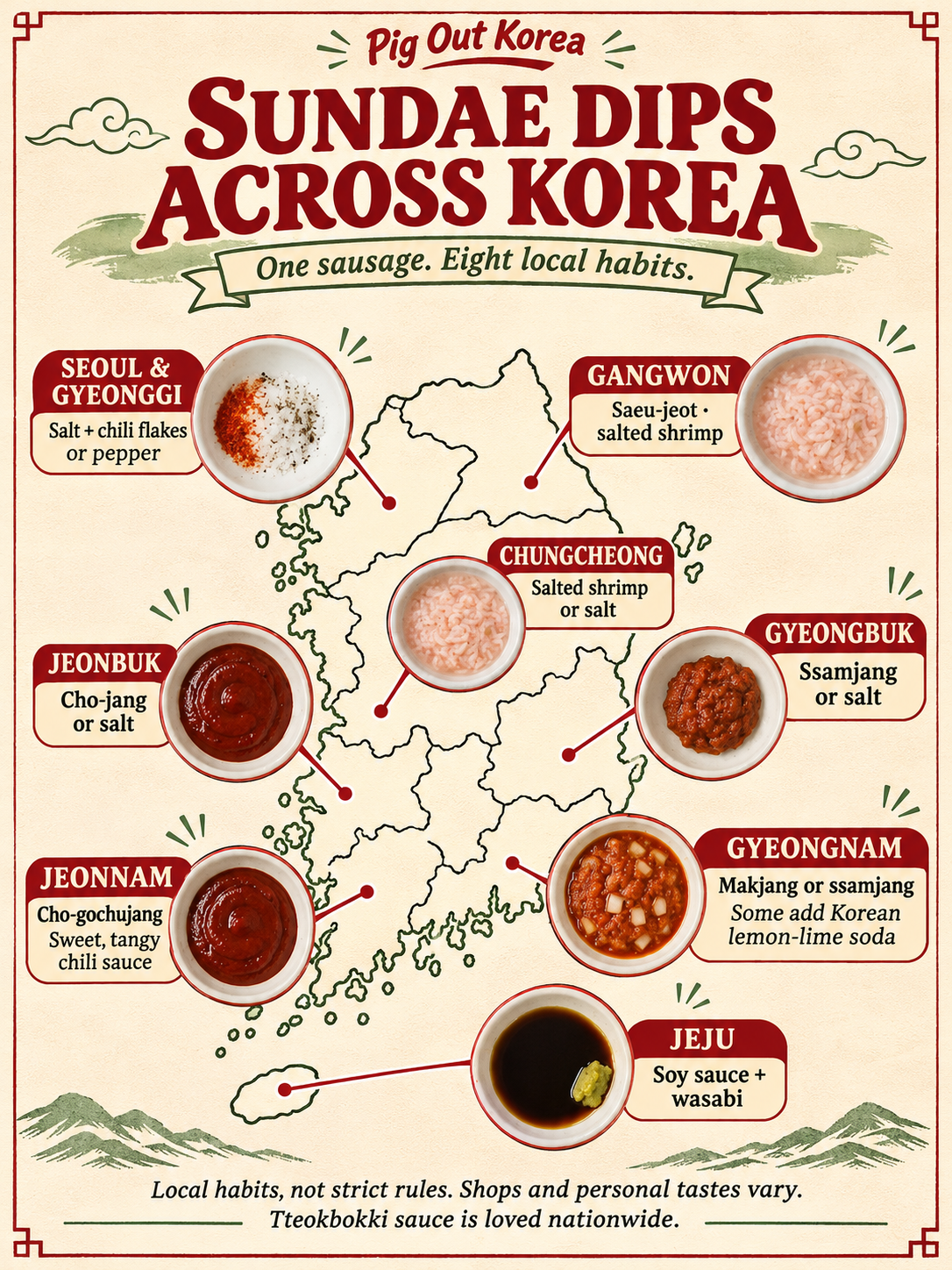
Treat this as a guide to familiar regional preferences. It does not mean that everyone within a provincial border uses one sauce. Shops, types of sundae and individual tastes vary, even within the same city.
Seoul & Gyeonggi: salt with chili flakes or pepper
The small dish of sogeum (salt) may contain gochugaru (Korean chili flakes) or black pepper. Rather than giving the sundae a thick coating, touch one edge lightly to the seasoning. It is a useful starting point if you want to notice the noodles’ springiness and the filling’s savoury flavour.
Visible chili flakes do not make this a sweet, spicy sauce like tteokbokki sauce. Salt does most of the seasoning here; the chili or pepper adds a little aroma and heat.
Gangwon: saeu-jeot, with saltiness and umami
Saeu-jeot (salted, fermented shrimp) is made by preserving small shrimp in salt. If you associate it only with seasoning a bowl of soup, try a little with sundae. Alongside the saltiness, it adds the aroma of fermented seafood and some moisture.
Start with a few tiny shrimp or a little of the brine rather than a spoonful. The seasoning already in the sundae and the saltiness of the saeu-jeot come together, so a small amount can make a noticeable difference.
Chungcheong: compare salted shrimp with salt
The map highlights both saeu-jeot and salt for Chungcheong. Think of these as options you may encounter, depending on the shop and the sundae, rather than ingredients you must mix together.
Try a little salt on one piece and a little saeu-jeot on the next. Both add saltiness, but the shrimp also brings its fermented aroma.
Jeonbuk: cho-jang or salt
For Jeonbuk (North Jeolla), the map shows cho-jang (a sweet, tangy chili sauce) alongside salt. Cho-jang adds sweetness and acidity to a gochujang-based sauce, taking a bite in quite a different direction from salt alone.
If you cannot decide, compare one bite with salt and another with cho-jang. The sauce can be assertive, so touch one side of the sundae to it rather than submerging the entire cut surface.
Jeonnam: sweet, tangy cho-gochujang
Cho-jang, also called cho-gochujang (sweet-and-tangy, vinegar-seasoned chili paste), usually refers to the same family of sauces. The red dipping dish representing Jeonnam (South Jeolla) on this map belongs to that family. You do not need to memorise the two regions’ sauces as completely separate kinds.
The acidity following the sundae’s rich, savoury flavour is a major difference from salt. Rather than assuming a red sauce must simply be hotter, notice how much sweetness and tang it brings.
Gyeongbuk: a rich ssamjang-style paste, or salt
The map highlights ssamjang (seasoned soybean-and-chili paste) and salt for Gyeongbuk (North Gyeongsang). A reddish paste may contain more than gochujang alone. A ssamjang-style mixture of doenjang (fermented soybean paste), gochujang and other seasonings brings the flavour of fermented beans and a thicker texture.
A large helping can make the sauce more noticeable than the filling. Start with a small dab, taste it and adjust from there.
Gyeongnam: makjang, ssamjang—and sometimes a splash of soda
In Gyeongnam (South Gyeongsang), makjang (a seasoned dipping sauce served with sundae) or a ssamjang-style sauce is a familiar pairing. Some shops add garlic or chili seasoning, and some use saida (Korean lemon-lime soda) to adjust the sweetness and consistency. Here, “cider” means a soft drink such as Chilsung Cider, not an alcoholic drink.
Do not assume that every sundae sauce called makjang follows one nationwide recipe. Some are thick like ssamjang; others are looser, with visible pieces of garlic. Tasting how sweet, salty and rich the sauce is tells you more than its name alone.
Jeju: ganjang with gochunaengi
The Jeju combination on the map is ganjang (soy sauce) with gochunaengi (wasabi). Compared with a thick soybean-based paste or red cho-jang, the thinner soy sauce coats the surface lightly, while the wasabi adds its sharp aroma.
Adjust the wasabi a little at a time in your own small dish. Mixing all of it in at once can let its pungency overshadow the sundae.
A simple way to compare your first plate
If more than one seasoning arrives, taste them separately before mixing anything together. Try the first piece plain, then touch one edge of the next piece to a little sauce. It makes it easier to distinguish the sundae’s flavour from what the condiment adds.
Where possible, compare pieces of the same kind of sundae. Change both the sausage and the sauce at once and it becomes harder to tell where the difference came from. If you are sharing, adjust the amount on your own small plate.
The shop in front of you does not need to stock every sauce on the map. Start with what it serves and remember the combination you like. You will have something to compare when a different dipping dish appears on your next trip.
Tteokbokki sauce is loved across regional borders
Whether you dip sundae in salt in Seoul or enjoy it with makjang in Gyeongnam, tteokbokki sauce is a popular pairing across Korea. People may disagree about “our local sauce,” but ordering sundae and tteokbokki together and sharing the red sauce is a familiar scene in snack shops around the country.
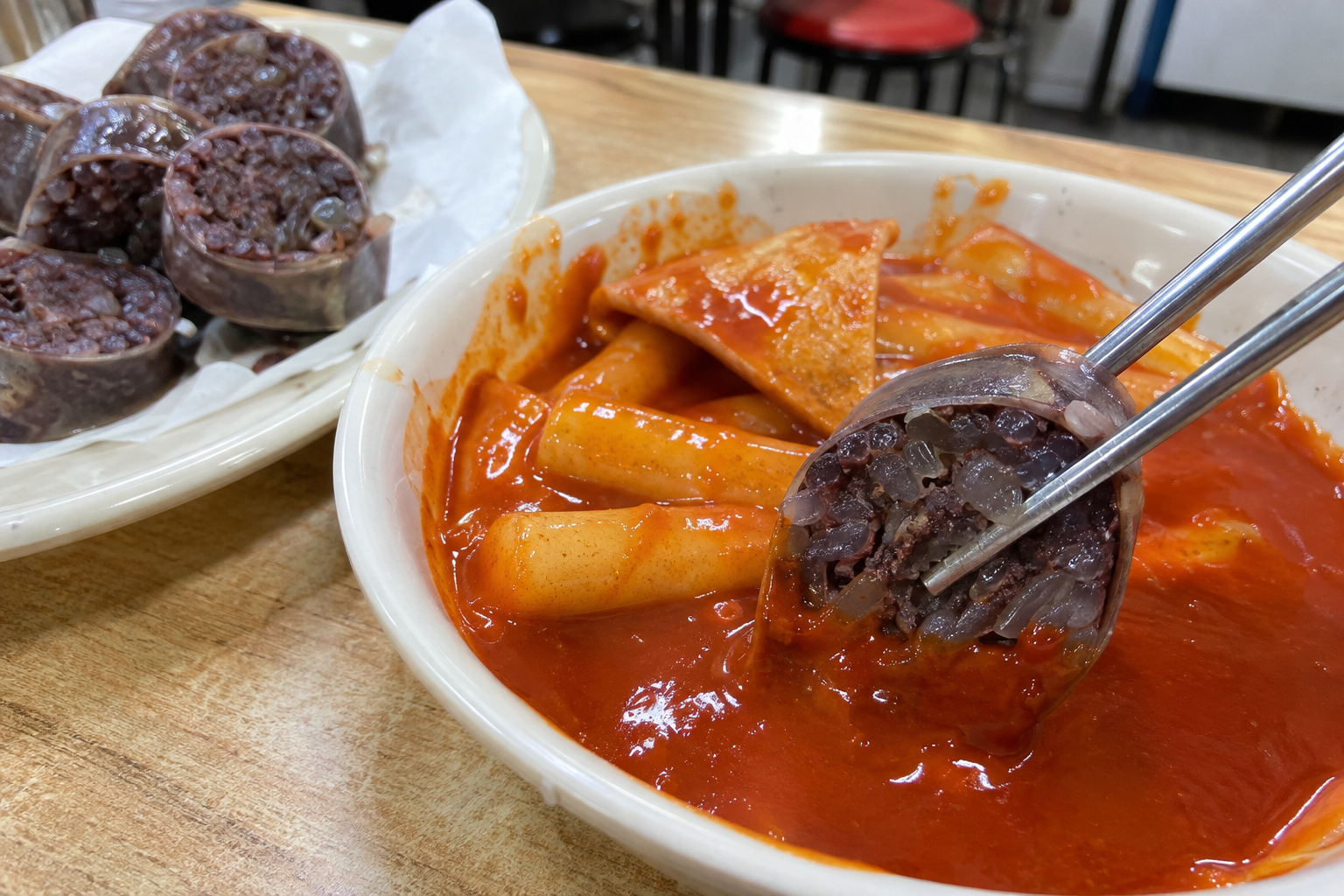
Sweet, spicy tteokbokki sauce coats the sundae for another kind of bite, quite different from salt or saeu-jeot. Keep it as an extra option while exploring the regional dips.
Try one piece of sundae first, then dip the next lightly into the sauce to compare. When eating with others, use your own small plate and enjoy it the way you like.
The same name can lead to a different bite
Sundae in soup, a freshly steamed market portion and a regional version filled with vegetables and blood offer different eating experiences. No single one needs to represent every sundae in Korea.
When you encounter it again on your trip, take a look at the little dipping dish first. A different seasoning from yesterday’s is a good opportunity to compare.
Rather than hunting for one correct way to eat sundae, be curious about why people enjoy the same piece differently. Even a familiar plate of snacks can give you a taste of the distance you have traveled.
Comments 0