
CATEGORY
THE ARCHIVE
Still on the menu.
We haven’t added a story for that craving yet.
Try another place or dish.
A NOTE FROM JO PIGGY
A little curiosity.
A very big appetite.
Hi, I’m JO PIGGY. Think of Pig Out Korea as a friend who enjoys reading the reviews almost as much as you enjoy planning the next meal.
We bring together Korean food stories, neighborhood discoveries, and local reviewers’ perspectives for travelers with an appetite for more.
Our archive is built from research and linked sources. We don’t pretend we’ve eaten every meal ourselves. We help you find the places you’d like to try.
Let’s find your next bite ↗Contact
A question, a local tip, or just a hello?
bravora2026@gmail.comKorea’s “Pizza” Has No Cheese: Find Your Favourite Jeon
Call it “Korean pizza”—but every jeon has a different bite
A large round dish arrives for everyone to share. You can see the ingredients on its surface, and somebody is already eyeing the crisp edges. That is one way to introduce jeon (Korean pan-fried dishes made with batter or a light coating of flour and egg): think “Korean pizza.”
Then the menu starts to challenge the comparison. Long scallions take the place you might expect cheese to occupy. What looks like a flour batter can turn out to be grated potato. Some jeon do not arrive as one large round at all: each small piece of fish wears its own thin yellow egg coating.
The useful distinction is not simply how many names you can remember. Look at how the ingredients are cut, what holds them together and how thickly they are pan-fried. The same word, jeon, can lead to very different bites.
Pa-Jeon (scallion jeon): long strands, crisp edges
Pa-Jeon (scallion jeon) centres on scallions. If seafood is included, you may see Haemul Pa-Jeon (seafood-and-scallion jeon) on the menu. Some versions use a thin batter that lets the shape and flavour of the scallions stand out. Others are thicker and softer inside.
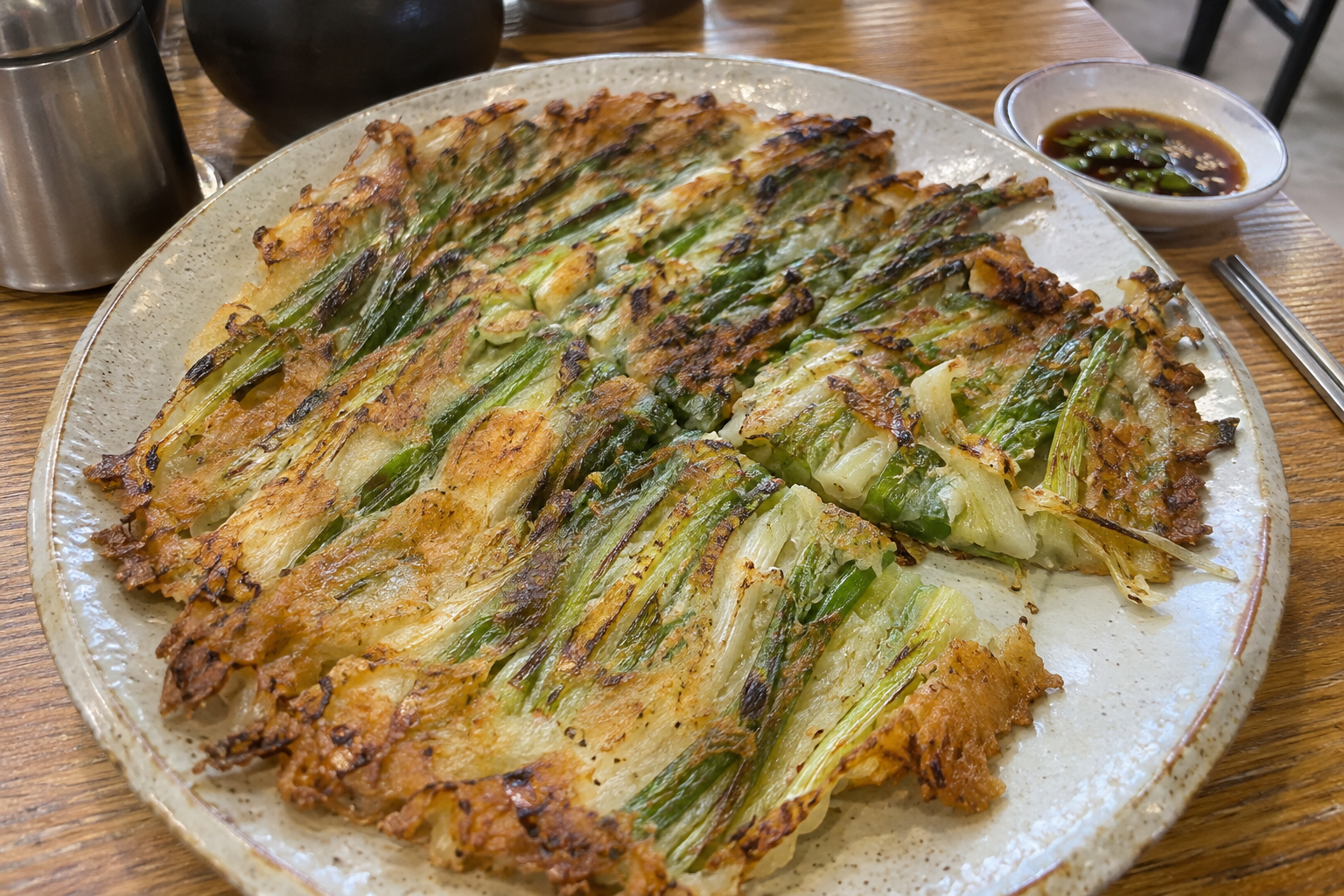
Notice how the scallions stretch as you pull a piece away with chopsticks. The crisp edge and the moist centre may almost feel like different foods. The balance between scallions and batter can be more interesting than the number of toppings.
If this is your first plate, try a little before adding the soy dipping sauce. The seafood and scallions may already taste well seasoned to you.
Kimchi-Jeon (kimchi jeon): the seasoning runs through the batter
Kimchi-Jeon (kimchi jeon) combines chopped kimchi with batter before frying. Rather than imagining kimchi placed on bread as a topping, think of its seasoning and acidity reaching through the whole dish.
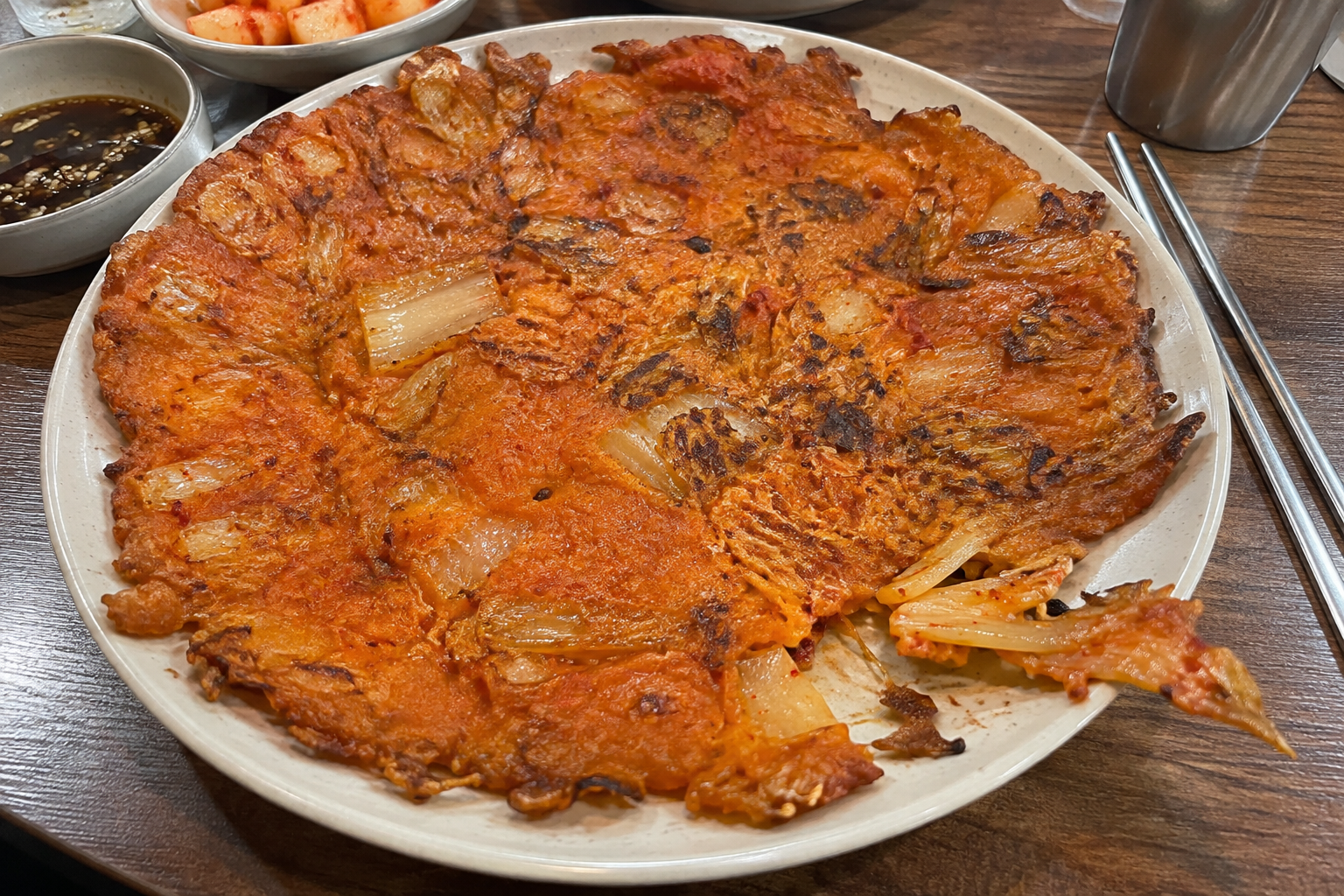
How ripe the kimchi is, and how much goes into the mixture, can change the sourness and heat. Some versions add squid or meat too. The red colour alone does not tell you exactly what to expect.
Take a bite before dipping it deeply in soy sauce. If the kimchi brings enough salt and acidity already, you might prefer to enjoy the toasted edges as they are.
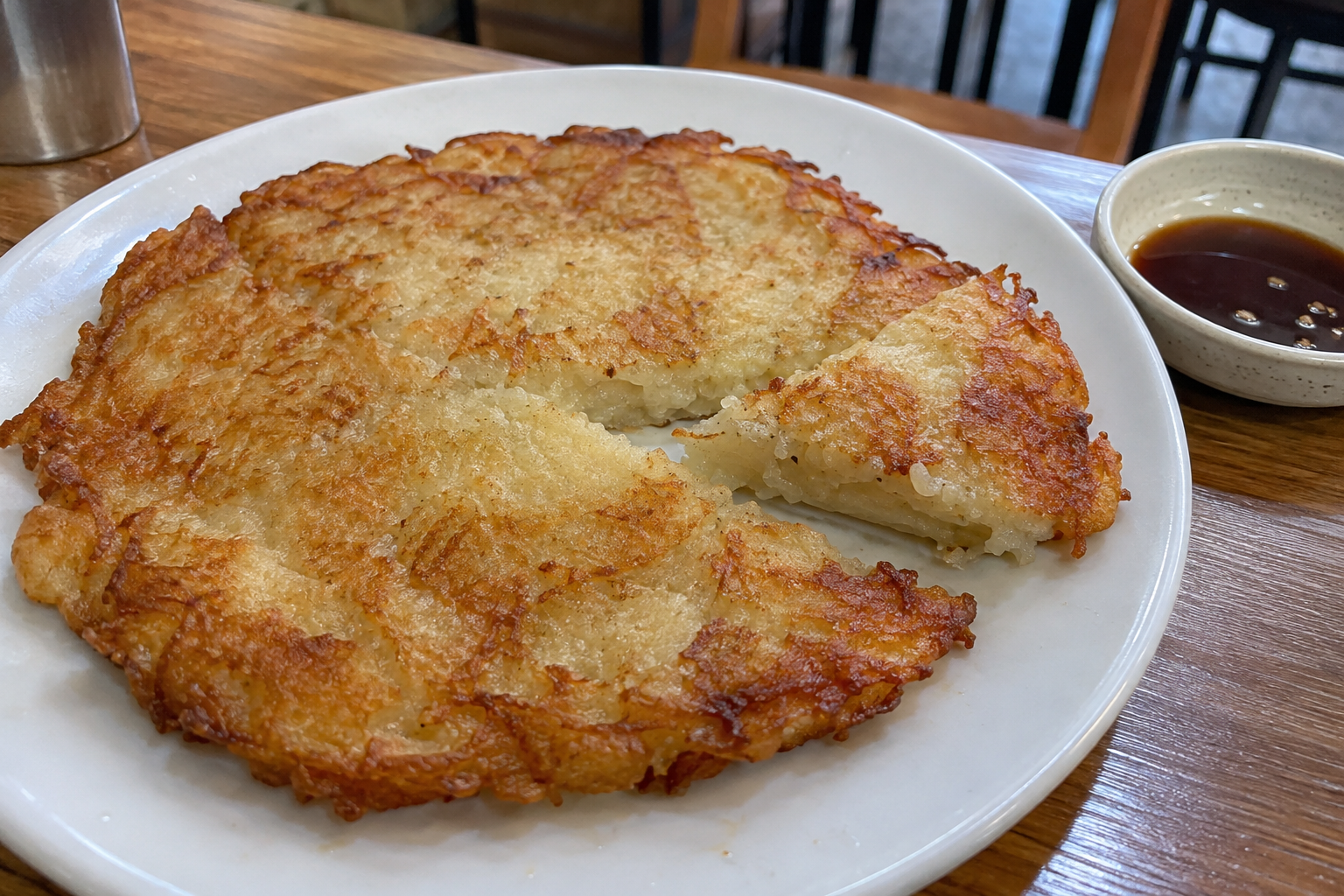
Gamja-Jeon (grated-potato jeon): the potato changes the texture
Gamja-Jeon (grated-potato jeon) feels different from a flour-batter Pa-Jeon. The edges can become crisp while the centre has a cohesive, slightly chewy texture from the potato starch. A simple ingredient makes its presence felt through texture.
Some places use shredded or thinly sliced potato, or add other ingredients, so the shape and texture can vary. You may order Gamja-Jeon expecting a soft centre and instead meet the crisp strands of shredded potato.
If you like fried potatoes, this is a familiar ingredient with a different expression. Compare what happens when the potato is grated rather than cut into strands.
Nokdu-bindaetteok (mung-bean jeon): a thicker bite for a reason
Nokdu-bindaetteok (mung-bean jeon) starts with soaked, ground mung beans. Recipes may include mung-bean sprouts, kimchi or pork. A thick market-style version gives you a crisp, fried exterior followed by the substantial texture of the ground beans.
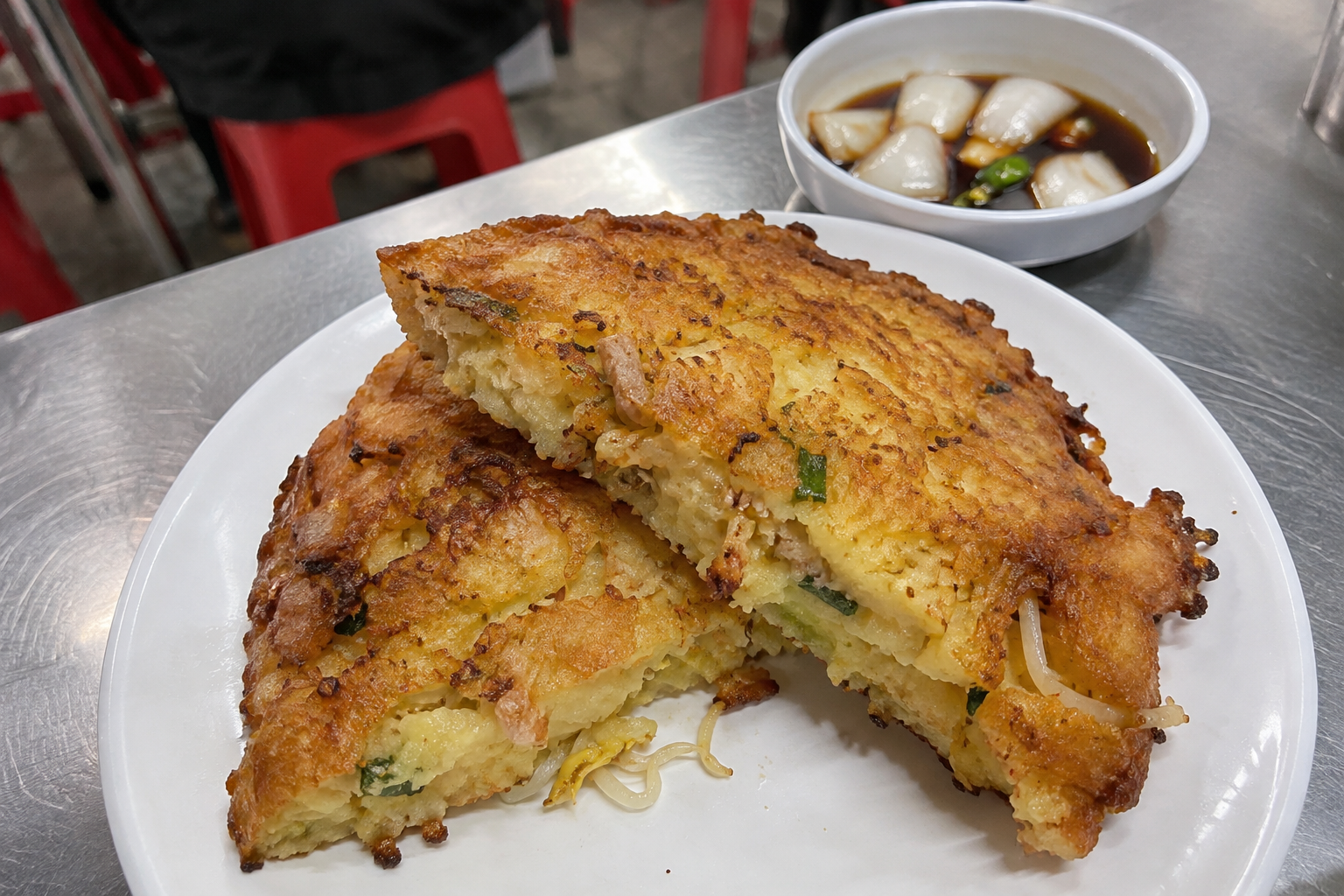
Where Pa-Jeon offers the pleasure of pulling apart long strands, bindaetteok can give you a heavier, more substantial mouthful. Its thickness can make even one piece feel filling.
If an onion-and-soy dipping sauce arrives with it, try a little onion too. The crunch and acidity offer a contrast to the rich centre. Do not assume the dish is meat-free just because mung beans are its main ingredient.
Yuk-Jeon, Hobak-Jeon and Dongtae-Jeon: a thin coating around each piece
Now move from one large round to a plate of individual pieces. Some jeon are made by slicing an ingredient, coating it lightly in flour and egg, and pan-frying it. The Academy of Korean Studies’ entry on jeon describes this style of preparation.
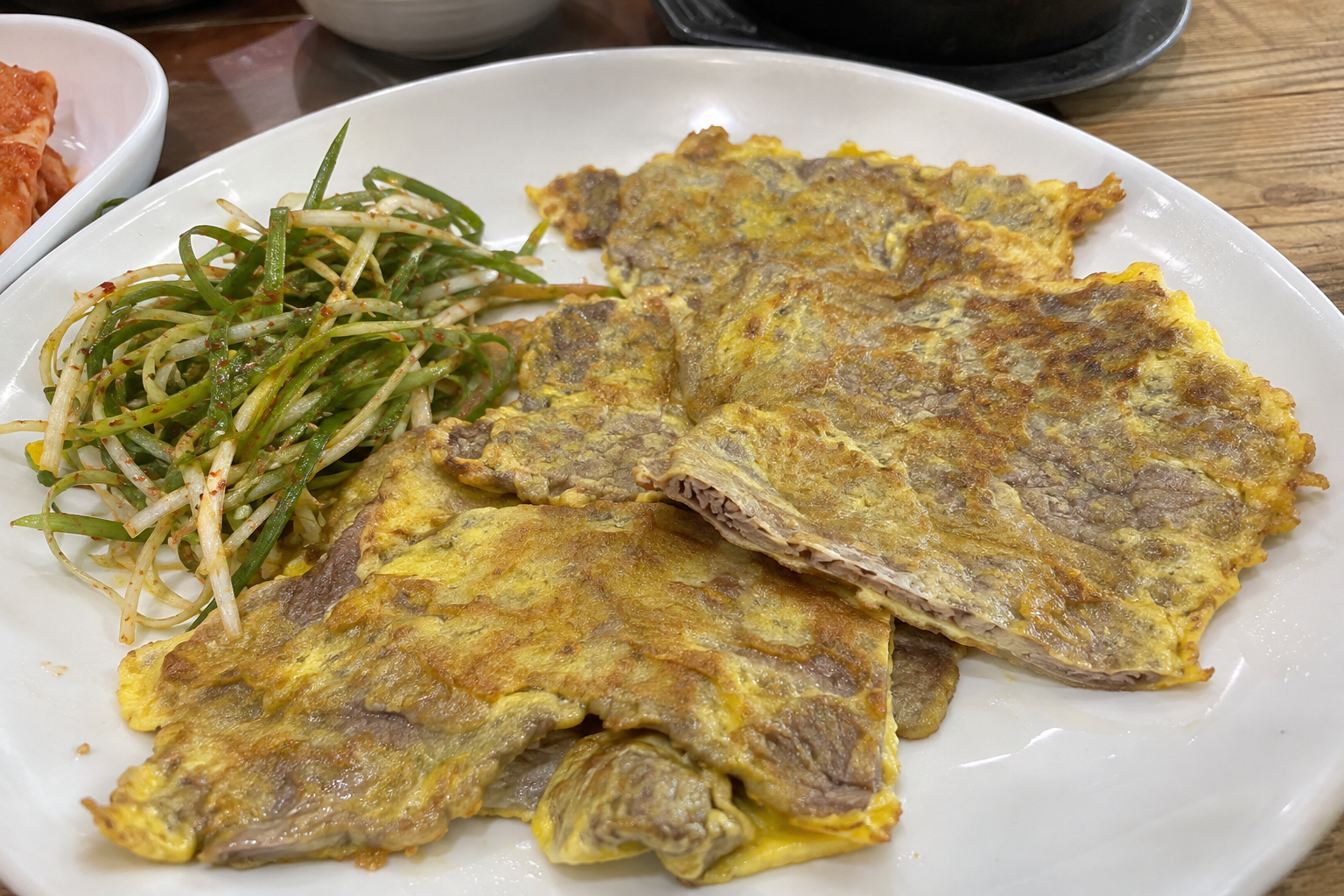
Yuk-Jeon (egg-coated pan-fried meat slices, commonly beef) uses thinly sliced meat. Pay attention to the meat and delicate egg layer together, rather than expecting a thick batter. If scallion salad comes alongside, compare one plain piece with another dressed in a little of the salad.
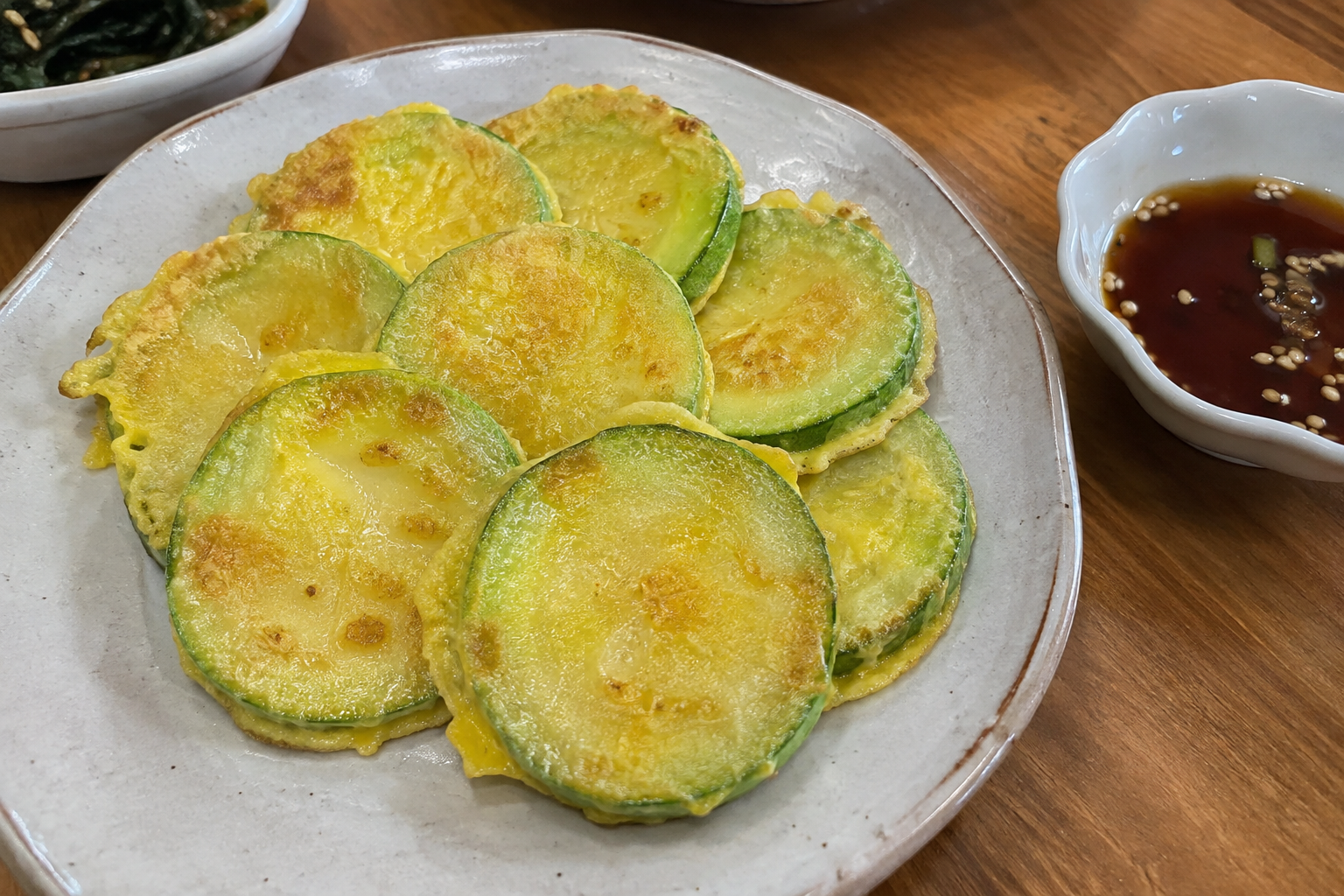
Hobak-Jeon (egg-coated Korean zucchini slices) offers a soft, moist centre inside its round green rim. If you look only for a crunchy edge, you may miss what makes it appealing. Enjoy the tender bite of the zucchini.
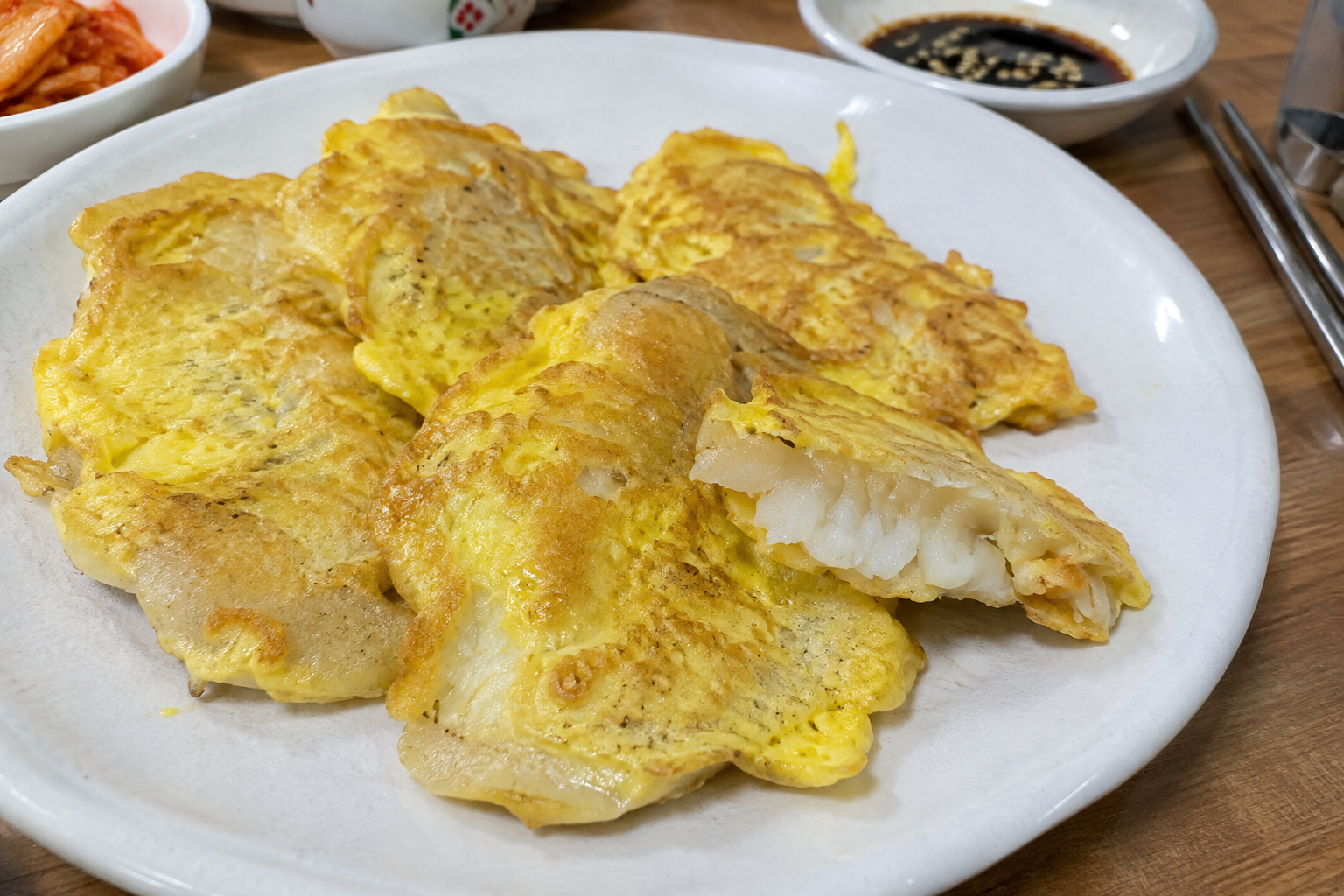
Dongtae-Jeon (egg-coated pollock slices) wraps mild, flaky white fish in a thin egg coating. Hobak-Jeon, Yuk-Jeon and Dongtae-Jeon may all look yellow on the outside, but their centres give you very different textures.
Modeum-Jeon (an assorted jeon platter): a small tasting comparison
If you are unsure where to start, look for Modeum-Jeon (an assorted jeon platter). You can compare several ingredients instead of committing to one large portion. The selection and number of pieces vary between restaurants.
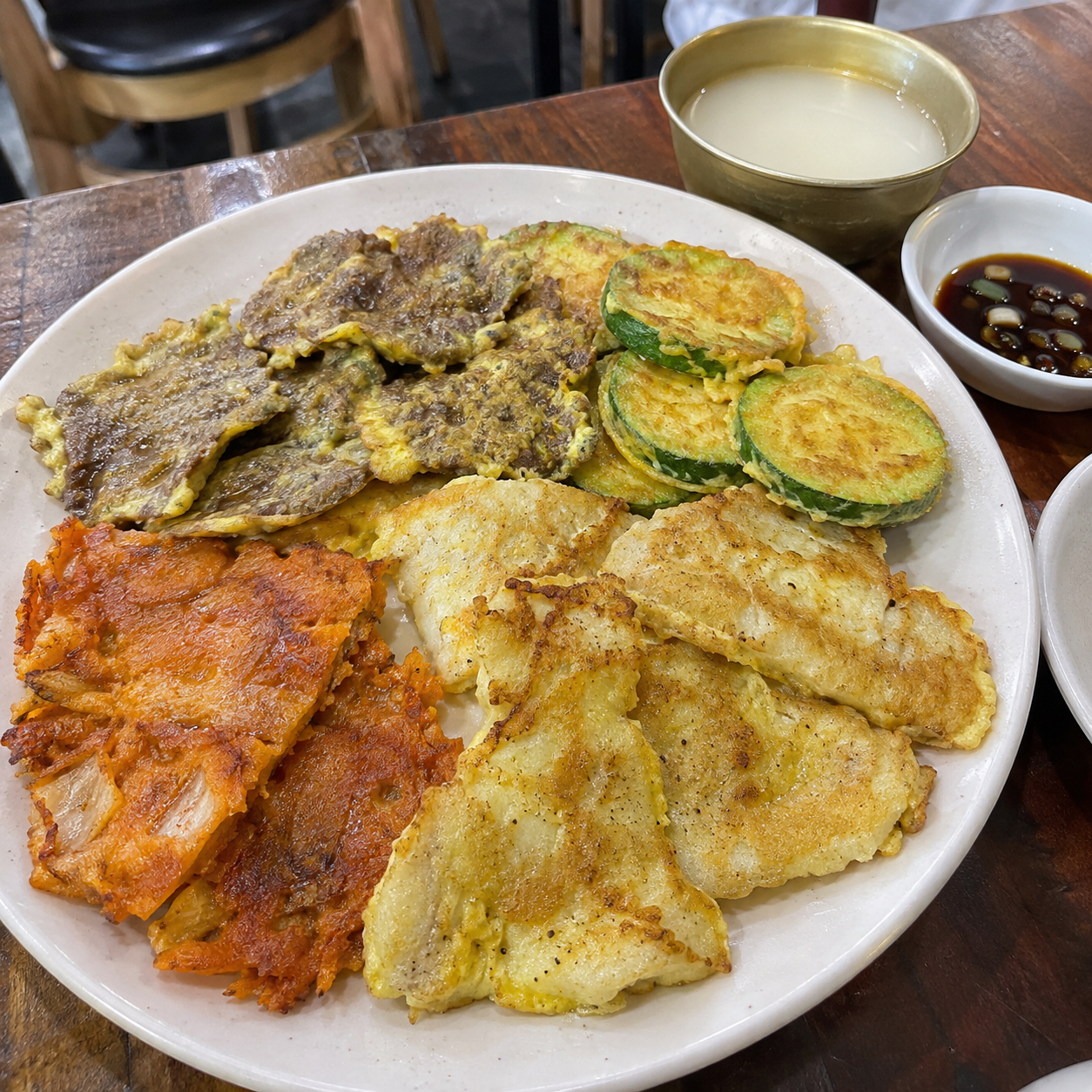
Look beyond how many kinds are included and ask whether their textures differ. A substantial bindaetteok, a tangy Kimchi-Jeon and a tender Hobak-Jeon can make a more varied plate than several similar bites.
You can change the order too. Try a more lightly seasoned piece before moving to something stronger, such as Kimchi-Jeon. That may make the differences easier to notice. It is a tasting suggestion, not a rule of etiquette.
Before you lower the whole piece into the sauce
The sauce beside your jeon is not something you must use to “finish” the food. It may add a welcome seasoning to a mild egg-coated slice, while less sauce may suit your taste with Kimchi-Jeon.
Start by dipping just one edge. Soaking the whole piece changes its crispness and can let the soy sauce overpower the ingredient. Varying the amount a little from bite to bite makes it easier to find your preference.
A plate of jeon, a bowl of makgeolli
Crisply pan-fried jeon is good with makgeolli (a cloudy Korean rice-based alcoholic drink). The savoury jeon and the drink’s soft flavour and gentle acidity make an enjoyable combination to share slowly, one piece at a time. Try a bowl beside Kimchi-Jeon or nokdu-bindaetteok as well as Pa-Jeon.
New to makgeolli? It helps to know what the drink is and which brands you may encounter. For that introduction, plus a two-parts-makgeolli-to-one-part-soda mixture, continue with Korean Drinks Guide 01: Makgeolli, Pa-Jeon and a 2:1 Soda Twist.
Comments 0