
CATEGORY
THE ARCHIVE
Still on the menu.
We haven’t added a story for that craving yet.
Try another place or dish.
A NOTE FROM JO PIGGY
A little curiosity.
A very big appetite.
Hi, I’m JO PIGGY. Think of Pig Out Korea as a friend who enjoys reading the reviews almost as much as you enjoy planning the next meal.
We bring together Korean food stories, neighborhood discoveries, and local reviewers’ perspectives for travelers with an appetite for more.
Our archive is built from research and linked sources. We don’t pretend we’ve eaten every meal ourselves. We help you find the places you’d like to try.
Let’s find your next bite ↗Contact
A question, a local tip, or just a hello?
bravora2026@gmail.comKorean Drinks Guide 01: Makgeolli, Pajeon and a 2:1 Soda Twist
A milky drink with grain at its heart
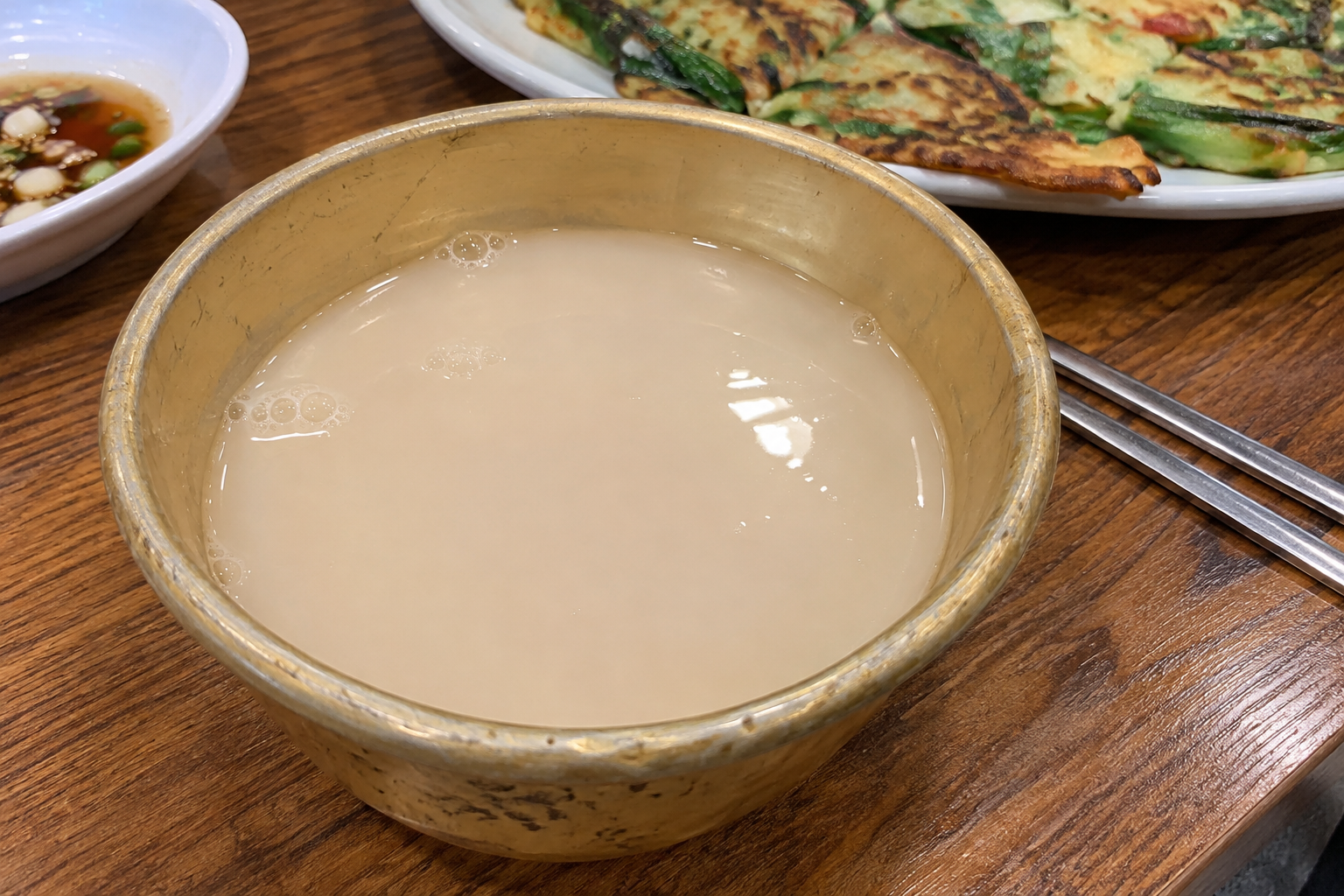
A cloudy white bottle and a wide, shallow drinking bowl are a familiar pairing at a Korean pancake restaurant. The drink is probably makgeolli (막걸리, roughly “mahk-guhl-lee”). Sweetness may arrive first, followed by acidity, grain aromas and a little fizz. It has its own place alongside the beer and wine you may already know.
Makgeolli is a Korean alcoholic drink made by fermenting grains such as rice or wheat with a starter such as nuruk (누룩). Fine grain particles remain in the drink, giving it its cloudy appearance and texture. Some bottles are light and refreshing; others are thick enough to make you consider reaching for a spoon.
Leave room for more than one idea of “makgeolli flavour.” Just as beer covers everything from lager to stout, makgeolli offers a wider range than its milky appearance suggests.
The bowl is part of the experience
Order makgeolli and you may receive a wide, shallow bowl called a sabal (사발), shaped a little like a small rice bowl. Lightweight yellow metal bowls and heavier ceramic ones are both familiar sights. If you are expecting a beer glass or wine glass, it can look as though someone brought the wrong tableware. That is your makgeolli cup.
Some places serve it from a kettle for the table to share; others pour straight from the bottle. A little cloudy drink in a wide bowl, with a piece of pajeon beside it, is a good introduction to the scene.
Read makgeolli through sweetness, acidity, fizz and texture
“Sweet” only tells you part of the story. Two bottles with similar sweetness can feel quite different if one is sharper, fizzier or thicker.
On your first sip, notice four things: how long the sweetness stays, how clearly the acidity comes through, whether bubbles prickle on your tongue, and how much grain texture remains in your mouth. Even without knowing a brand, you can ask for “something with some acidity that isn't too sweet.”
It is also useful to distinguish saeng makgeolli (생막걸리), an unpasteurized product, from pasteurized versions. Fermentation-related changes can continue inside an unpasteurized bottle, so time since production and storage conditions affect the taste. Follow the storage instructions on the label. Even products from the same brand can behave differently.
Six makgeolli brands to recognize on the menu
This is an introduction to different brands and product ranges, rather than a sales ranking. Look for the full product name instead of expecting every bottle from one producer to taste the same.
| Brand | Names and product lines to look for | What to notice |
|---|---|---|
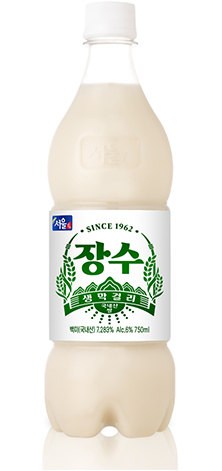
| Seoul Jangsu (서울장수) | Jangsu Saeng Makgeolli; the domestic-rice Jangsu Saeng Makgeolli | A starting point for comparing everyday unpasteurized makgeolli. The domestic-rice product is listed at 6% ABV. Notice the grain flavour and fermentation fizz. |
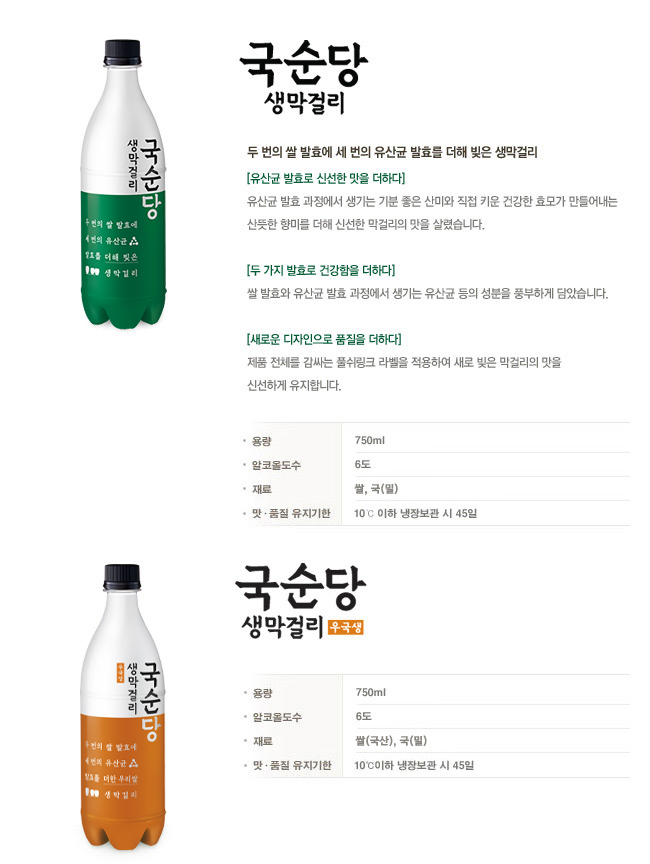
| Kooksoondang (국순당) | Kooksoondang Saeng Makgeolli, Rice Makgeolli and other lines | Read the product name after the producer's name. Check whether it is an unpasteurized product or another rice makgeolli, along with its storage instructions. |
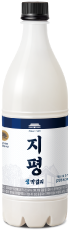
| Jipyeong (지평) | Jipyeong Saeng Makgeolli, Yet Makgeolli, Jipyeong 1925 | Several lines sit alongside the basic unpasteurized product. Changing products within the brand makes for a useful comparison. |
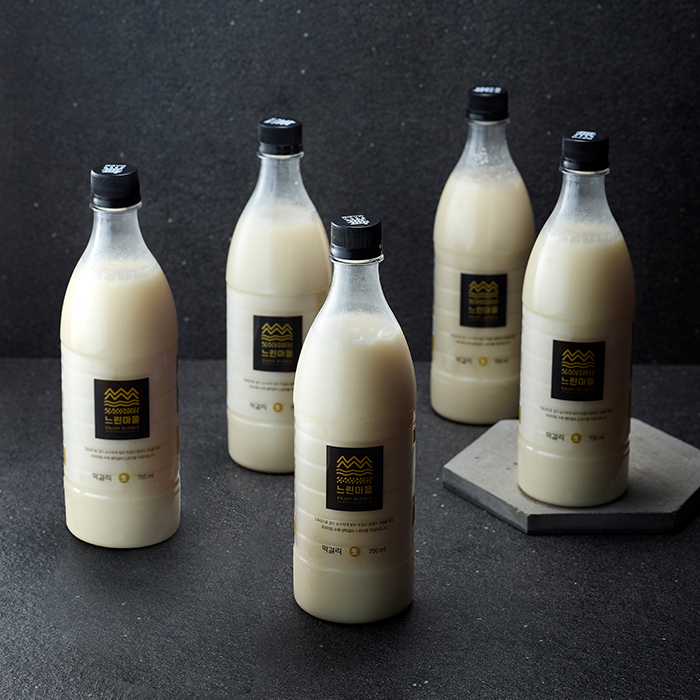
| Neurin Maeul (느린마을) | The basic Neurin Maeul Makgeolli, Bangultok (방울톡), Hanbeondeo (한번더) | Distinguish the basic bottle from the other products, then compare sweetness, acidity and fizz. |
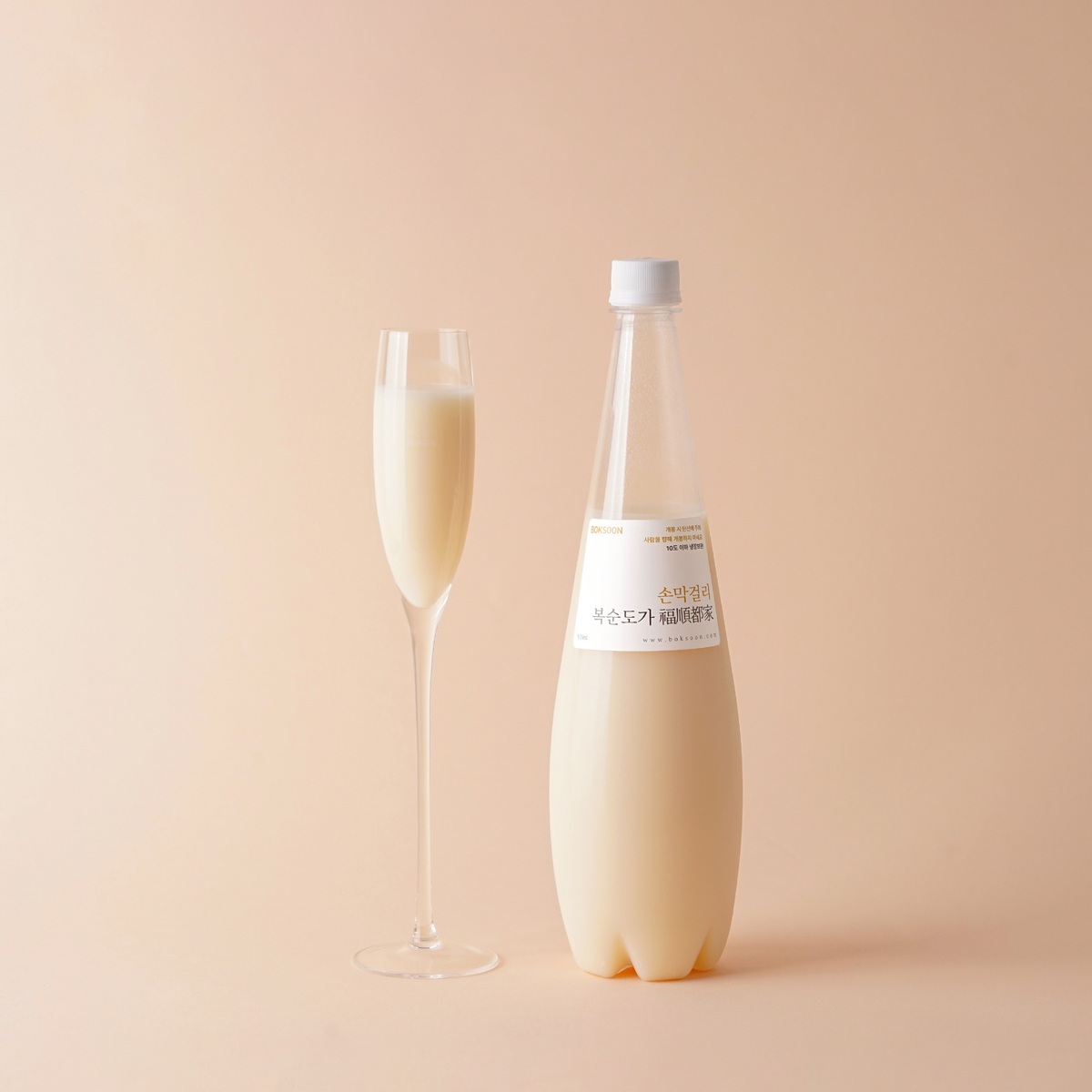
| Boksoondoga (복순도가) | Son Makgeolli, Red Rice Makgeolli, Super Dry | Son Makgeolli is presented as a sparkling product at 6.5% ABV. Worth a look if carbonation interests you as much as grain texture. |
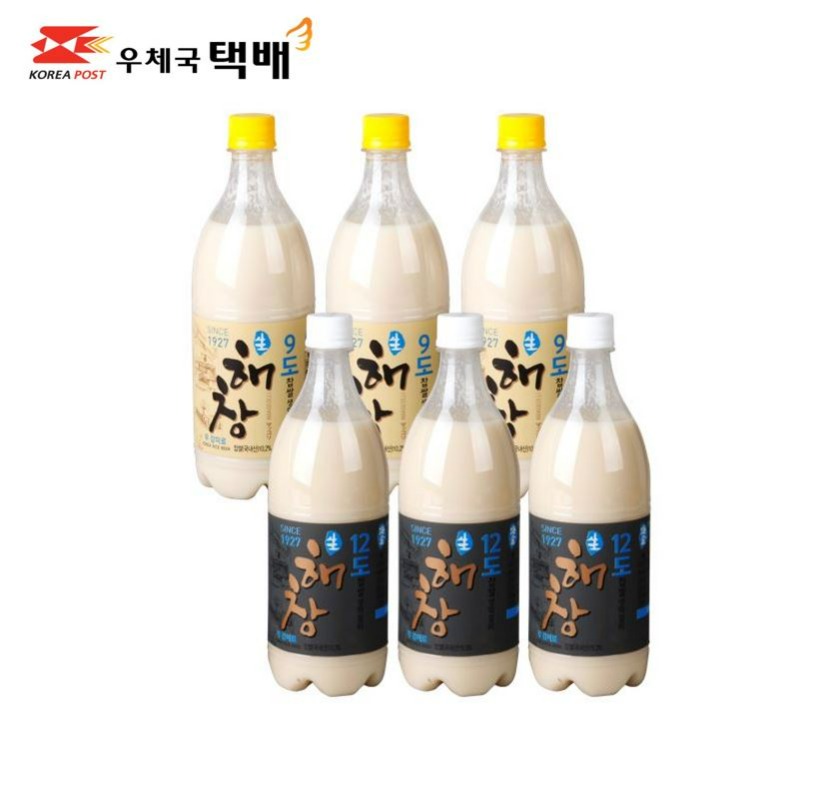
| Haechang (해창) | Haechang 9, Haechang 12 and other strengths | A range to explore for fuller rice flavour and body. Strength varies substantially: 9% and 12% ABV are quite different bottles. |
Domestic, export and reformulated products may have different details, so let the label on the actual bottle guide you. You do not need to start with the most expensive one. Comparing a lighter unpasteurized bottle with one that has a different texture or carbonation level can help you find your preference.
Why pajeon keeps appearing beside makgeolli
Pajeon (파전) is a pancake pan-fried with green onions. Add seafood and you may see haemul pajeon (해물파전) on the menu. The batter's thickness, amount of green onion, and mixture of egg or seafood vary from kitchen to kitchen.
Try a piece from the crisp edge, then one from the green-onion-filled centre. The edge brings toasted batter and the richness of frying; the middle may offer sweeter cooked onions and a softer texture.
Makgeolli's acidity or fizz can contrast with the pancake's richness. A grainier makgeolli alongside a softer piece of pajeon can also carry the savoury flavour from one mouthful to the next. Different parts of the same pancake give you slightly different pairings.
Pajeon and makgeolli are also associated with rainy days in Korea. You may hear that rain sounds like batter sizzling in a pan. Enjoy the comparison without treating it as a settled account of how the custom began. Sharing a hot pancake while sheltering from the rain makes a good travel memory on its own.
Add Korean cider and you have maksa
Makgeolli is worth trying with a splash of Korean cider, too. The soft drink adds sweetness and carbonation to the grainy, tangy base. The mixture is called maksa (막사), combining the “mak” in makgeolli with the “sa” in saida.
Here, saida (사이다), often labelled “cider,” means a non-alcoholic lemon-lime soft drink. It is different from alcoholic apple cider, an easy source of confusion when reading Korean menus in English.
JO PIGGY's recommended ratio is 2 parts makgeolli to 1 part Korean cider. No measuring jug required: use the same cup, filled to the same level, for two measures of makgeolli and one measure of cold cider. Combine them in a larger glass or kettle, using the liquid level after the foam settles as your measuring guide, and stir gently.
There is one maksa ratio to remember in this guide: two measures of makgeolli + one measure of cider = 2:1. The makgeolli brings grain flavour and acidity; the cider adds sweetness and fizz.
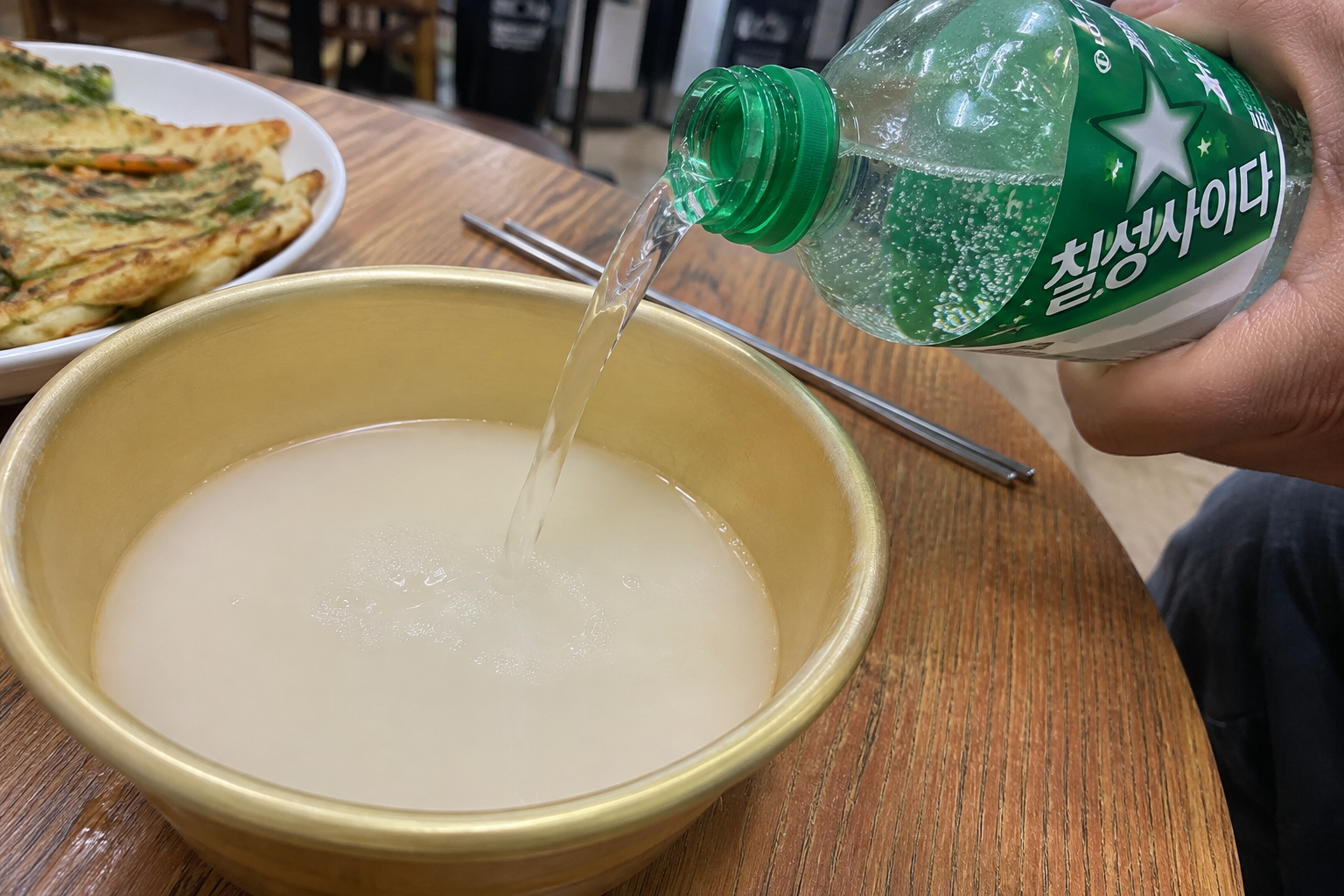
You do not have to mix an expensive bottle. Taste the makgeolli on its own first, then set aside a portion for maksa. One bottle gives you two versions to compare.
Adding cider lowers the alcohol concentration, but it does not remove the alcohol already in the makgeolli. A sweeter taste is no reason to hurry.
Before you open the bottle and pour
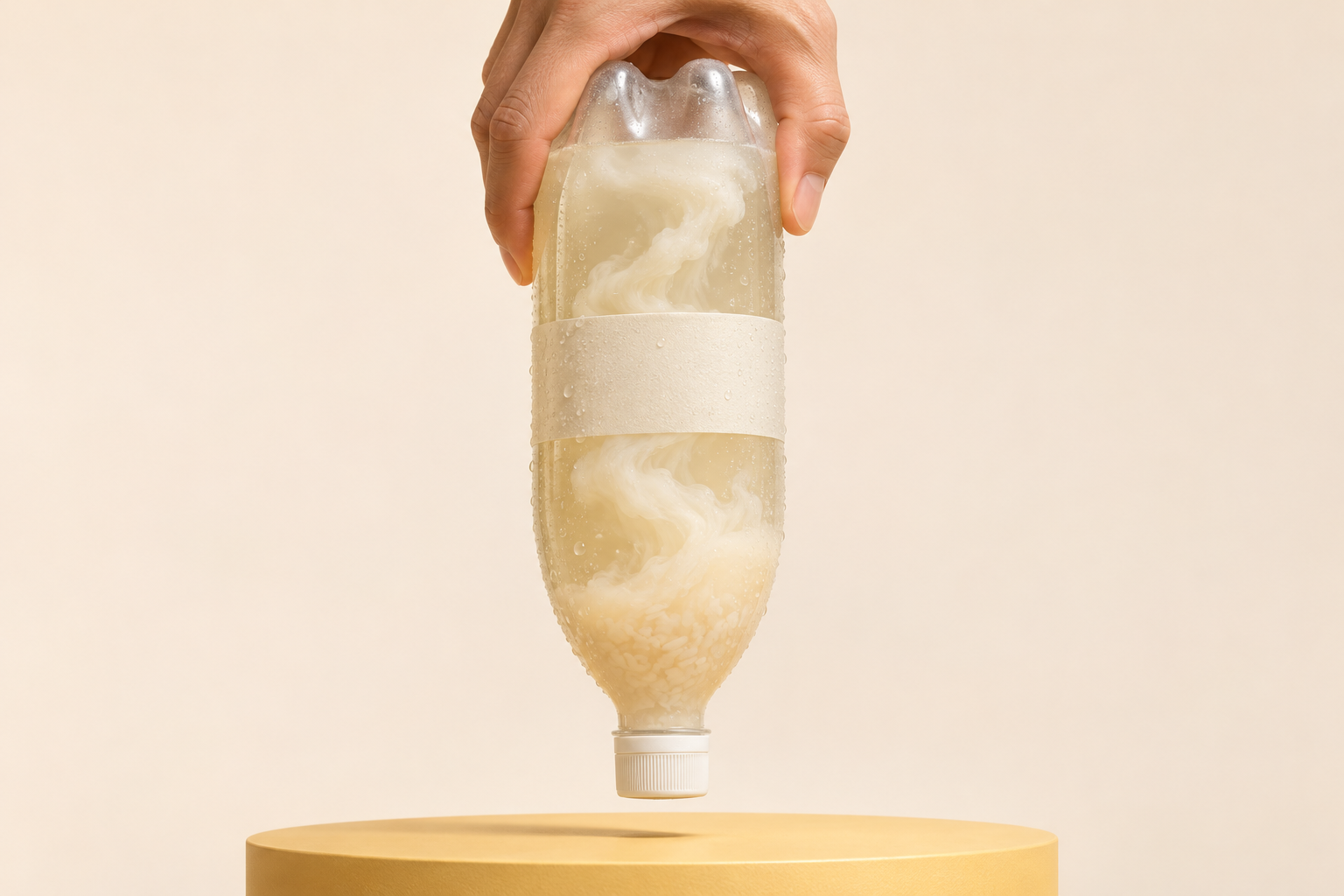
When sediment has settled, you have a choice: mix it back in or taste the clearer liquid at the top first. How you pour the first serving changes the texture and your first impression of the bottle.
For a cloudy, evenly mixed start, keep the cap closed, slowly turn the bottle upside down and pause to let the sediment loosen. Return it upright, wait for the foam to settle, then open it carefully. This distributes the grain particles through the drink.
Alternatively, open a bottle that has been standing upright without mixing it, then pour a little of the clearer upper liquid first. Notice its lighter texture and any bitterness or acidity before mixing the remainder for comparison. The top portion is not necessarily more bitter in every makgeolli; the balance of bitterness, sweetness and acidity depends on the product and its fermentation.
Try the first pour on its own, the next with pajeon, and, if you like, set aside a portion for 2:1 maksa. The same bottle can give you quite different impressions across those three situations.
For your next order, remember one brand name and one feature you enjoyed: lively fizz, restrained sweetness, or a rich grain texture. That is enough to begin choosing the next bottle.
The Korean Drinks Guide series
- 01 — Makgeolli, Pajeon and the 2:1 Maksa Mix
- 02 — Soju, Distilled Spirits and Food Pairings
- 03 — Somaek, Gojingamrae and Mixed Drinks
Sources and product references
- National Archives of Korea — How makgeolli and soju are made
- Korea Tourism Organization — Pajeon and makgeolli culture
- Seoul Takju — Domestic-rice Jangsu Saeng Makgeolli
- Kooksoondang — Makgeolli products
- Jipyeong Brewery — Brands and products
- Homesool.com — Neurin Maeul makgeolli range
- Boksoondoga — Son Makgeolli product details
- Haechang Brewery — 9% and 12% products
- Seoul Takju — Maksa product record
- Boksoondoga — Opening bottles and mixing sediment
- Rural Development Administration — Makgeolli sediment and texture
- Korea Tourism Organization — Haechang Brewery report
Comments 0